Categories
Education

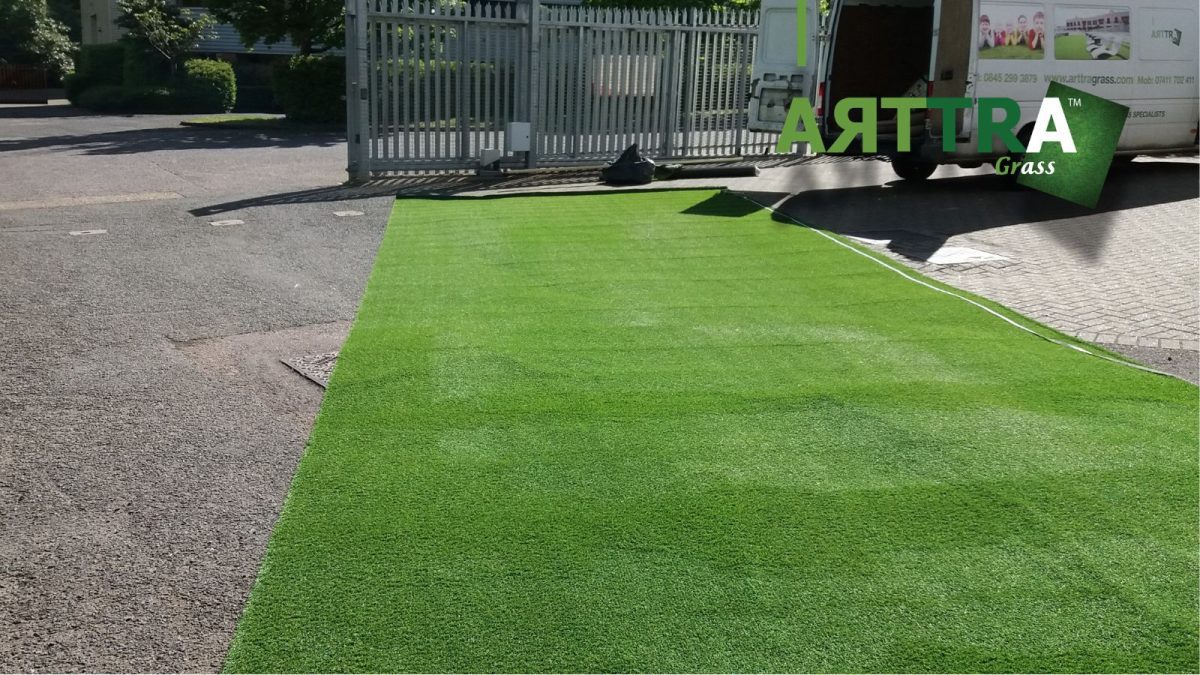
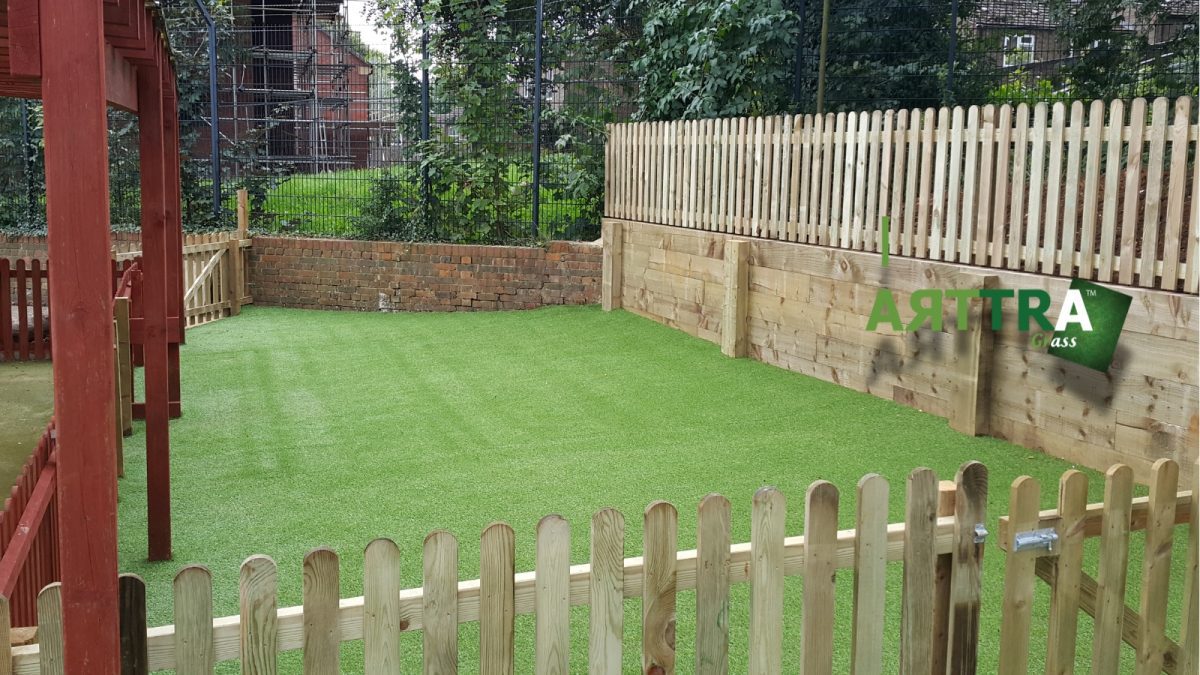
Temporary Artificial Grass School Installation

Francis Holland School – Belgravia

When Francis Holland School required a premium sports surface for a week-long event, the challenge wasn’t just performance.

It was precision.

The school needed:

  • A professional sports-ready surface
  • Installation over existing concrete and tarmac
  • No permanent alterations
  • Full removal after the event
  • Zero surface damage

ARTTRAGrass® delivered a complete temporary artificial grass solution designed specifically for short-term educational events.

The Challenge

The sports day event required a high-quality artificial grass surface that:

  • Looked professional
  • Performed safely under heavy footfall
  • Could be installed directly onto hard surfaces
  • Would be removed cleanly after one week

The sub-base consisted of:

  • Concrete
  • Tarmac

There was no option for excavation or groundwork.

This required a fully reversible installation strategy.

Our Solution

We supplied and installed a temporary artificial grass system designed for:

✔ Hard-surface overlay
✔ Short-term use
✔ Secure fixing without surface penetration
✔ Safe traction for student activities
✔ Clean removal post-event

The installation was completed efficiently to meet the event schedule.

After one week of intensive sports use, our team returned to:

  • Carefully lift the artificial grass
  • Remove fixings
  • Restore the original surface

The area was left in its original condition.

Key Project Details

Client: Francis Holland School – Belgravia
Location: Belgravia, London
Application: Temporary sports day surface
Duration: 1 week
Sub-surface: Concrete and tarmac
Installation Type: Fully reversible temporary system
Removal: Completed post-event

Why Temporary Artificial Grass Works for School Events

Temporary installations are ideal for:

  • Sports days
  • Open days
  • Graduation ceremonies
  • Outdoor showcases
  • Summer fairs
  • University promotional events

Schools often require a premium aesthetic without committing to permanent infrastructure changes.

Temporary artificial turf provides:

  • Instant visual transformation
  • Professional sports appearance
  • Safe underfoot traction
  • Quick installation
  • Fast removal

Benefits for Educational Institutions

No Permanent Alterations

Perfect for listed buildings or heritage sites in central London.

Safe for Students

Provides improved grip compared to bare concrete or tarmac.

Professional Presentation

Creates a high-end finish suitable for photography and marketing.

Minimal Disruption

Installation and removal scheduled around school operations.

Trusted by Leading Educational Institutions

In addition to Francis Holland School, ARTTRAGrass® has delivered installations for:

  • Le Cordon Bleu London
  • King’s College London

From independent schools to universities, our temporary artificial grass systems are trusted for special events across London.

Planning a School Sports Event?

If your school requires:

  • Temporary artificial lawn
  • Hard-surface installation
  • Event-ready finish
  • Guaranteed post-event removal

ARTTRAGrass® provides end-to-end management from installation to reinstatement.

Book a consultation to discuss your upcoming event.

FAQs: Temporary Artificial Grass School Installation in Belgravia

1. Can artificial grass be installed temporarily for school events?

Yes. Temporary artificial grass is an ideal solution for school sports days, open days and special events. At Francis Holland School in Belgravia, we installed a professional-grade artificial grass surface for a one-week sports event, providing a safe and visually impressive environment without permanent alterations.


2. Can artificial grass be laid over concrete or tarmac?

Yes. Temporary artificial grass can be installed directly over hard surfaces such as concrete and tarmac. For this project, we used a secure, non-invasive fixing method that ensured stability throughout the event while protecting the existing surface.


3. Will temporary artificial grass damage the surface underneath?

No. Our temporary systems are fully reversible. We do not excavate or permanently fix into the ground. After removal, the original concrete or tarmac surface is left in its original condition, with no structural damage.


4. How long does installation take?

Installation time depends on the size and layout of the area. For most school event spaces, installation can be completed within a short timeframe to meet event deadlines. We work closely with school administrators to minimise disruption to daily operations.


5. Is temporary artificial grass safe for sports activities?

Yes. Temporary artificial grass provides improved traction and comfort compared to bare concrete or tarmac. It creates a safer, more forgiving surface for running, light sports and organised activities during events.


6. Can it be removed after a week?

Yes. Temporary artificial grass is specifically designed for short-term use. In the case of Francis Holland School, we returned after one week to carefully remove the surface and reinstate the original area.


7. Do you provide both installation and removal?

Yes. ARTTRAGrass® manages the complete process — delivery, installation, event support if required, and full removal. Schools and universities benefit from a single point of responsibility from start to finish.


8. Is temporary artificial grass suitable for London schools?

Absolutely. Temporary artificial grass is particularly useful for urban schools in London where outdoor space may consist primarily of concrete or tarmac. It allows schools to transform hard courtyards into functional sports or event areas without permanent redevelopment.


9. Can it be used for university events?

Yes. Temporary artificial grass is suitable for university open days, promotional events, graduation celebrations and sports activities. We have also delivered installations for institutions such as King’s College London and Le Cordon Bleu London.


10. How much does temporary artificial grass hire cost?

Costs vary depending on area size, duration, access requirements and logistics. Because every event space is different, we provide tailored quotations following a consultation to ensure accurate pricing and suitability.

GET IN TOUCH
Schedule a Visit

Categories
Education

ARTTRAGrass® 25mm Bio-Backed Artificial Grass for School Play Areas

Safe. Sustainable. Proven in Real Education Environments.

When a school chooses artificial grass, it isn’t buying a surface. At ARTTRAGrass®, we specialise in artificial grass for school play areas — designed specifically for educational environments, not repurposed landscaping turf.

It’s making a long-term decision about:

  • Child safety
  • Cleanliness & hygiene
  • Sustainability
  • Durability under extreme footfall
  • Financial efficiency

Our systems are already trusted by:

  • Francis Holland School
  • Winchester House School
  • Cygnet Pre-School
  • The Shire School
  • Le Cordon Bleu London
  • King’s College London

From nursery play zones to SEN environments and elite sports spaces — ARTTRAGrass® delivers performance with purpose.

Why Schools Replace Natural Grass

The Mud Problem

One of the biggest triggers for school enquiries? Mud.

At Winchester House School, a 400sqm natural grass area caused constant disruption:

  • Mud tracked into classrooms
  • Slippery surfaces
  • Restricted winter play
  • Increased cleaning costs

After installation of ARTTRAGrass® 25mm bio-backed artificial grass:

✔ No more muddy shoes
✔ All year round play access
✔ Reduced maintenance
✔ Cleaner classrooms

This is one of the most common ROI drivers for primary schools.

Introducing ARTTRAGrass® 25mm Bio-Backed Artificial Grass

Designed Specifically for Schools & Children

Our flagship 25mm system features:

✔ 100% recyclable construction
✔ Non-toxic materials
✔ Odour-free backing
✔ Low-carbon manufacturing
✔ Reduced fossil fuel dependency
✔ Green bio-backed technology

Unlike traditional latex-backed systems, ARTTRAGrass® dramatically reduces reliance on fossil fuels.

This supports:

  • MAT sustainability frameworks
  • ESG compliance
  • Net-zero objectives
  • Local authority procurement requirements

Case Study: SEN & Accessibility

The Shire School – Bletchley, Milton Keynes

The Shire School required a surface that allowed both younger and older students with special needs to safely access outdoor play.

The previous natural surface created:

  • Mud hazards
  • Mobility challenges
  • Reduced outdoor time
  • Safety concerns

Our solution provided:

✔ Stable, even surface
✔ All year round accessibility
✔ Mud-free outdoor engagement
✔ Improved confidence for students and staff

For SEN environments, surface consistency is not optional — it’s essential.

Case Study: Aesthetic & Functional Impact

Cygnet Pre-School – Wellingborough

Cygnet Pre-School required two distinct improvements:

  1. An attractive, welcoming entrance aesthetic
  2. A mud-free outdoor play space for nursery children

The transformation delivered:

✔ Clean, vibrant first impressions
✔ Safe, soft play environment
✔ Reduced cleaning workload
✔ Improved parent perception

For nurseries, visual appeal and hygiene matter equally.

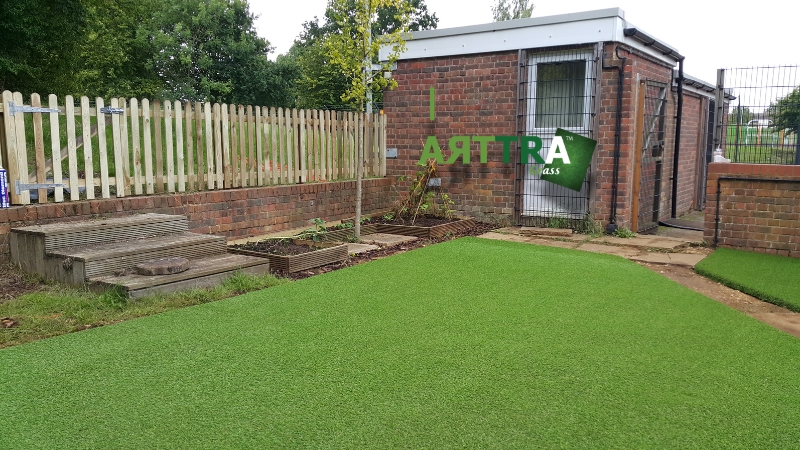
Artificial Grass Cygnet School Wellingborough
ARTTRAGrass® supplied and installed for Cygnet Pre-School in Wellingborough | 2015

Case Study: Sports Performance

Francis Holland School – Belgravia

At Francis Holland School, the requirement was sports-focused.

The school needed a high-performance artificial grass area suitable for structured activities.

Our system delivered:

✔ Durable sports-ready surface
✔ Consistent traction
✔ All-weather usability
✔ Professional finish

For independent schools, performance and presentation go hand-in-hand.

Case Study: Special Event Installations

We also supported event-based educational use at:

  • Le Cordon Bleu London
  • King’s College London

These installations required:

✔ Premium aesthetic finish
✔ Temporary or event-ready durability
✔ Fast turnaround
✔ Immaculate presentation

Our versatility allows ARTTRAGrass® to serve both permanent installations and high-profile academic events.

Coloured MUGA Artificial Grass for School Play Areas

While our bio-backed 25mm system is ideal for playgrounds and general school use, we also provide high-density coloured artificial grass for sports environments.

Ideal For:

  • Multi-Use Games Areas (MUGA)
  • Football training
  • Basketball
  • Netball
  • Playground zoning
  • Padel walkways

Key Features

✔ High-density fibre
✔ Enhanced traction
✔ Colour-coded zones
✔ Long-term sports durability

This allows schools to maximise limited space while increasing structured sports opportunities.

Why ARTTRAGrass® Outperforms Standard Artificial Turf

Most artificial grass products on the market were developed for domestic landscaping.

Schools need something very different.

We Focus On:

  • Extreme daily footfall
  • Child-safe materials
  • Sustainability reporting
  • Longevity under institutional use
  • Procurement transparency

Our systems are engineered for education environments first.

Long-Term Financial Efficiency

Artificial grass reduces:

  • Grounds maintenance contracts
  • Reseeding
  • Irrigation
  • Drainage repairs
  • Cleaning costs from mud transfer

Schools like Winchester House School quickly see operational benefits beyond surface aesthetics.

Over a 10–15 year lifecycle, artificial grass becomes a predictable, controllable asset.

Built for Every Education Setting

Primary Schools

Safe, clean, all year round play.

Secondary Schools

High-performance sports durability.

Nurseries

Non-toxic, odour-free environments.

SEN Schools

SEN Schools: Stable, consistent, accessible surfaces.

Universities & Colleges

Event-ready and multi-use solutions.

Sustainability That Supports Your Reputation

Parents increasingly expect schools to demonstrate environmental responsibility.

ARTTRAGrass® allows you to communicate:

  • Recyclable materials
  • Reduced fossil fuel dependency
  • Long lifecycle performance
  • Sustainable procurement choices

That strengthens trust at every level — from governors to community stakeholders.

FAQs: Artificial Grass for School Play Areas

1. Is artificial grass safe for primary schools?

Yes. Our bio-backed artificial grass is non-toxic and odour-free.

2. What pile height is best for school playgrounds?

25mm provides an ideal balance between durability and comfort.

3. Can artificial grass reduce mud problems?

Yes — this is one of the primary reasons schools switch.

4. Is artificial grass suitable for SEN schools?

Absolutely. A consistent surface improves accessibility and safety.

5. Does artificial grass meet sustainability goals?

Our bio-backed system is 100% recyclable and low-carbon.

6. Is coloured artificial grass available?

Yes. We offer high-density MUGA systems.

7. How long does artificial grass last in a school?

Typically 8–15 years depending on use.

8. Can it be used for sports activities?

Yes — we supply both general play and sports-specific systems.

9. Is it suitable for nursery environments?

Yes. It provides a clean, safe, mud-free play area.

10. Do you provide site surveys?

Yes. We offer tailored consultations for schools across the UK

Book a School Surface Consultation

Your school deserves more than a generic solution.

Whether you are:

  • Eliminating mud
  • Upgrading a sports facility
  • Improving SEN accessibility
  • Enhancing your entrance aesthetic
  • Supporting sustainability goals

ARTTRAGrass® provides expert guidance from consultation to completion. If you would like to compare natural with artificial grass, visit our Artificial Grass vs Natural Grass for Schools article.

Request your free site survey today.

Let’s build a safer, cleaner, more sustainable outdoor environment for your pupils.

GET IN TOUCH

Schedule a Visit

Categories
Dogs

How Much Does Artificial Grass Cost for Dogs in the UK? (2026 Price Guide)

If you’re researching how much artificial grass costs for dogs in the UK, you’re likely close to making a decision.

You want:

  • A clean, mud-free garden
  • No yellow patches
  • No ongoing lawn repairs
  • No lingering odours
  • Something safe for pets and children
  • And a realistic idea of what it will cost

In this guide, we break down:

  • Material costs
  • Installation costs
  • What affects the price
  • The difference between budget and premium systems
  • Whether it’s worth the investment

This is written specifically for UK dog owners.

How Much Does Artificial Grass for Dogs Cost in the UK?

Fully Installed Cost (2026 UK Averages)

For a professionally installed, dog-friendly artificial lawn:

£60–£120 per m² fully installed

The range depends on:

  • Ground preparation required
  • Type of artificial grass selected
  • Drainage requirements
  • Garden access
  • Waste removal

Materials Only (Supply Only)

If purchasing the turf without installation:

£20–£45 per m²

Premium eco-backed systems may sit slightly higher.

But materials alone are only part of the total cost.

Typical UK Garden Cost Examples

Here’s what real-world pricing often looks like:

Small Garden (30m²)

  • £1,800 – £3,600 fully installed

Medium Garden (50m²)

  • £3,000 – £6,000 fully installed

Larger Garden (75m²+)

  • £4,500 – £9,000+

Smaller gardens often cost more per m² due to fixed labour and prep costs.

What Affects the Cost of Artificial Grass for Dogs?

1. Ground Preparation (The Biggest Cost Factor)

For dog-friendly installations, ground prep is critical.

This includes:

  • Excavation
  • Removing existing turf
  • Waste removal
  • Installing a compacted sub-base
  • Installing permeable membranes
  • Creating proper fall for drainage

Poor prep leads to:

  • Standing water
  • Odour issues
  • Uneven surfaces
  • Early failure

If you’re concerned about smells, see our guide on
How to Stop Artificial Grass Smelling of Dog Urine

Ground preparation is not where you cut corners.

2. Type of Artificial Grass Selected

There is a major difference between:

  • Budget latex-backed turf
  • Mid-range pet turf
  • Premium recyclable bio-backed systems

You can see a full breakdown here:
ARTTRAGrass® vs Standard Artificial Turf

Premium systems cost more upfront — but often last longer and reduce environmental impact.

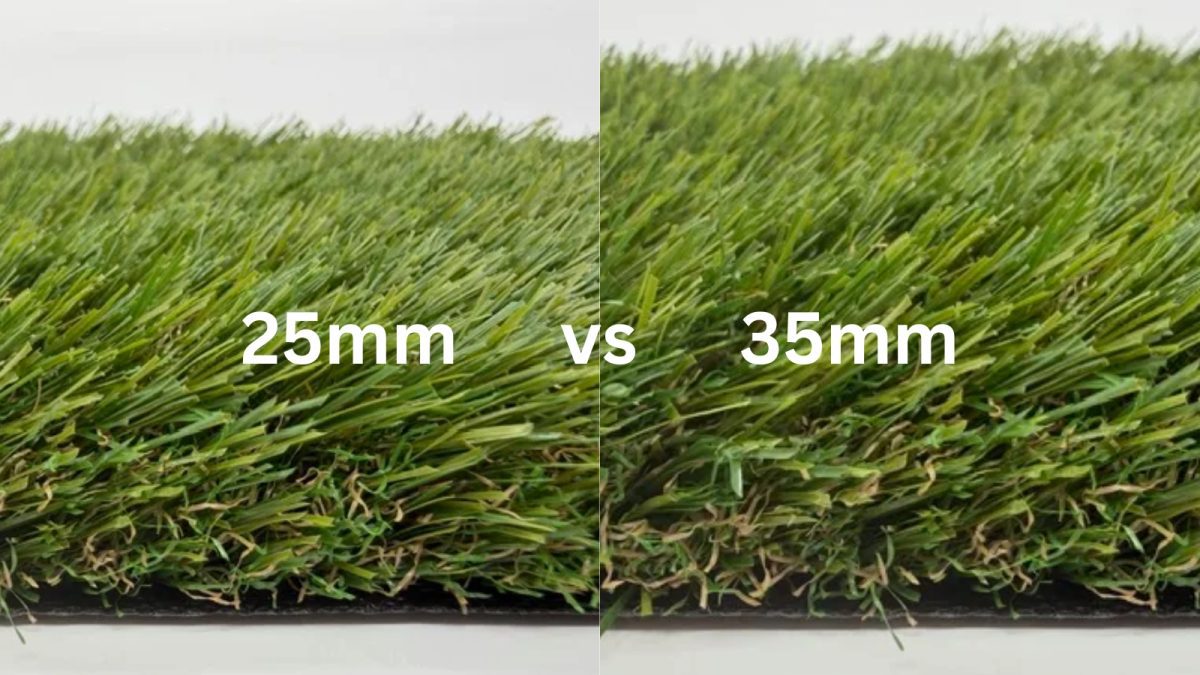
3. Pile Height Choice (25mm vs 35mm)

Pile height slightly influences price due to fibre volume.

25mm:

  • Slightly more practical
  • Often marginally lower cost

35mm:

  • More natural aesthetic
  • Slightly more fibre

If you’re unsure which suits your home, read:
25mm vs 35mm Artificial Grass for Dogs

4. Drainage Requirements for Dog Owners

Dog gardens require:

  • Permeable sub-base
  • Proper fall gradient
  • Correct compaction
  • Quality backing

If drainage is wrong, you’ll experience odour problems regardless of grass type.

Drainage is installation-driven, not marketing-driven.

5. Garden Access

Limited access:

  • Terraced houses
  • No side entrance
  • Manual waste removal

This increases labour time and cost.

Why Dog-Friendly Artificial Grass Costs More Than Decorative Turf

Dog installations must withstand:

  • Repeated urine exposure
  • High traffic paths
  • Turning stress
  • Claw pressure
  • Localised wear areas

This means:

  • Stronger backing
  • Higher density fibres
  • Better sub-base
  • Proper drainage compatibility

Cheap turf designed purely for appearance often fails under dog use.

Is Cheaper Artificial Grass a False Economy?

This is where many homeowners make the mistake.

Budget artificial turf often:

  • Uses petroleum-heavy latex backing
  • Has lower fibre density
  • Degrades faster
  • Flattens quickly
  • Is difficult to recycle
  • Ends up in landfill

It may cost less initially.

But if replaced after 5–7 years, total ownership cost rises significantly.

Premium systems like ARTTRAGrass® are engineered with:

  • 100% recyclable bio-backed green backing
  • Reduced fossil fuel dependency
  • Non-toxic construction
  • Long-term durability

Over 10–15 years, the cost difference narrows dramatically.

Long-Term Cost vs Upfront Cost

Let’s compare realistically.

Budget Turf

  • Lower upfront price
  • Possible replacement within 5–7 years
  • Disposal costs
  • Environmental impact

Premium Recyclable Turf

  • Higher upfront investment
  • Longer lifespan
  • Recyclable pathway
  • Reduced fossil fuel reliance
  • Stronger resale appeal

When viewed over 10–15 years, the premium option often provides better overall value.

Is Artificial Grass Worth It for Dog Owners?

Let’s look beyond price.

Dog owners save money on:

  • Lawn reseeding
  • Turf repairs
  • Mud management
  • Cleaning costs
  • Time spent maintaining grass
  • Lawn treatments

Benefits include:

  • No muddy paws
  • No brown patches
  • All year round usability
  • Cleaner patios and interiors
  • Consistent appearance

For many UK dog owners, it’s a quality-of-life investment.

Cost Comparison: Natural Lawn vs Artificial Grass (Dogs)

Natural lawn (over 10 years):

  • Fertiliser
  • Reseeding
  • Lawn repair
  • Turf replacement
  • Water usage
  • Time investment

Artificial grass:

  • Higher upfront cost
  • Minimal ongoing expense
  • Occasional rinse
  • Periodic brushing

The long-term cost comparison often surprises homeowners.

Why Premium Dog-Friendly Artificial Grass Costs More

Advanced systems incorporate:

  • Recyclable backing innovation
  • Reduced fossil fuel manufacturing
  • Safer materials
  • Higher fibre density
  • Enhanced drainage compatibility

This is not simply “grass”.

It is engineered surfacing.

For a complete overview of choosing the right product, see:
Best Dog Friendly Artificial Grass in the UK (Buyer’s Guide)

How to Get an Accurate Quote

To receive an accurate cost estimate, installers typically assess:

  • Garden size
  • Current surface condition
  • Drainage requirements
  • Access constraints
  • Waste disposal volume
  • Desired pile height (25mm or 35mm)

The most accurate pricing comes from a site visit.

Can You Install Artificial Grass for Dogs Yourself?

DIY is possible — but dog installations require:

  • Proper excavation depth
  • Compacted aggregate sub-base
  • Weed membrane
  • Correct joining methods
  • Secure edging
  • Adequate fall

Mistakes commonly lead to:

  • Odour retention
  • Uneven settling
  • Visible seams
  • Premature wear

Professional installation reduces risk.

Financing and Budget Planning

If budgeting is a concern:

  • Spread the cost over time
  • Plan installation during landscaping upgrades
  • Install in stages if necessary

Remember: artificial grass is a long-term investment.

Financing Artificial Lawn

When Is the Best Time to Install?

Artificial grass can be installed all year round in the UK.

Autumn and winter installations are common and often more flexible for scheduling.

There is no need to wait for summer.

Summary: What Should You Budget?

For a typical UK dog-owning household:

Plan for:

£60–£120 per m² fully installed

The key variables are preparation and product quality.

Cutting corners in either area usually leads to regret.

Get some more info by visiting our service page: Artificial Grass for Dogs

FAQs: How much does artificial grass cost for dogs UK

1. How much does artificial grass cost for dogs in the UK?

Typically £60–£120 per m² fully installed depending on preparation and product quality.

2. Is artificial grass cheaper than replacing natural lawn?

Over the long term, it can be, especially for dog owners.

3. Does premium artificial grass cost more?

Yes, due to advanced backing, durability, and sustainability features.

4. Is 25mm cheaper than 35mm?

Slightly, but the difference is usually minor.

5. Can artificial grass increase property value?

Well-installed landscaping can improve appeal and buyer perception.

6. Is cheap artificial grass worth it?

It may cost less initially but often requires earlier replacement.

7. Does installation cost more for dog owners?

It can if enhanced drainage is required.

8. How long does artificial grass last with dogs?

Typically 10–15+ years with quality installation.

9. Does size affect cost per m²?

Yes. Smaller gardens often have higher per m² rates.

10. What is the biggest cost factor?

Ground preparation and sub-base installation.

GET IN TOUCH

Schedule a Visit

Categories
Dogs

ARTTRAGrass® vs Standard Artificial Turf

Which Is Truly Best for Dogs and UK Families?

If you’re investing in artificial grass for your dog, you’ve probably realised something:

Not all artificial turf is the same.

At first glance, most products look similar.

But beneath the surface, the differences are significant — especially when it comes to:

  • Pet safety
  • Odour control
  • Environmental impact
  • Longevity
  • Backing technology
  • Fossil fuel dependency

This page breaks down the real differences between:

ARTTRAGrass® (100% recyclable bio-backed system)
vs
Standard petroleum-backed artificial turf

So you can make an informed decision.

The Core Difference: Backing Technology

Most artificial grass in the UK uses:

  • Latex or polyurethane backing
  • Petroleum-derived materials
  • Mixed-material construction
  • Limited recyclability

ARTTRAGrass® uses:

  • 100% recyclable bio-backed green backing
  • Reduced fossil fuel dependency
  • Lower carbon footprint manufacturing
  • Fully recyclable design pathway

The fibres may look similar on top.

The backing is where the real innovation lives.

Side-by-Side Comparison

FeatureARTTRAGrass®Standard Artificial Turf
Backing100% recyclable bio-backedLatex / PU (petroleum-based)
Fossil Fuel DependencyDrastically reducedHigh
RecyclabilityDesigned for recyclingOften landfill
Odour ResistanceSupports airflow & drainageVaries
SafetyNon-toxicDepends on manufacturer
Available Pile Heights25mm & 35mmVarious
UK Family FocusYesNot always
Long-Term Environmental ImpactLowerHigher

1. Safety for Dogs and Children

When it comes to pets, safety is non-negotiable.

Standard Turf Risks May Include:

  • Chemical stabilisers
  • Petroleum-based backing
  • Questionable sourcing
  • Heat retention concerns
  • VOC emissions (varies by manufacturer)

ARTTRAGrass® Focuses On:

  • Non-toxic materials
  • Family-safe construction
  • Designed for pet and child use
  • Low-carbon innovation

While many products claim safety, ARTTRAGrass® is engineered specifically with family use in mind.

2. Environmental Impact

This is where the biggest separation happens.

Standard Artificial Turf

  • Heavily petroleum-based
  • Difficult to recycle
  • Often disposed of in landfill
  • High fossil fuel input

ARTTRAGrass®

  • Bio-backed green technology
  • Reduced fossil fuel dependency
  • 100% recyclable pathway
  • Lower carbon footprint

For eco-conscious UK homeowners, this difference matters.

3. Odour and Drainage Performance

Dog urine smell is usually caused by:

  • Poor drainage
  • Inadequate sub-base
  • Moisture retention
  • Bacteria build-up

Standard turf may:

  • Use impermeable backings
  • Trap moisture
  • Increase odour risk if poorly installed

ARTTRAGrass®:

  • Supports airflow
  • Compatible with permeable installations
  • Designed for pet-friendly drainage systems

Proper installation is critical — but product design plays a major role.

4. Longevity and Structural Integrity

Standard turf:

  • Backing can degrade over time
  • Latex may crack
  • Separation can occur in low-cost products

ARTTRAGrass®:

  • Engineered backing system
  • Built for UK weather
  • Designed for long-term performance

When investing in artificial grass, longevity impacts total cost of ownership.

5. Performance Under Heavy Dog Use

Dogs create:

  • Repetitive traffic
  • Concentrated toilet spots
  • Turning stress
  • Claw pressure

ARTTRAGrass® is available in:

  • 25mm (heavy-duty practicality)
  • 35mm (family aesthetic finish)

Both options maintain structural performance while supporting drainage.

ARTTRAGrass® Artificial Dog Grass

6. Heat Retention

All artificial grass warms in direct sun.

However, darker petroleum-based backings may contribute to heat retention.

ARTTRAGrass®’s green bio-backed system reduces reliance on petroleum-heavy components.

For UK climate conditions, heat is rarely extreme — but product design still matters.

7. Cost Comparison

Standard artificial turf can appear cheaper upfront.

But consider:

  • Replacement frequency
  • Disposal costs
  • Environmental cost
  • Performance degradation
  • Brand credibility

ARTTRAGrass® may represent:

  • Higher upfront value
  • Lower long-term environmental cost
  • Premium family-focused investment

Price is only one part of the equation.

Who Should Choose Standard Turf?

Standard artificial turf may suit:

  • Budget-only projects
  • Temporary installations
  • Low-use decorative spaces

But for dog-owning families prioritising safety and sustainability, alternatives are worth evaluating.

Who Should Choose ARTTRAGrass®?

ARTTRAGrass® is ideal for:

  • Dog owners
  • Families with children
  • Eco-conscious households
  • Homeowners planning long-term
  • Multi-dog homes
  • Responsible property developers

It’s built for people who care about what’s under the surface — not just how it looks on top.

Why the UK Market Is Changing

UK homeowners are becoming more aware of:

  • Sustainability
  • Carbon impact
  • Pet safety
  • Material sourcing
  • Product lifecycle

The artificial grass industry is evolving.

Petroleum-heavy systems are slowly being challenged by recyclable innovations.

ARTTRAGrass® is positioned at the front of that shift.

Visit our Artificial Grass for Dogs service page for more information.

The Real Question Isn’t “Which Looks Better?”

Most artificial grass looks good in photos.

The real question is:

What is it made of?
Where does it end up?
How does it impact your dog?
How does it impact the planet?

That’s where meaningful differentiation exists.

Frequently Asked Questions: ARTTRAGrass® vs Standard Artificial Turf

1. Is ARTTRAGrass® safer than standard artificial turf?

ARTTRAGrass® is designed to be non-toxic and family-safe, with reduced fossil fuel reliance.

2. Is all artificial grass recyclable?

No. Most standard turf is difficult to recycle due to mixed-material construction.

3. Does standard turf contain petroleum?

Most traditional backings rely heavily on petroleum-derived materials.

4. Is ARTTRAGrass® fully recyclable?

It is designed with a 100% recyclable pathway.

5. Which is better for dogs?

Products designed with drainage, safety, and non-toxic materials are generally preferable.

6. Does ARTTRAGrass® cost more?

It may have a higher upfront cost but offers long-term environmental and performance benefits.

7. Is it suitable for multiple dogs?

Yes, especially in the 25mm option.

8. Does recyclable turf last as long?

Yes — durability is engineered into the backing system.

9. Is installation different?

Installation principles remain similar.

10. Why choose ARTTRAGrass® over a cheaper option?

Because long-term safety, sustainability, and performance matter.

GET IN TOUCH

Schedule a Visit

Categories
Dogs

25mm vs 35mm Artificial Grass for Dogs (UK Comparison Guide 2026)

If you’re choosing artificial grass for dogs, one of the biggest decisions is pile height.

Should you choose:

  • 25mm artificial grass
    or
  • 35mm artificial grass?

Both are excellent options — but they serve slightly different purposes.

In this guide, we’ll break down:

  • Drainage performance
  • Durability under heavy dog use
  • Comfort and appearance
  • Cleaning and maintenance
  • Which is best for your specific situation

By the end, you’ll know exactly which pile height suits your home.

What Does “Pile Height” Actually Mean?

Pile height refers to the length of the artificial grass fibres.

  • 25mm = shorter, tighter finish
  • 35mm = longer, more natural lawn look

It affects:

  • Drying time
  • Cleaning ease
  • Cushioning
  • Appearance
  • Wear resistance

It does NOT directly affect safety — both are safe when manufactured properly.

Quick Comparison Overview

Feature25mm Artificial Grass35mm Artificial Grass
AppearanceNeat, practicalLush, natural
Drying SpeedFasterSlightly slower
CleaningEasierStill easy
Multi-Dog HomesExcellentVery good
ComfortFirmSofter feel
Best ForHeavy use areasFamily gardens

25mm Artificial Grass for Dogs

Why Many Dog Owners Choose 25mm

25mm artificial grass is often considered the most practical option for pet households.

Key Benefits

✔ Dries faster after rain
✔ Easier to rinse
✔ Less fibre flattening
✔ Handles heavy use
✔ Ideal for multiple dogs

Because the fibres are shorter, moisture evaporates more quickly — helpful in damp UK conditions.

Best Situations for 25mm

  • Homes with 2+ dogs
  • Dog runs
  • High-traffic gardens
  • Breeders
  • Rental properties
  • Areas focused on practicality over aesthetics

If your garden is primarily for the dog, 25mm is usually the smart choice.

35mm Artificial Grass for Dogs

Why Homeowners Prefer 35mm

35mm offers a softer, more natural lawn appearance.

It looks closer to a freshly cut British lawn and provides slightly more cushioning.

Key Benefits

✔ More realistic appearance
✔ Softer underfoot
✔ Great for mixed-use gardens
✔ Comfortable for children and pets
✔ Premium aesthetic finish

For many UK families, 35mm strikes the balance between style and function.

Best Situations for 35mm

  • Family gardens
  • Homes with children and pets
  • Front gardens
  • Decorative spaces
  • Moderate dog use

If your garden is both a relaxation space and dog area, 35mm often wins.

Does Pile Height Affect Drainage?

This is a common misconception.

Drainage performance is primarily determined by:

  • Backing permeability
  • Sub-base preparation
  • Installation quality

However:

  • 25mm dries slightly faster due to shorter fibres
  • 35mm may hold surface moisture slightly longer

In properly installed systems, both perform well.

Does Pile Height Affect Odour?

Indirectly.

Shorter fibres (25mm):

  • Allow easier rinsing
  • Dry more quickly
  • Are slightly less prone to surface moisture retention

But the real cause of odour is poor drainage — not fibre length.

Advanced systems like ARTTRAGrass® combine either pile height with 100% recyclable bio-backed green backing, supporting airflow and drainage compatibility.

Find out more on our Artificial Grass for Dogs service page.

Durability Under Heavy Dog Use

Dogs create:

  • Repeated traffic paths
  • Digging pressure
  • Zoomies and turning stress
  • Concentrated toilet areas

25mm:

  • Slightly more resilient to flattening
  • Easier to maintain upright appearance

35mm:

  • Slightly softer feel
  • May require occasional brushing in high-use spots

Both perform well when fibre density and backing quality are high.

Comfort for Dogs

Dogs care more about:

  • Stability
  • Cleanliness
  • Temperature

than fibre height.

That said:

  • 35mm feels slightly plusher when lying down
  • 25mm feels firmer but still comfortable

For elderly dogs, cushioning may matter slightly more.

UK Weather Considerations

Given the UK’s damp climate:

  • Faster drying can be beneficial
  • Good drainage is essential
  • Professional installation is critical

25mm can offer marginally better drying speed in shaded gardens.

However, in well-installed systems, both are suitable all year round.

Eco Considerations

Pile height itself does not determine environmental impact.

What matters is:

  • Backing technology
  • Recyclability
  • Fossil fuel dependency
  • Product lifespan

ARTTRAGrass® is available in both 25mm and 35mm and features:

  • 100% recyclable bio-backed green backing
  • Reduced fossil fuel reliance
  • Lower carbon footprint
  • Non-toxic construction

The eco advantage applies to both options.

Cost Difference Between 25mm and 35mm

Generally:

  • 35mm may cost slightly more due to increased fibre volume
  • Installation costs are similar

Price differences are usually minor compared to base preparation costs.

Choosing based on performance needs is more important than minor price variation.

Which Should You Choose?

Choose 25mm if:

  • You have multiple dogs
  • Your garden is high traffic
  • Practicality matters most
  • You want easier cleaning

Choose 35mm if:

  • You want a more natural lawn appearance
  • Your garden is shared by children and pets
  • Aesthetic finish matters
  • Dog use is moderate

Both are excellent when properly installed.

The Most Important Decision Isn’t 25mm vs 35mm

It’s this:

  • Is the turf non-toxic?
  • Is the backing permeable?
  • Is the installation done correctly?
  • Is the system environmentally responsible?

Pile height is secondary to product quality.

Why ARTTRAGrass® Offers Both Options

Rather than forcing a one-size-fits-all approach, ARTTRAGrass® provides:

  • 25mm for heavy-duty practicality
  • 35mm for premium aesthetic finish
  • 100% recyclable bio-backed green backing
  • Reduced fossil fuel dependency
  • Designed for UK families with pets and children

The technology remains consistent — only the fibre height changes.

25mm Artificial Lawn for Dogs

Need Help Deciding?

The best way to choose is through:

  • Usage assessment
  • Garden layout review
  • Drainage evaluation
  • Lifestyle considerations

Request a free consultation and we’ll help you decide whether 25mm or 35mm is the better long-term investment for your home.

FAQs: 25mm vs 35mm Artificial Grass for Dogs

1. Is 25mm or 35mm artificial grass better for dogs?

25mm is slightly more practical for heavy use; 35mm offers a softer look and feel.

2. Does 35mm artificial grass smell more?

No. Odour depends on drainage, not pile height.

3. Is 25mm easier to clean?

Yes, slightly — due to shorter fibres.

4. Is 35mm softer for dogs?

Yes, marginally.

5. Which lasts longer?

Both last 10–15+ years when properly installed.

6. Is there a big cost difference?

Usually minimal.

7. Is 25mm better for multiple dogs?

Often yes, due to practicality.

8. Does pile height affect drainage?

Not directly — backing and sub-base are more important.

9. Can puppies use either?

Yes, both are safe when non-toxic.

10. Which looks more realistic?

35mm typically looks more like a natural lawn.

GET IN TOUCH

Schedule a Visit

Categories
Dogs

How to Stop Artificial Grass Smelling of Dog Urine (UK Guide 2026)

If your artificial lawn smells unpleasant, you’re not imagining it.

One of the most searched problems in the UK artificial turf market is:

“Why does my artificial grass smell of dog urine?”

The good news?
The smell is not inevitable.

The better news?
It’s preventable — and in most cases, fixable.

In this guide, we’ll explain:

  • Why artificial grass develops urine odour
  • How to remove existing smells
  • The biggest installation mistakes
  • Long-term prevention strategies
  • When replacement is the only real solution

Why Artificial Grass Smells of Dog Urine

Artificial grass itself does not create smell.

The odour comes from:

  • Ammonia in dog urine
  • Bacteria growth
  • Urine pooling beneath the surface
  • Poor drainage systems
  • Incorrect sub-base installation

In UK conditions, damp weather can worsen the issue by slowing evaporation.

The Real Cause: Drainage Failure

In over 80% of odour cases, the root cause is poor drainage.

This happens when:

  • The backing is not sufficiently permeable
  • The sub-base is compacted incorrectly
  • There is no proper MOT Type 1 base
  • Sand layers trap moisture
  • Cheap latex backing restricts airflow

When urine cannot drain vertically, it stagnates — creating ammonia build-up and bacterial growth.

No cleaning product can permanently fix trapped urine beneath the turf.

Immediate Fix: How to Remove Artificial Grass Dog Urine Smell

If the smell is recent or mild, try this step-by-step method.

Step 1: Rinse Thoroughly

Use a garden hose to flush the affected area.

In the UK, regular rainfall often helps — but targeted rinsing is more effective.

Step 2: Apply an Enzyme Cleaner

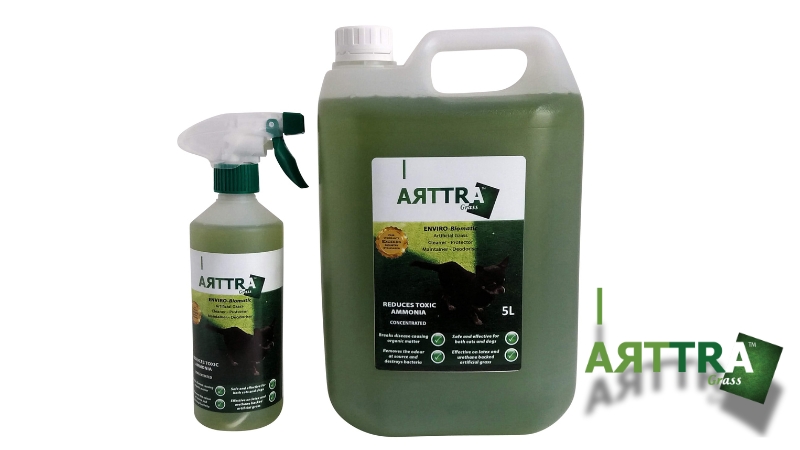
Use a pet-safe enzyme-based artificial grass cleaner.

Enzymes break down:

  • Uric acid crystals
  • Bacteria
  • Organic residue

Avoid bleach or harsh chemicals — they can damage fibres and harm pets.

Step 3: Brush the Fibres

Brushing helps:

  • Lift flattened fibres
  • Improve airflow
  • Prevent moisture trapping

Step 4: Improve Drainage Flow

If water pools after rinsing, your issue is structural — not surface-level.

What NOT to Do

Avoid:

  • Pouring undiluted disinfectant
  • Using pressure washers excessively
  • Masking smell with fragranced sprays
  • Ignoring sub-base issues

Temporary solutions only delay the problem.

When Cleaning Doesn’t Work

If the smell keeps returning after rain or cleaning, it usually means:

  • Urine has soaked into the sub-base
  • The turf backing restricts drainage
  • The base was not installed correctly

In these cases, surface treatment will not solve the issue.

The solution may involve:

  • Lifting sections of turf
  • Replacing the base layer
  • Installing higher drainage backing

How Proper Installation Prevents Smell

A correctly installed dog friendly artificial grass system should include:

  1. Adequate excavation depth
  2. Compacted MOT Type 1 base
  3. Sharp sand levelling
  4. Permeable membrane
  5. High-drainage turf backing

Premium systems like ARTTRAGrass® use advanced bio-backed green backing technology, supporting airflow and vertical drainage.

This drastically reduces the risk of urine stagnation compared to traditional latex-backed turf.

Why Cheap Artificial Grass Smells More

Budget turf often uses:

  • Dense latex backing
  • Limited perforation
  • Poor-quality fibres
  • Weak seam bonding

These materials trap moisture and limit airflow.

Over time, bacteria multiply beneath the surface — especially in multi-dog households.

UK Climate & Artificial Grass Smell

In warmer countries, heat can intensify odour.

In the UK, the main issue is damp conditions slowing evaporation.

That’s why:

  • Proper drainage is essential
  • Sub-base preparation matters
  • Permeable materials outperform sealed systems

Preventing Artificial Grass Dog Urine Smell Long-Term

To prevent future problems:

✔ Rinse High-Use Areas Weekly

✔ Remove Solid Waste Promptly

✔ Use Enzyme Cleaner Monthly

✔ Ensure Proper Drainage During Installation

✔ Choose High-Permeability Turf

Prevention is far easier than correction.

Enzyme Cleaner for Artificial Grass

Is Artificial Grass Always Going to Smell with Dogs?

No.

When:

  • The product is high quality
  • The backing is breathable
  • Installation is professional
  • Drainage is correct

Artificial grass can remain odour-free for years. Pet infills can also help.

Thousands of UK households successfully use dog friendly artificial grass without issues.

When Replacement Is the Best Option

If:

  • The base is saturated with urine
  • The backing is non-permeable
  • Smell returns within days of cleaning

You may need to replace the turf and rebuild the base properly.

When upgrading, choose a system designed specifically for pet use — not decorative garden turf.

Why Many UK Dog Owners Upgrade to ARTTRAGrass®

If you’re experiencing persistent artificial grass dog urine smell, it’s often due to:

  • Outdated latex-backed turf
  • Inadequate drainage
  • Poor installation

ARTTRAGrass® is engineered with:

  • 100% recyclable bio-backed green backing
  • Reduced fossil fuel dependency
  • Improved drainage compatibility
  • Non-toxic construction
  • Availability in 25mm and 35mm

It’s designed specifically for families with pets and children.

Get more information by visiting our Artificial Grass for Dogs service page.

Final Thoughts

Artificial grass dog urine smell is not inevitable.

It’s usually the result of:

  • Poor drainage
  • Cheap materials
  • Installation shortcuts

Fix minor issues with cleaning.

Fix structural issues with better installation.

And if needed — upgrade to a system built for real dog ownership.

Need Expert Advice?

If your artificial lawn smells and you are unsure whether it’s fixable or needs replacing, request a professional assessment.

We will help you determine whether cleaning, drainage correction or full replacement is the best solution.

FAQs: How to Stop Artificial Grass Smelling of Dog Urine

1. Why does my artificial grass smell of dog urine?

Usually due to poor drainage or urine pooling beneath the turf.

2. Can artificial grass smell permanently?

Only if the sub-base is saturated and drainage is inadequate.

3. Does rain remove urine smell?

Rain helps, but proper drainage is more important.

4. What is the best cleaner for artificial grass dog urine?

Pet-safe enzyme cleaners are most effective.

5. Should I use bleach on artificial grass?

No, bleach can damage fibres and harm pets.

6. How often should I rinse artificial grass with dogs?

Weekly for high-use areas.

7. Does pile height affect odour?

Indirectly — shorter piles (25mm) dry faster.

8. Can poor installation cause smell?

Yes, it’s the most common cause.

9. Is eco-friendly artificial grass less likely to smell?

High-quality permeable systems are less prone to odour.

10. When should artificial grass be replaced?

If smell persists despite cleaning and drainage corrections.

GET IN TOUCH

Schedule a Visit

Categories
Dogs

Best Dog Friendly Artificial Grass in the UK (2026 Buyer’s Guide)

Choosing the best dog friendly artificial grass in the UK isn’t just about appearance.

If you own a dog, the wrong product can lead to:

  • Persistent urine odour
  • Poor drainage
  • Fibre flattening
  • Heat retention
  • Premature wear
  • Environmental concerns

This buyer’s guide explains exactly what separates premium dog-friendly turf from decorative synthetic grass — so you can invest with confidence.

What Makes Artificial Grass “The Best” for Dogs?

The best artificial grass for dogs must meet five core criteria:

  1. Non-toxic construction
  2. Superior drainage
  3. Odour resistance
  4. Durability under heavy use
  5. Environmental responsibility

If a product fails any of these, it’s not truly pet-optimised.

1. Safety First: Non-Toxic Materials

Your dog spends hours in the garden — sniffing, rolling, lying down.

Low-quality artificial grass can contain:

  • Petroleum-heavy latex backing
  • Chemical residues
  • Inferior dyes

The best dog friendly artificial grass in the UK uses:

  • Lead-free fibres
  • No harmful infill
  • Safe backing systems
  • Certified materials

Premium options like ARTTRAGrass® are engineered with 100% recyclable bio-backed green backing, reducing fossil fuel dependency and eliminating traditional latex concerns.

2. Drainage: The #1 Performance Factor

Drainage determines whether your lawn smells fresh or becomes a problem.

The best artificial grass for dogs will include:

  • Perforated backing
  • High permeability rate
  • Fast vertical drainage
  • Compatibility with permeable sub-base

Without this, urine pools beneath the surface.

In the UK’s wet climate, proper drainage is non-negotiable.

3. Odour Control: How the Best Turf Prevents Smell

Contrary to myth, artificial grass doesn’t automatically smell.

Odour occurs when:

  • Urine stagnates
  • Bacteria multiply
  • Backing materials trap moisture

The best dog friendly artificial grass supports airflow and drainage, preventing ammonia build-up.

When paired with professional installation, odour issues are rare.

4. Choosing the Right Pile Height (25mm vs 35mm)

25mm – Practical & High Traffic

Best for:

  • Multiple dogs
  • Heavy garden use
  • Dog runs
  • Faster drying
  • Easier cleaning

35mm – Softer & More Natural

Best for:

  • Family gardens
  • Aesthetic focus
  • Mixed use (children + pets)
  • Slightly plusher feel

Both can be excellent — but usage intensity should guide your decision.

Dog Friendly Synthetic Turf

5. Fibre Density & Durability

The best artificial grass for dogs should:

  • Maintain upright fibres
  • Resist matting
  • Recover from zoomies
  • Withstand digging attempts

Look for:

  • High stitch rate
  • Strong backing adhesion
  • UV stability

Cheaper turf often flattens within a few seasons.

6. Eco Credentials: The Future of Artificial Grass

Many UK homeowners now want sustainability alongside performance.

Traditional artificial turf:

  • Relies heavily on fossil fuels
  • Is difficult to recycle
  • Uses petroleum-based latex

Modern eco-friendly artificial grass options, such as ARTTRAGrass®, offer:

  • 100% recyclable bio-backed technology
  • Reduced fossil fuel dependency
  • Lower carbon footprint
  • Circular lifecycle potential

If environmental impact matters to you, this is a key differentiator.

7. Installation: The Hidden Factor

Even the best turf fails with poor installation.

Professional installation ensures:

  • Correct excavation depth
  • Compacted MOT Type 1 base
  • Sharp sand levelling
  • Secure edging
  • Seam bonding

Many complaints about artificial grass smell or lifting come from improper sub-base preparation — not the product itself.

How to Compare Artificial Grass Suppliers in the UK

Before choosing, ask:

  • Is the product non-toxic?
  • What backing system is used?
  • Is it recyclable?
  • What drainage rate does it offer?
  • What warranty is included?
  • Is installation provided in-house?

Transparency is a sign of quality.

Cost of the Best Dog Friendly Artificial Grass in the UK

Expect variation depending on:

  • Area size
  • Ground conditions
  • Product specification
  • Access
  • Waste removal

While premium eco-backed turf costs more upfront, it often lasts longer and performs better — making it better value over time.

Common Mistakes When Choosing Artificial Grass for Dogs

  1. Choosing purely on price
  2. Ignoring drainage specifications
  3. Not asking about backing materials
  4. Overlooking eco impact
  5. Attempting DIY installation without expertise

Cutting corners often leads to odour and premature replacement.

Why ARTTRAGrass® Stands Out in the UK Market

When evaluating the best dog friendly artificial grass UK suppliers, ARTTRAGrass® offers:

  • 100% recyclable bio-backed green backing
  • Non-toxic construction
  • Odour-resistant drainage compatibility
  • Reduced fossil fuel dependency
  • Lower carbon footprint
  • Available in 25mm and 35mm
  • Designed for families with pets and children

It’s engineered not just for aesthetics — but for real dog ownership.

Visit our Artificial Grass for Dogs service page to learn more.

Is Dog Friendly Artificial Grass Worth It?

For many UK dog owners, the benefits include:

  • No mud
  • No burn patches
  • No fertilisers
  • Minimal maintenance
  • Cleaner interiors
  • Long lifespan

For busy households, it often transforms daily life.

Final Checklist Before You Buy

✔ Non-toxic fibres
✔ High drainage backing
✔ 25mm or 35mm suited to usage
✔ Professional installation
✔ Eco credentials verified
✔ Clear warranty

If all boxes are ticked, you’re likely choosing wisely.

Ready to Upgrade?

If you’re comparing the best dog friendly artificial grass in the UK and want:

  • Expert advice
  • Eco-conscious technology
  • Long-term performance
  • Professional installation

Request a free consultation and product recommendation today.

FAQs: Best Dog Friendly Artificial Grass UK

1. What is the best artificial grass for dogs in the UK?

The best options are non-toxic, highly permeable and durable under heavy use, with strong eco credentials.

2. Is more expensive artificial grass better for dogs?

Often yes, as premium products provide better drainage and longer lifespan.

3. Should I choose 25mm or 35mm for dogs?

25mm suits heavy use; 35mm offers a softer aesthetic.

4. How do I avoid artificial grass smelling?

Ensure proper drainage and professional installation.

5. Is eco-friendly artificial grass available in the UK?

Yes, some manufacturers now offer 100% recyclable bio-backed systems.

6. How long does dog friendly artificial grass last?

Typically 10–15+ years.

7. Can artificial grass handle multiple dogs?

Yes, if fibre density and drainage are adequate.

8. Is installation included?

Many reputable suppliers offer full installation services.

9. Does artificial grass need infill for dogs?

Most modern systems do not require crumb rubber infill.

10. Is artificial grass better than natural turf for pets?

For mud prevention and durability, many UK dog owners prefer it.

GET IN TOUCH

Schedule a Visit

Categories
Dogs

The Ultimate Guide to Dog Friendly Artificial Grass (UK 2026 Edition)

If you are researching dog friendly artificial grass, you’re likely dealing with one (or more) of these problems:

  • Muddy paws destroying your floors
  • Yellow urine burn patches across your lawn
  • Constant reseeding and fertilising
  • Smells lingering in warm weather
  • A garden that looks worn out and patchy

You’re not alone.

Across the UK, more dog owners are replacing natural turf with modern artificial systems designed specifically for pets. But here’s the critical part:

Not all artificial grass is genuinely dog friendly.

This guide explains everything UK dog owners need to know before investing — from safety and drainage to pile height, environmental impact and long-term value.

What Does “Dog Friendly Artificial Grass” Actually Mean?

This term gets used loosely in the industry.

True dog friendly artificial grass must:

  • Be non-toxic
  • Drain urine quickly
  • Resist odour build-up
  • Withstand high traffic
  • Be easy to clean
  • Stay stable under digging pressure
  • Remain safe in UK weather conditions

If it fails in any of these areas, it’s simply decorative turf — not pet-engineered lawn.

Is Artificial Grass Safe for Dogs in the UK?

This is the most common concern for responsible pet owners.

The Safety Factors That Matter

A dog safe artificial lawn should include:

  • Lead-free yarn fibres
  • No harmful chemical coatings
  • No crumb rubber infill
  • Proper drainage backing
  • Stable installation

High-quality systems such as ARTTRAGrass® are built using a 100% recyclable bio-backed green backing, reducing fossil fuel reliance and eliminating traditional latex concerns.

Unlike natural lawns, artificial turf also removes exposure to:

  • Fertilisers
  • Weed killers
  • Moss treatments
  • Pesticides

For many UK families, artificial grass is actually the safer option.

The Biggest Concern: Artificial Grass & Dog Urine Smell

Let’s address this honestly.

Yes — artificial grass can smell.

But only when:

  • Drainage is poor
  • Installation is incorrect
  • Cheap latex backing is used
  • Sub-base preparation is inadequate

Why Odour Happens

Dog urine contains ammonia. When urine sits beneath turf without proper drainage, bacteria multiply, causing smell.

How Proper Systems Prevent It

A genuinely dog friendly system includes:

  • Perforated backing
  • Permeable sub-base
  • Fast vertical drainage
  • Airflow beneath the turf

When installed correctly, urine drains away rather than pooling.

In UK climates, regular rainfall also assists natural rinsing.

Natural Grass vs Dog Friendly Artificial Grass

Let’s compare practically.

Natural Grass Problems in the UK

  • Mud for 6+ months of the year
  • Waterlogged lawns
  • Yellow burn patches
  • Constant reseeding
  • Slippery surfaces
  • Digging damage

Dog Friendly Artificial Grass Benefits

  • Mud-free all year
  • No bald patches
  • Minimal maintenance
  • Fast drainage
  • Clean paws
  • Consistent appearance

For multi-dog households, the difference is dramatic.

Choosing the Right Pile Height for Dogs

Pile height affects both aesthetics and practicality.

25mm Artificial Grass

Best for:

  • Heavy dog use
  • Dog runs
  • Multiple dogs
  • Easier cleaning
  • Faster drying

It’s practical and durable.

35mm Artificial Grass

Best for:

  • Family gardens
  • Softer underfoot feel
  • Natural lawn appearance
  • Mixed use (children + pets)

Both options work — the right choice depends on usage intensity.

Drainage: The Most Important Factor

If you remember only one thing from this guide, let it be this:

Drainage determines success.

Proper dog friendly artificial grass installation in the UK requires:

  1. Excavation to correct depth
  2. Compacted MOT Type 1 sub-base
  3. Sharp sand levelling layer
  4. Permeable membrane
  5. High-drainage turf backing

Without this structure, even premium turf can fail.

Eco Friendly Dog Friendly Artificial Grass

Sustainability is now a major consideration for UK homeowners.

Traditional artificial turf relies heavily on petroleum-based latex backings and is often difficult to recycle.

What Makes Modern Turf Eco-Conscious?

  • Bio-based backing systems
  • Reduced fossil fuel dependency
  • 100% recyclability
  • Lower carbon footprint
  • Longer lifespan (reduces replacement waste)

ARTTRAGrass® features pioneering bio-backed technology that drastically reduces fossil fuel reliance compared to traditional synthetic turf.

For families who care about both pets and the planet, this is a major differentiator.

Does Artificial Grass Get Too Hot for Dogs?

In direct sun, all artificial surfaces warm up.

However, in the UK:

  • Extreme temperatures are rare
  • Cloud cover reduces exposure
  • Light watering cools instantly

Modern fibres are also engineered to reduce heat retention compared to older products.

Maintenance Guide for UK Dog Owners

Dog friendly artificial grass is low maintenance — not no maintenance.

Weekly

  • Remove solid waste
  • Hose high-use areas
  • Brush fibres occasionally

Monthly

  • Check edges
  • Inspect drainage areas
  • Use pet-safe enzyme cleaner if needed

Compared to mowing, feeding and reseeding natural lawns, upkeep is minimal

Enzyme Cleaner for Artificial Grass

Preventing Dogs from Digging

Dogs dig for instinct, scent or boredom.

Professional installation prevents lifting:

  • Secure edge restraints
  • Fully compacted base
  • Bonded seams
  • No exposed edges

Once installed correctly, most dogs quickly adapt.

Artificial Grass for Multiple Dogs

Higher traffic requires:

  • Dense fibre construction
  • Superior drainage
  • Slightly shorter pile height (often 25mm preferred)
  • More regular rinsing

For breeders or homes with several dogs, installation quality becomes even more critical.

How Long Does Dog Friendly Artificial Grass Last?

With proper installation in UK conditions:

  • 10–15+ years lifespan
  • Stable drainage
  • Strong fibre resilience

Longevity depends on:

  • Product quality
  • Sub-base preparation
  • Usage intensity
  • Maintenance routine

Cheaper products often fail within 5–7 years

Cost of Dog Friendly Artificial Grass in the UK

Pricing varies depending on:

  • Garden size
  • Access
  • Ground preparation
  • Waste removal
  • Turf specification
  • Installation complexity

While upfront investment is higher than reseeding, long-term savings include:

  • No fertilisers
  • No watering
  • No mowing
  • No lawn repairs
  • No mud damage indoors

For many households, it becomes cost-effective over time.

Explore how much artificial grass costs for dogs in the UK.

Common Myths About Dog Friendly Artificial Grass

“It always smells.”

Only when poorly installed.

“It’s bad for dogs.”

Non-toxic systems are completely safe.

“It’s bad for the environment.”

Modern recyclable bio-backed turf dramatically reduces impact.

“Dogs won’t use it.”

Most adapt immediately.

Who Should Consider Dog Friendly Artificial Grass?

It’s ideal for:

  • Urban homes
  • Busy families
  • Multi-dog households
  • Rental properties
  • Breeders
  • Homes with children and pets

Why Many UK Families Choose ARTTRAGrass®

When comparing options, ARTTRAGrass® stands out because it combines:

  • 100% recyclable bio-backed green backing
  • Non-toxic construction
  • Odour-resistant drainage support
  • Reduced fossil fuel dependency
  • Lower carbon footprint
  • Availability in 25mm and 35mm
  • Designed for families with pets and children

This isn’t just synthetic turf.

It’s next-generation sustainable lawn technology built for real UK homes.

Learn how our products help you on our Artificial Grass for Dogs service page.

Dog Friendly Artificial Grass

Internal Next Steps

If you’re still researching, explore:

  • Artificial grass for dogs installation
  • 25mm vs 35mm artificial grass comparison
  • How to stop artificial grass smelling of dog urine
  • Eco friendly artificial grass explained

If you’re ready to transform your garden:

Request a free quote for dog friendly artificial grass installation today.

Frequently Asked Questions

1. Is dog friendly artificial grass safe for long-term use?

Yes, when manufactured using non-toxic materials and installed correctly.

2. How do you stop artificial grass smelling of dog urine?

Ensure proper drainage during installation and rinse regularly.

3. What pile height is best for dogs?

25mm for heavy use; 35mm for softer family gardens.

4. Does artificial grass get too hot in the UK?

Rarely excessively. Water cools it quickly.

5. Is artificial grass better than natural grass for dogs?

For mud prevention and durability, many UK owners prefer it.

6. Can puppies use artificial grass?

Yes, it’s suitable during toilet training.

7. How long does dog friendly artificial grass last?

Typically 10–15+ years.

8. Is eco friendly artificial grass recyclable?

Some advanced systems are 100% recyclable.

9. Will dogs dig it up?

Not when professionally installed.

10. Does it require special cleaning?

Only simple rinsing and occasional enzyme treatment.

GET IN TOUCH

Schedule a Visit

Categories
Residential

Luxury Home Golf Installations UK

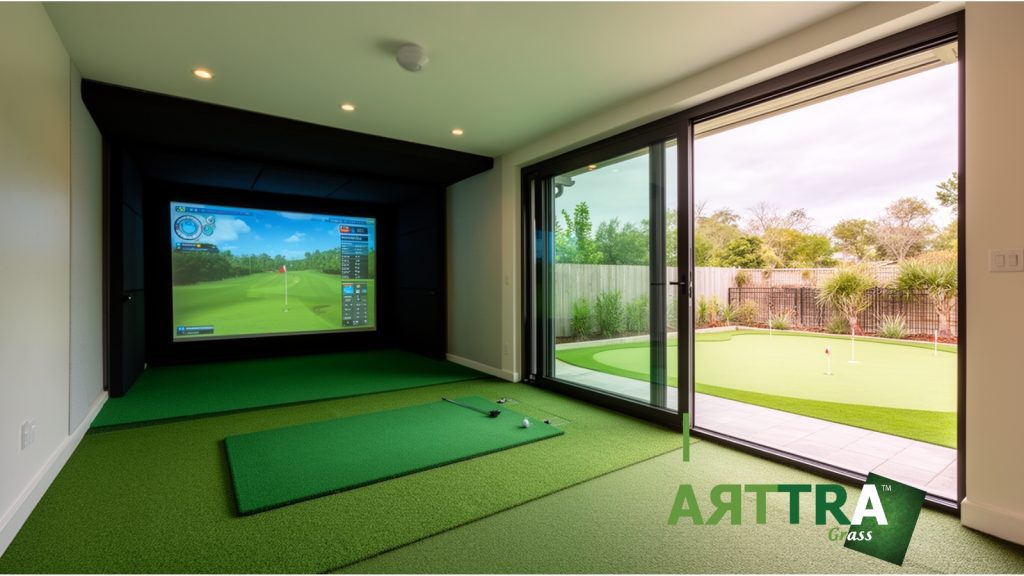
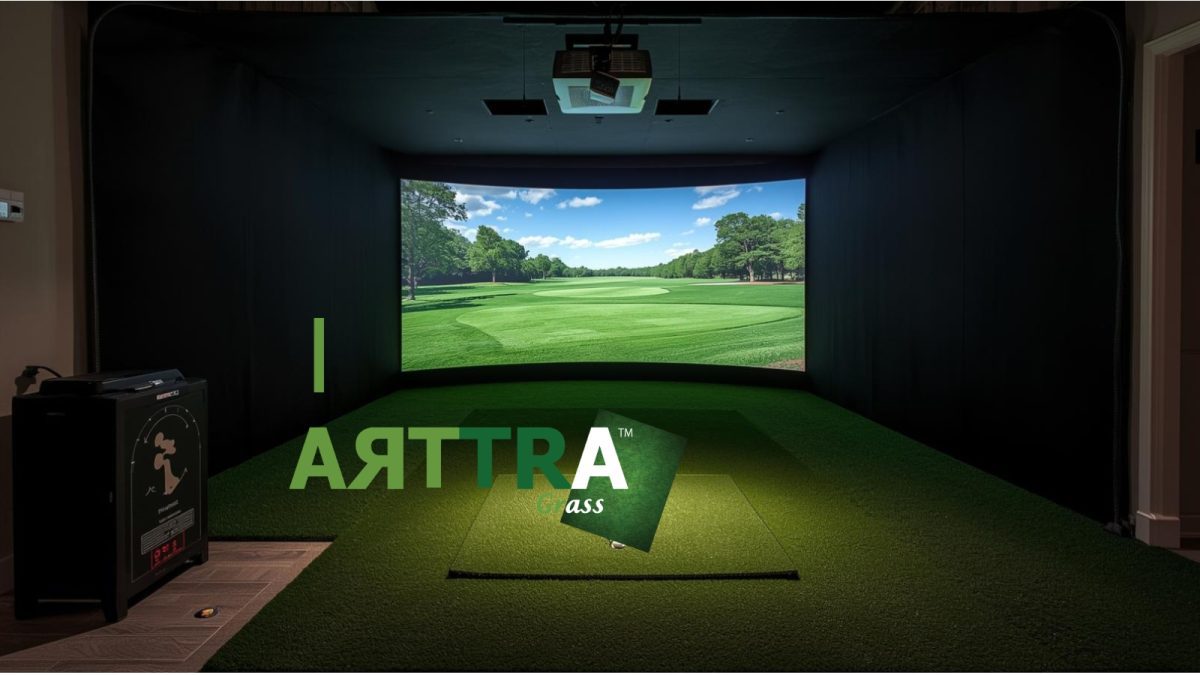
Luxury Home Golf Installations UK require more than simply fitting a simulator into an available room. They demand structural planning, acoustic control, precise swing-clearance design and seamless integration with the property’s architecture.

Whether you’re considering converting an existing space into a home golf studio or investing in a purpose-built simulation cabin, the right solution depends on performance expectations, available space and long-term property goals.

Luxury home design is no longer limited to kitchens, cinemas and swimming pools. Today, high-end UK homeowners are investing in something more personal: Private golf environments.

From championship-style backyard putting greens to fully immersive golf simulation cabins, luxury home golf installations combine performance, prestige and lifestyle.

Let us explore what defines a premium installation — and how to design one properly.

What Defines a Luxury Home Golf Installation?

Not every putting green or simulator qualifies as “luxury.”

A true luxury installation includes:

  • Professional sub-base engineering
  • Premium turf systems
  • Architectural integration
  • Bespoke structural design
  • High-spec AV and launch monitor systems
  • Integrated lighting & acoustics
  • Long-term durability

Luxury is not about adding equipment.

It’s about creating a designed golf environment.

The Three Core Luxury Install Types

1. Bespoke Outdoor Putting Greens

High-end outdoor installations often include:

  • Complex contour shaping
  • Multiple pin positions
  • Fringe integration
  • Stone or timber edging
  • Landscape blending
  • Advanced drainage systems

Typical size range:

25m² – 60m²+

Premium installations may also incorporate:

  • Chipping areas
  • Bunker-style features
  • Elevated tiers

These projects are engineered beneath the surface — not just visually attractive.

For a full breakdown and additional information, visit our Artificial Putting Green Installation Service page.

2. Golf Simulation Cabins

Luxury indoor golf spaces include:

  • Fully insulated garden cabins
  • Architectural garage conversions
  • Basement golf rooms
  • Integrated climate control
  • Professional enclosure systems
  • High-lumen projection
  • Acoustic wall treatment

Budget range:

£30,000 – £100,000+

These are immersive, permanent structures.

Find out more about simulators by visiting our Golf Simulation Cabin Installation UK page. Alternatively, you may visit the Garden Golf Simulator Room Cost UK page for a full breakdown of cost.

3. Integrated Indoor–Outdoor Golf Ecosystems

The most exclusive installations combine:

  • Outdoor artificial putting green
  • Indoor simulation cabin
  • Unified design language
  • Cohesive landscaping
  • Smart lighting integration

This creates a complete private golf environment.

These projects represent the highest tier of residential golf design.

Luxury Home Golf Installations UK

Why Luxury Installations Require Specialist Design

High-end golf builds demand:

  • Structural assessment
  • Soil and drainage evaluation
  • Ceiling clearance analysis
  • Swing envelope mapping
  • Equipment compatibility planning
  • Electrical load consideration
  • Acoustic modelling

Mistakes at this level are expensive.

Luxury projects require coordinated planning — not off-the-shelf kits.

Space Planning for Premium Homes

For indoor installations:

Recommended dimensions:

  • 3m+ ceiling height
  • 3m+ width
  • 5m+ depth

For outdoor greens:

  • Proportionally integrated within landscaping
  • Proper run-off and drainage design
  • Visual symmetry

Architectural balance is essential.

Cost Expectations for Luxury Home Golf Installations UK

Investment varies significantly based on complexity.

High-End Outdoor Putting Green

£12,000 – £40,000+

Premium Golf Simulation Cabin

£30,000 – £100,000+

Fully Integrated Luxury Golf Environment

£50,000 – £150,000+

Factors influencing cost:

  • Structural build
  • AV specification
  • Launch monitor selection
  • Contour complexity
  • Landscaping integration
  • Acoustic engineering

Luxury projects are custom — not templated.

Property Value & Market Positioning

In premium property markets:

  • Distinctive lifestyle features increase desirability
  • Unique recreational spaces differentiate listings
  • Golf environments signal exclusivity

While surveyors may not assign fixed uplift, these installations:

  • Enhance property perception
  • Strengthen buyer engagement
  • Support premium positioning

Luxury features are emotional drivers in high-value sales.

Who Invests in Luxury Home Golf Installations?

Typical clients include:

  • Serious amateur golfers
  • Business owners
  • High-net-worth homeowners
  • Property developers
  • Golf club members seeking private practice

These clients prioritise:

  • Quality
  • Longevity
  • Design integration
  • Performance accuracy

Launch Monitor Considerations at Luxury Level

Premium installations may incorporate:

  • Overhead tracking systems
  • Radar-based launch monitors
  • Multi-camera ball tracking

These systems provide:

  • Spin rate
  • Launch angle
  • Ball speed
  • Club path
  • Impact metrics

Technology selection influences overall build design.

Acoustic & Lighting Design

Luxury environments require:

  • Controlled lighting angles
  • Shadow minimisation
  • Ambient mood lighting
  • Acoustic wall absorption
  • Sound containment

Comfort and atmosphere matter as much as performance.

Maintenance & Longevity

Luxury outdoor greens:

  • 12–15+ year lifespan
  • Minimal upkeep
  • Engineered drainage

Luxury cabins:

  • Structural durability
  • Upgradeable technology
  • Long-term usability

High-quality installation ensures minimal future disruption.

Planning Permission & Compliance

Most internal conversions:

  • Do not require planning permission

Garden cabins may require:

Regulatory guidance should form part of the early planning stage.

The ARTTRAGrass® Approach to Luxury Installations

We deliver:

  • Turnkey design
  • Structural planning
  • Surface engineering
  • Simulator integration
  • Project management

We coordinate:

  • Builders
  • Electricians
  • AV specialists
  • Landscaping teams

Luxury projects require unified execution.

Is a Luxury Home Golf Installation Right for You?

It may be suitable if you:

  • Value premium lifestyle features
  • Play regularly
  • Entertain guests
  • Own a high-value property
  • Plan long-term home ownership

It may not be suitable if:

  • Budget is constrained
  • Space is severely limited
  • Golf is occasional hobby

Luxury installations are commitments — not experiments.

FAQs – Luxury Home Golf Installations UK

1. How much does a luxury home golf installation cost?

Typically between £30,000 and £150,000+ depending on scope.

2. Can I combine indoor and outdoor golf features?

Yes, integrated projects are common in high-end homes.

3. What ceiling height is required for a simulator?

3 metres is ideal for unrestricted swing.

4. Do luxury golf installations increase property value?

They can enhance desirability in premium markets.

5. How long does a full installation take?

4–8 weeks depending on structural complexity.

6. Are launch monitors included?

They are selected and integrated based on budget and performance goals.

7. Is soundproofing included?

Yes, acoustic treatment is essential in premium builds.

8. Do outdoor greens require much maintenance?

No, artificial systems are low maintenance.

9. Can architects be involved?

Yes, collaboration with architects is common in luxury projects.

10. Is this suitable for commercial luxury developments?

Yes, developers use golf environments to differentiate high-end properties.

GET IN TOUCH

Schedule a Visit

Categories
Commercial Residential

Home Golf Studio vs Golf Simulation Cabin: Which Is Right for You?

If you’re comparing home golf studio vs golf simulation cabin, you’re likely serious about creating a dedicated indoor golf environment.

But these two setups are not the same.

While both allow all year round golf practice, they differ significantly in:

  • Cost
  • Structure
  • Immersion
  • Property impact
  • Long-term value
  • Installation complexity

This guide breaks down the differences clearly so you can choose the right solution for your home and budget.

What Is a Home Golf Studio?

A home golf studio is typically:

  • A converted indoor space
  • Installed within an existing room
  • Equipped with a launch monitor
  • Fitted with a hitting mat and net or screen

Most home golf studios are created in:

  • Garages
  • Spare rooms
  • Basements
  • Garden rooms

They focus primarily on practice and data tracking, rather than immersive build quality.

Typical Features of a Home Golf Studio

  • Launch monitor
  • Basic impact net or screen
  • Projector (optional)
  • Hitting mat
  • Minimal structural alteration

It’s often modular and can be partially DIY.

What Is a Golf Simulation Cabin?

A golf simulation cabin is a purpose-built, structurally designed golf environment.

It may include:

  • A standalone garden cabin
  • A fully insulated converted garage
  • A bespoke structural build
  • Acoustic treatment
  • Professional enclosure systems
  • Integrated lighting and projection

It is engineered for:

  • Immersion
  • Safety
  • Aesthetics
  • Longevity
  • Property enhancement

This is not just a simulator setup — it’s a permanent installation.

Core Differences at a Glance

FeatureHome Golf StudioGolf Simulation Cabin
Build TypeConverted spacePurpose-built structure
InstallationModular / partial DIYProfessional full build
Cost£5,000 – £25,000£15,000 – £100,000+
ImmersionModerateHigh
SoundproofingLimitedIntegrated
Property ImpactMinimalPremium feature
LongevityDependent on setupLong-term installation

1. Cost Comparison

Home Golf Studio Costs

  • Entry-level setup: £5,000 – £10,000
  • Mid-range setup: £10,000 – £20,000
  • Higher-end studio: £20,000 – £25,000

These costs typically cover equipment, not structural build.

Golf Simulation Cabin Costs

  • Garage conversion cabin: £15,000 – £25,000
  • Garden cabin build: £25,000 – £60,000
  • Luxury bespoke installation: £60,000 – £100,000+

This includes structural work, insulation, professional installation and integrated systems.

Cost Verdict

Studios are cheaper.
Cabins are a premium investment.

But cost alone doesn’t determine value.

Visit the Garden Golf Simulator Room Cost UK page for a full breakdown of cost.

2. Space & Structural Requirements

Home Golf Studio

Can function in:

  • 2.5m ceiling height (tight but workable)
  • Smaller room footprints
  • Existing residential layouts

Often compromises exist on swing clearance.

Golf Simulation Cabin

Recommended minimum:

  • 2.7m – 3m ceiling height
  • 3m+ width
  • 4.5m+ depth

Built specifically around swing geometry and safety.

Structural planning ensures optimal experience.

3. Immersion & Experience

Home Golf Studio Experience

  • Functional
  • Data-driven
  • Less immersive
  • Visible room edges
  • Potential sound echo

Ideal for pure practice.

Golf Simulation Cabin Experience

  • Enclosed immersive screen
  • Controlled lighting
  • Professional acoustic treatment
  • Clean visual finish
  • Premium feel

Feels closer to a commercial indoor golf venue.

Immersion matters for enjoyment and resale appeal.

4. Sound & Acoustic Control

Ball strike noise can be significant.

Studio

  • Basic insulation
  • Potential noise leakage
  • May disturb adjacent rooms

Cabin

  • Insulated wall systems
  • Acoustic panels
  • Impact absorption
  • Reduced reverberation

If installed in residential areas, cabins offer superior noise control.

5. Safety & Durability

Studio Setup Risks

  • Net rebound risk
  • Wall impact exposure
  • Limited enclosure protection
  • Wear on domestic walls

Cabin Setup

  • Professional enclosure system
  • Designed rebound control
  • Reinforced structural surfaces
  • Safer long-term usage

This is particularly important for high ball speeds.

6. Installation Complexity

Home Golf Studio

  • Can be partially DIY
  • Modular equipment
  • Less structural modification

Lower barrier to entry.

Golf Simulation Cabin

  • Requires design planning
  • Structural assessment
  • Electrical integration
  • Lighting configuration
  • Professional installation

Higher upfront involvement, better long-term execution.

7. Property Value Impact

This is where the difference becomes significant.

Home Golf Studio

  • Seen as removable equipment
  • Limited valuation impact
  • Similar to high-end gym equipment

Golf Simulation Cabin

  • Permanent structural feature
  • Lifestyle enhancement
  • Premium property differentiator
  • Stronger appeal in high-value homes

Cabins can influence buyer perception in upper markets.

8. Who Should Choose a Home Golf Studio?

A studio may be right if you:

  • Want data tracking without major build
  • Have limited space
  • Prefer lower upfront investment
  • Value portability
  • Are testing long-term commitment

Studios are excellent for entry and mid-level golfers.

9. Who Should Choose a Golf Simulation Cabin?

A cabin is ideal if you:

  • Play regularly
  • Want immersive realism
  • Value design aesthetics
  • Own a premium property
  • Plan long-term use
  • May combine with outdoor putting green

It’s a lifestyle investment. Want to know more? Read our Golf Simulation Cabin Installation UK article.

10. Long-Term Value Perspective

Over 10+ years:

  • A studio may require equipment replacement
  • A cabin remains a structural asset
  • Equipment can be upgraded within cabin shell
  • The cabin maintains aesthetic value

Cabins offer better scalability.

Hybrid Approach: Studio Inside a Cabin

Some clients start with a basic setup inside a professionally built cabin shell.

This allows:

  • Gradual equipment upgrades
  • Structural readiness
  • Controlled environment

It’s often the most strategic long-term approach.

Final Verdict: Home Golf Studio vs Golf Simulation Cabin

Choose a Home Golf Studio if:

  • Budget is primary concern
  • You want a flexible setup
  • Immersion is secondary

Choose a Golf Simulation Cabin if:

  • You want a premium experience
  • Property impact matters
  • Long-term value is important
  • You want full integration

Both serve different purposes.

The right choice depends on ambition, budget and property context.

You may also want to learn more about our Artificial Grass Putting Green Installation service.

FAQs – Home Golf Studio vs Golf Simulation Cabin

1. Is a golf simulation cabin worth the extra cost?

For serious golfers and premium homes, yes.

2. Can I upgrade a home studio later?

Yes, but structural limitations may remain.

3. Which requires more space?

Cabins typically require more dedicated space.

4. Are cabins safer?

Yes, due to professional enclosure systems.

5. Do studios require planning permission?

Generally no.

6. Do cabins require planning permission?

Standalone cabins may require checks.

7. Which adds more property value?

Cabins typically offer stronger lifestyle appeal.

8. Can both use the same launch monitor?

Yes, equipment can be similar.

9. Is soundproofing necessary?

Highly recommended for both, especially cabins.

10. Which is better for commercial use?

Golf simulation cabins are more suitable.

GET IN TOUCH

Arrange a Quotation