Categories
Education

How Much Does Artificial Grass Cost for Schools?

2026 Pricing Guide for Educational Settings

One of the first questions schools ask is: “How much does artificial grass cost?”

The honest answer?

It depends.

Costs vary based on:

  • Area size
  • Ground preparation
  • Drainage requirements
  • Usage level
  • Accessibility needs
  • Location

This guide breaks down realistic pricing ranges for UK schools and explains what influences your final investment.

Quick Cost Overview (UK Schools)

For most educational installations, artificial grass typically costs:

£55 – £95 per square metre (fully installed)

This range includes:

  • Ground preparation
  • Sub-base construction
  • Artificial grass supply
  • Installation labour
  • Finishing and edge detailing

Larger projects often benefit from lower per-square-metre costs.

Smaller projects may sit at the higher end due to fixed setup costs.

Typical School Project Examples

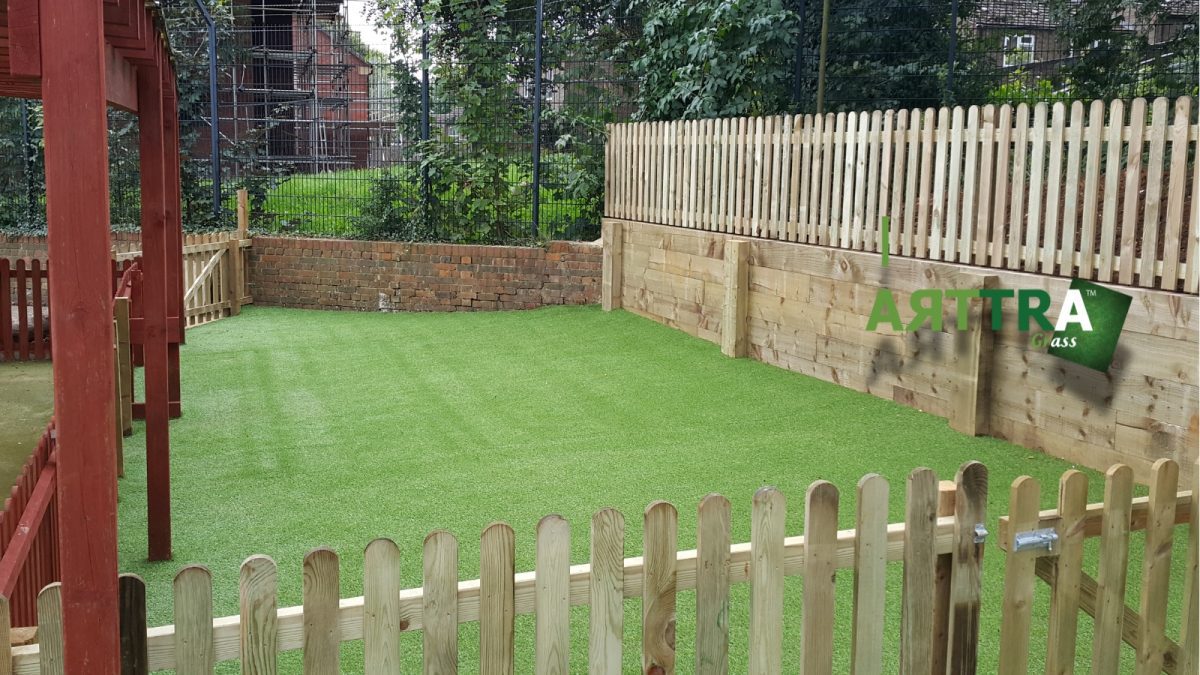
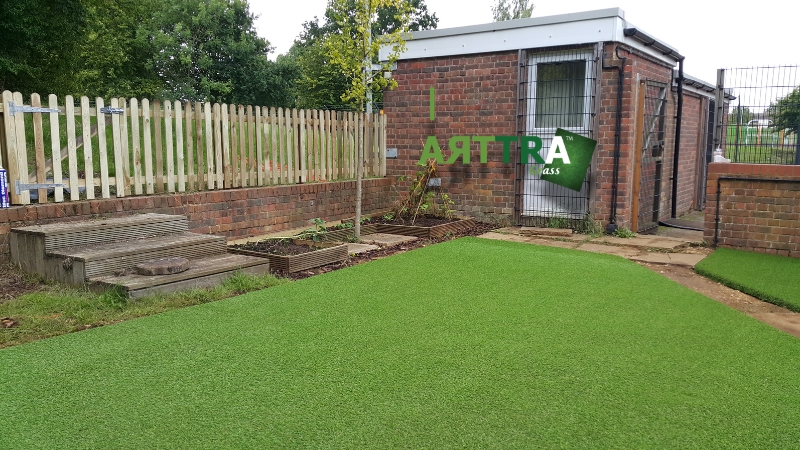
Small Nursery Play Area (50–100sqm)

Estimated total:
£3,000 – £8,500

Ideal for:

  • Early years settings
  • Compact outdoor classrooms
  • Sensory areas

Primary School Playground (200–400sqm)

Estimated total:
£11,000 – £34,000

Commonly installed to eliminate mud and increase year-round access.

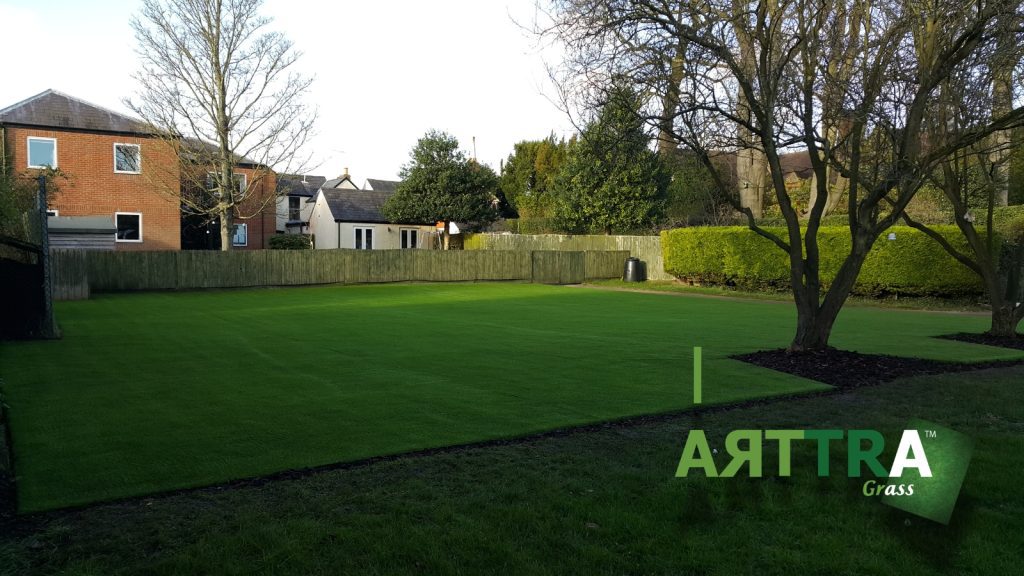
For example, Winchester House School installed approximately 400sqm to resolve ongoing mud disruption.

Larger School Courtyard or Multi-Use Area (500sqm+)

Estimated total:
£27,500 – £47,500+

Economies of scale may reduce per-sqm cost slightly on larger areas.
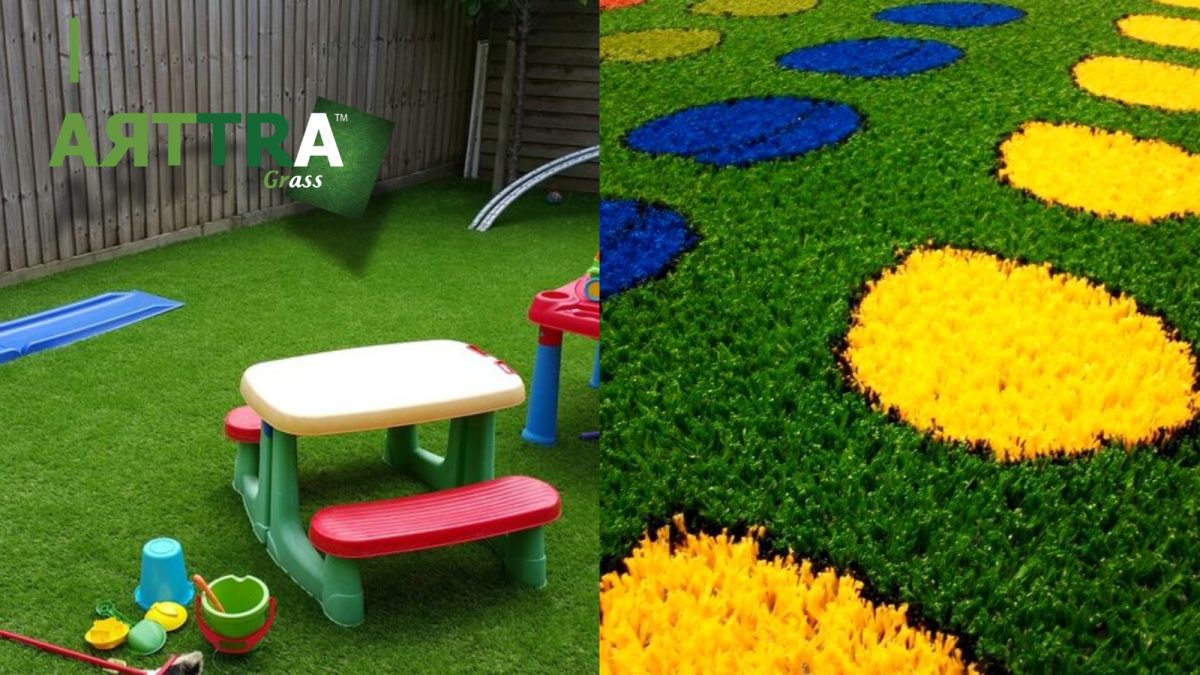
Nursery School Artificial Grass Cost

What Affects the Cost of Artificial Grass for Schools?

Understanding pricing variables helps you budget accurately.

1. Ground Preparation

The largest cost factor is often what lies beneath.

If your current surface is:

  • Worn natural grass
  • Uneven
  • Poorly draining
  • Waterlogged

It may require:

  • Excavation
  • New sub-base
  • Compaction
  • Drainage improvements

If installing over an existing stable surface (such as properly prepared concrete), costs may reduce.

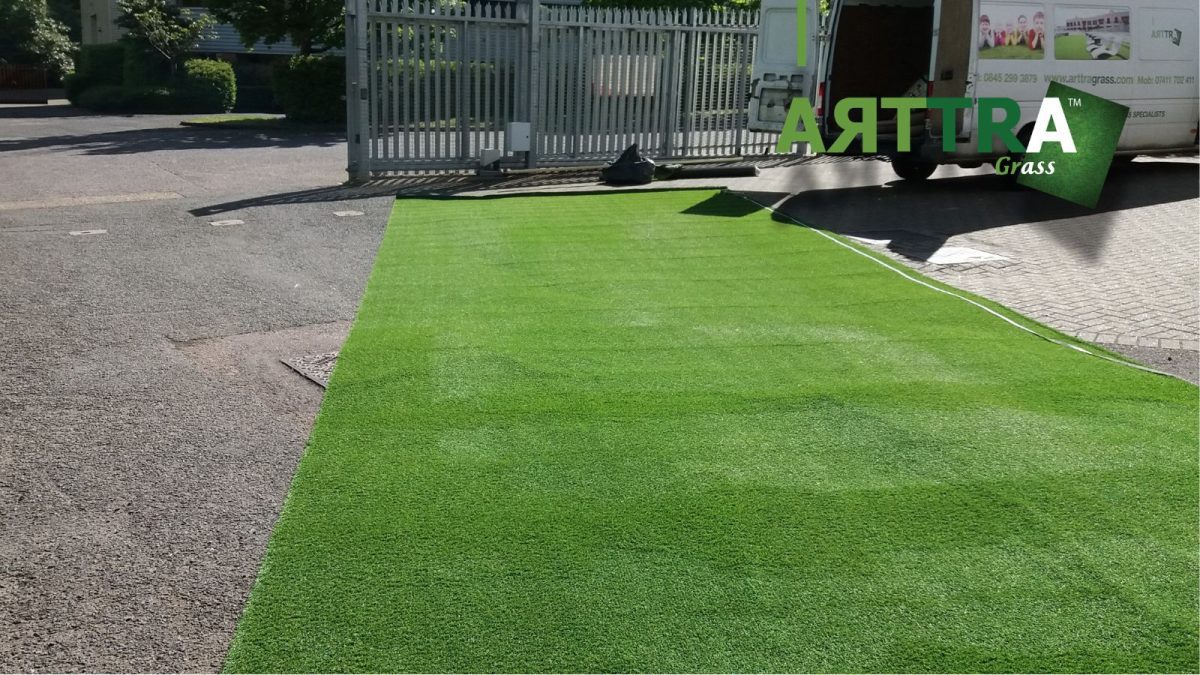
For example, a temporary installation was delivered at Francis Holland School directly over hard surfaces for a sports event.

2. Area Size

Bigger areas generally reduce cost per square metre.

Smaller areas may cost more per sqm due to:

  • Fixed labour mobilisation
  • Equipment setup
  • Waste removal

3. Pile Height & Product Specification

School artificial grass typically ranges between:

  • 20mm – 30mm for playgrounds
  • 25mm – 35mm for multi-use areas

Higher specification systems with enhanced durability or bio-backed materials may increase material cost.

4. Drainage Requirements

Schools often require:

  • Free-draining sub-base
  • Permeable membranes
  • Proper edge detailing

Poor drainage design leads to long-term problems — so this should never be compromised to reduce cost.

5. Shockpads & Safety Layers

Where additional fall protection is required (for example under play equipment), shock-absorbing underlays may be specified.

This increases cost but improves safety compliance.

6. Accessibility Considerations

For SEN environments or wheelchair-accessible areas, additional preparation and levelling may be required.

These adjustments affect installation time and material usage.

Is Artificial Grass Cheaper Than Natural Grass?

Upfront:
No. Natural grass is cheaper to install initially.

Long term:
Often yes.

Natural grass requires ongoing:

  • Mowing
  • Reseeding
  • Fertilising
  • Pest control
  • Irrigation
  • Grounds staff time

Additionally, many schools underestimate:

  • Cleaning costs from mud
  • Caretaker overtime
  • Corridor maintenance
  • Seasonal area closures

Artificial grass eliminates most of these recurring costs.

Over 8–15 years, lifetime cost comparisons often favour artificial grass in high-use school environments

How Long Does Artificial Grass Last in Schools?

Typical lifespan:

8 – 15 years

Depending on:

  • Usage levels
  • Installation quality
  • Maintenance
  • Footfall concentration

This means the annualised cost can be significantly lower than the headline installation figure suggests.

Hidden Costs Schools Often Overlook

When evaluating natural grass vs artificial grass, schools should consider:

  • Lost teaching time due to weather closures
  • Cleaning staff hours
  • Damage to indoor flooring from mud
  • Parent complaints
  • Negative first impressions during inspections

Artificial grass helps stabilise these operational variables.

Can Schools Finance Artificial Grass?

Many schools fund installations through:

  • Capital improvement budgets
  • PTA fundraising
  • Academy trust investment
  • Phased area installations
  • Summer project planning

Breaking a large playground into staged phases can make budgeting more manageable.

Temporary Artificial Grass Costs

For short-term events (sports days, open days, graduations), temporary artificial grass hire is also available.

Costs depend on:

  • Duration
  • Surface type
  • Installation complexity
  • Area size

Temporary installations are typically quoted individually due to logistics.

Return on Investment (ROI)

When evaluating ROI, schools should consider:

  • Reduced cleaning labour
  • Reduced grounds maintenance
  • Increased all year round usability
  • Enhanced presentation
  • Improved accessibility

The value is not purely financial — it is operational.

FAQs: How Much Does Artificial Grass Cost for Schools?

1. How much does artificial grass cost per square metre for schools?

Typically £55–£95 per square metre fully installed, depending on specification and preparation requirements.

2. Is artificial grass more expensive than natural grass?

Upfront, yes. Long-term, it can be more cost-effective in high-footfall environments.

3. What is the cheapest artificial grass option for schools?

Lower pile-height systems with minimal groundwork sit at the lower end of the pricing range.

4. How long does installation take?

Most school projects take between 3–10 working days depending on size and preparation needs.

5. Does artificial grass reduce maintenance costs?

Yes. It eliminates mowing, reseeding and most grounds maintenance requirements.

6. Can artificial grass be installed during school holidays?

Yes. Many schools schedule installation during half terms or summer breaks.

7. Does artificial grass add value to a school?

It can enhance presentation, usability and accessibility, which positively impacts perception and operations.

8. Is artificial grass suitable for nurseries?

Yes. It is commonly installed in early years settings to improve hygiene and reduce mud.

9. Can artificial grass be installed in phases?

Yes. Larger playgrounds can be divided into staged installations.

10. How do we get an accurate quote?

A site survey is required to assess ground conditions, drainage and project scope.

In a Nutshell

Artificial grass for schools is an investment.

The exact cost depends on your site conditions, specification and objectives.

For high-footfall playgrounds where mud, maintenance and disruption are ongoing problems, artificial grass often provides long-term value and operational stability.

A professional site assessment is the only way to obtain an accurate, tailored quotation. Find out the different types of Artificial Grass for Schools on our service page.

GET IN TOUCH
Schedule a Visit

Categories
Education

Artificial Grass vs Natural Grass for Schools

Artificial grass vs natural grass for schools; Which is the better long-term investment? Choosing the right outdoor surface for a school is not just about appearance.

It affects:

  • Safety
  • Maintenance budgets
  • Cleaning costs
  • Accessibility
  • All year round usability
  • Staff workload
  • Parent perception

For many schools, the debate comes down to one question:

Artificial grass or natural grass?

This guide provides a balanced, practical comparison to help headteachers, bursars and estates managers make an informed decision.

Quick Comparison Overview

FactorArtificial GrassNatural Grass
Year-round usability✅ All weather❌ Restricted in winter
Mud control✅ Eliminates mud❌ High risk
Maintenance✅ Low❌ High
Upfront costHigherLower
Long-term costPredictableOngoing + rising
AccessibilityExcellentVariable
Lifespan8–15 yearsContinuous upkeep

Now let’s explore this properly.

1. All Year Round Usability

Natural Grass

Natural grass struggles under:

  • Heavy footfall
  • Compacted soil
  • Winter rainfall
  • Limited recovery time

In school environments, grass rarely gets time to regenerate.

Wet weather often means:

  • Play areas closed
  • Break times restricted
  • Mud forming
  • Increased indoor congestion

Artificial Grass

Artificial grass provides:

  • Consistent drainage
  • No soil erosion
  • No recovery time needed
  • Immediate usability after rainfall

For high-footfall school environments, this consistency is often the deciding factor.

2. The Mud Problem

Mud is not just a cosmetic issue.

It leads to:

  • Dirty classrooms
  • Increased cleaning hours
  • Slippery corridors
  • Lost learning time
  • Higher caretaker workload

Many schools move to artificial grass specifically to eliminate mud transfer.

One example is Winchester House School, where a 400sqm artificial grass installation significantly reduced muddy classroom disruption.

Natural grass simply cannot prevent soil transfer in wet conditions.

Artificial grass eliminates the source of mud entirely.

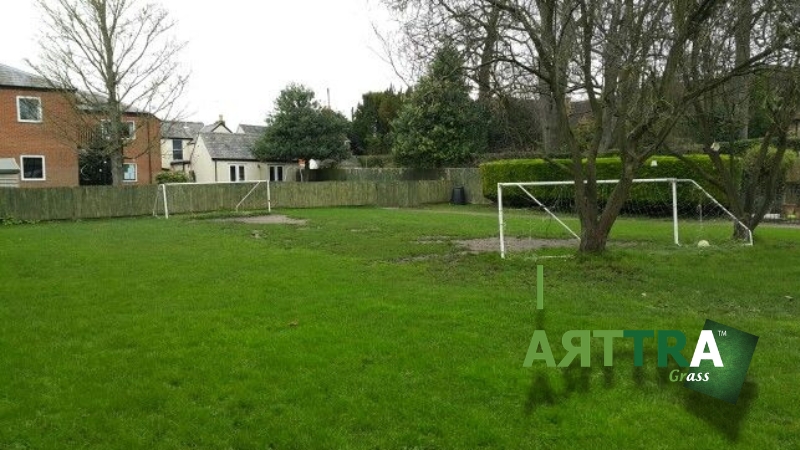
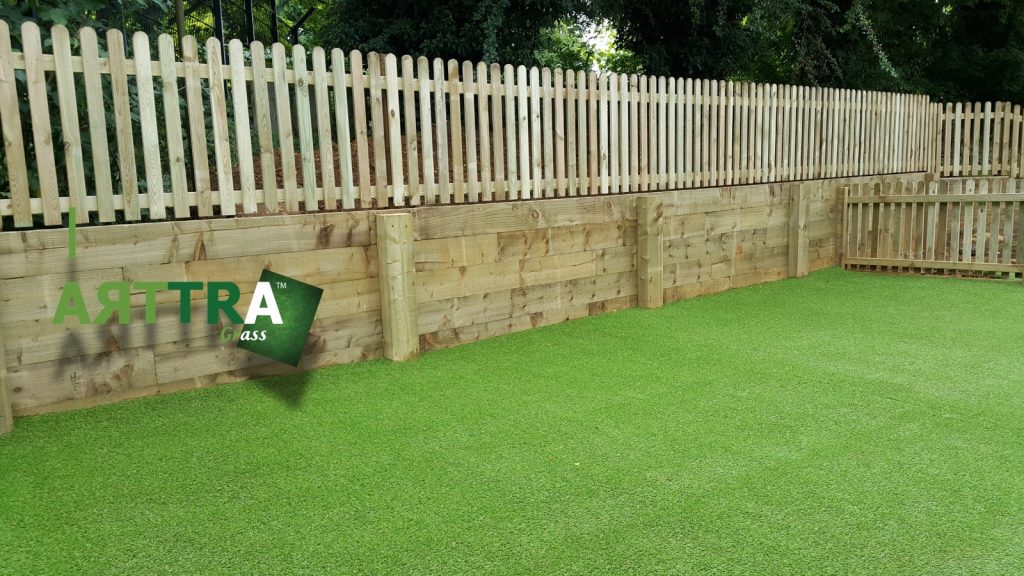
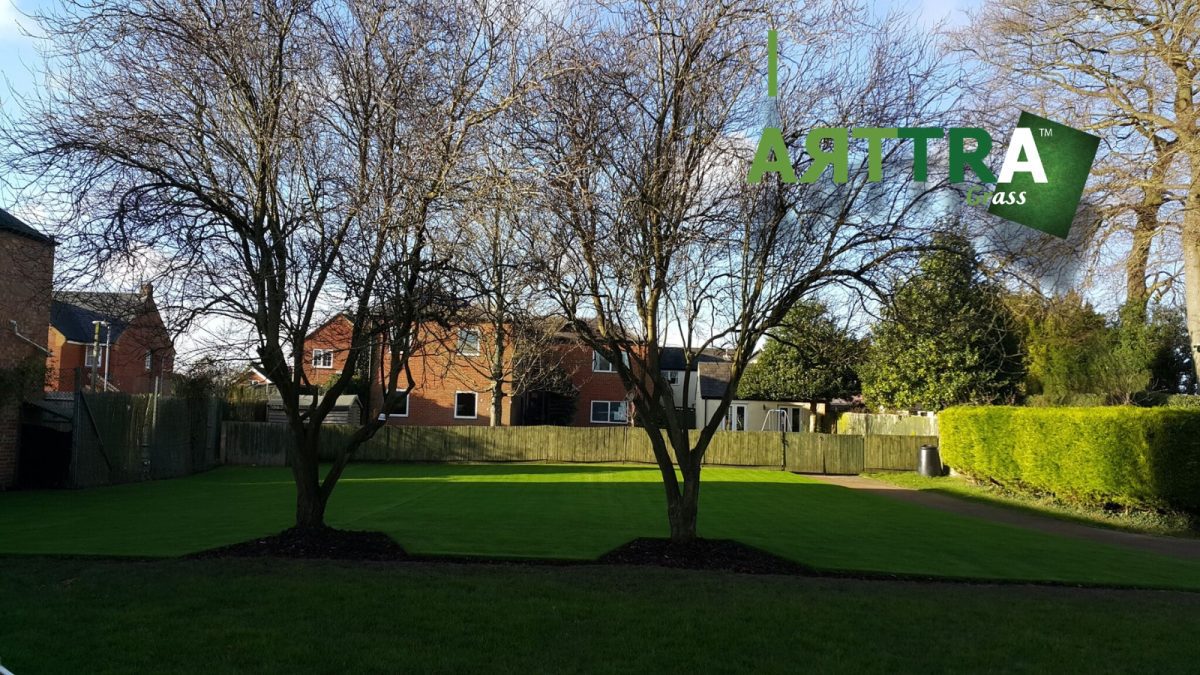
ARTTRA Grass Before Winchester House School
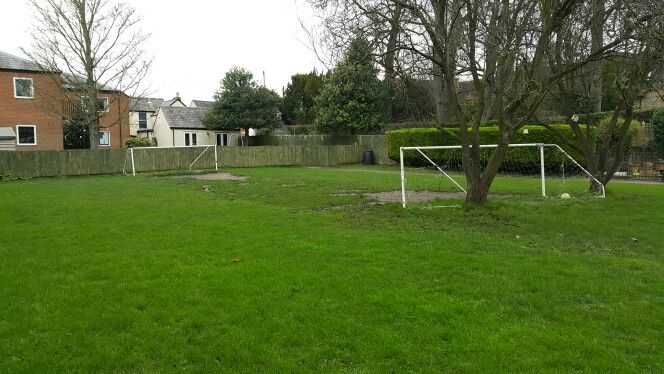
Before installing ARTTRAGrass® Artificial Grass at The Winchester House School | 2015

3. Maintenance Requirements

Natural Grass Maintenance Includes:

  • Regular mowing
  • Seasonal reseeding
  • Fertilising
  • Irrigation
  • Pest treatment
  • Aeration
  • Weed control
  • Line marking

These tasks require:

  • Ongoing labour
  • Specialist contractors
  • Equipment storage
  • Rising costs

Artificial Grass Maintenance Includes:

  • Occasional brushing
  • Debris removal
  • Infrequent deep cleaning

There is no:

  • Mowing
  • Watering
  • Reseeding
  • Fertilising

For schools with limited estates budgets, this reduction in ongoing maintenance can be transformative.

4. Long-Term Cost Comparison

This is where many decisions are made.

Natural Grass: Lower Upfront, Higher Lifetime Cost

While natural grass has lower installation costs, schools must factor:

  • Annual maintenance contracts
  • Grounds staff time
  • Repair work
  • Drainage improvements
  • Ongoing wear recovery

Over 10 years, cumulative maintenance can exceed initial artificial grass installation costs.

Artificial Grass: Higher Upfront, Predictable Over Time

Artificial grass requires a larger initial investment.

However:

  • No mowing contracts
  • No reseeding
  • Reduced cleaning costs
  • Reduced caretaker hours
  • Fewer weather closures

Over 8–15 years, many schools find artificial grass delivers better cost predictability.

(A dedicated cost breakdown page can explore this in detail.)

5. Durability Under High Footfall

School environments are extreme-use environments.

Natural grass suffers under:

  • Daily break times
  • PE sessions
  • Events
  • Assemblies
  • Sports days

Even high-quality turf deteriorates under constant compaction.

Artificial grass is specifically designed for:

  • Heavy daily use
  • Repetitive foot traffic
  • Consistent performance

This durability is particularly valuable in smaller playground areas where wear concentrates quickly.

6. Accessibility & Inclusion

Inclusion is increasingly central to school design.

Natural grass can become:

  • Uneven
  • Slippery
  • Soft under wheels
  • Difficult for mobility aids

Artificial grass provides:

  • Stable surfaces
  • Predictable traction
  • Wheelchair accessibility (when properly installed)
  • Level transitions

For Special Educational Needs settings, surface predictability can support confidence and safe movement.

7. Safety Considerations

Both surfaces can be safe — but performance varies.

Natural Grass

  • Can become slippery when wet
  • Develops uneven wear patches
  • May hide dips or ruts
  • Hardens in summer

Artificial Grass

When properly specified:

  • Provides consistent grip
  • Can include shockpads
  • Drains effectively
  • Remains stable all year round

Installation quality is critical in either case.

8. Environmental Considerations

This is often a sensitive topic.

Natural Grass

Pros:

  • Natural ecosystem
  • Carbon absorption
  • Biodiversity support

Cons:

  • Water consumption
  • Fertiliser use
  • Fuel for mowing equipment
  • Chemical treatments

Artificial Grass

Pros:

  • No watering
  • No fertilisers
  • No mowing emissions
  • Long lifespan
  • Recyclable options available

Modern bio-backed systems are increasingly addressing environmental concerns.

The key is selecting a responsible supplier and product.

9. Aesthetic & Presentation

School grounds influence:

  • Parent perception
  • Ofsted visits
  • Prospectus photography
  • Event presentation

Natural grass can look beautiful — when perfectly maintained.

But in winter or high-use areas, it often appears worn and patchy.

Artificial grass provides a consistently green appearance throughout the year.

For schools hosting events — such as the temporary installation delivered at Francis Holland School — presentation can be critical.

10. When Natural Grass Is the Right Choice

Artificial grass is not always the answer.

Natural grass may be preferable when:

  • Large sports fields are available
  • Maintenance budgets are strong
  • Usage levels are moderate
  • Biodiversity is a priority
  • Space allows rotational rest periods

The decision depends on context.

When Artificial Grass Is the Right Choice

Artificial grass is often ideal when:

  • Play areas are compact
  • Footfall is high
  • Mud is a recurring issue
  • Cleaning costs are rising
  • Accessibility is a priority
  • All year round usability is essential

Most schools switching to artificial grass do so due to operational pressures rather than aesthetics alone.

FAQs: Artificial Grass vs Natural Grass for Schools

1. Is artificial grass better than natural grass for schools?

It depends on usage levels and maintenance capacity. For high-footfall playgrounds, artificial grass often provides greater durability and usability.

2. Does artificial grass reduce mud in schools?

Yes. Artificial grass eliminates soil erosion, preventing mud formation.

3. Is natural grass cheaper than artificial grass?

Upfront, yes. Over the long term, ongoing maintenance can narrow or exceed the cost difference.

4. How long does artificial grass last in schools?

Typically 8–15 years depending on use and installation quality.

5. Can artificial grass be installed over existing surfaces?

Yes. It can be installed over prepared ground or certain hard surfaces when specified correctly.

6. Is artificial grass safe for children?

Yes. When properly installed, it provides stable, non-toxic, child-safe surfaces.

7. Does artificial grass require maintenance?

Yes, but significantly less than natural grass.

8. Does artificial grass drain properly?

Yes. Professional systems are permeable and designed for effective drainage.

9. Does artificial grass get too hot?

It can become warmer in direct sunlight, similar to other outdoor surfaces. Shade planning can mitigate this.

10. Will artificial grass damage the environment?

Modern systems offer recyclable and lower-impact options. Environmental impact depends on product choice and maintenance practices.

Final Thoughts: Artificial Grass vs Natural Grass for Schools

The decision between artificial grass and natural grass is not about trends.

It’s about:

  • Operational efficiency
  • Budget control
  • Accessibility
  • Safety
  • Usability

For many high-footfall schools, artificial grass offers predictable performance and reduced long-term disruption.

For others, natural grass remains appropriate where space, budgets and usage allow.

If your school is evaluating options, a site-specific assessment is always recommended.

GET IN TOUCH

Schedule a Visit

Categories
Education

Artificial Grass for SEN Schools

Safe, Sensory-Friendly Outdoor Surfaces

Outdoor environments play a vital role in supporting children with Special Educational Needs (SEN).

For many pupils, outdoor space is not just recreation — it’s regulation, therapy and development.

ARTTRAGrass® provides artificial grass systems designed to create:

  • Predictable surfaces
  • Soft underfoot comfort
  • Reduced mud and disruption
  • Accessible, inclusive play areas
  • Calm, visually consistent environments

Why Surface Choice Matters in SEN Settings

Children with additional needs may be more sensitive to:

  • Slippery or unstable ground
  • Uneven surfaces
  • Sudden texture changes
  • Wet or muddy conditions
  • Visual clutter

Natural grass often becomes:

  • Patchy
  • Waterlogged
  • Slippery
  • Inconsistent

Artificial grass creates a controlled, stable and dependable outdoor environment.

Key Benefits of Artificial Grass for SEN Schools

1. Consistency & Predictability

Artificial grass provides a uniform surface that remains consistent throughout the year.

There are no:

  • Mud patches
  • Bare soil areas
  • Sudden dips
  • Slippery worn zones

Predictability supports confidence and independent movement.

2. Improved Accessibility

Artificial grass can be installed to create:

  • Smooth wheelchair-accessible areas
  • Level transitions between zones
  • Stable walking surfaces
  • Defined learning spaces

It allows greater participation for children with mobility challenges.

3. Sensory-Friendly Environment

Artificial grass offers:

  • Soft tactile feedback
  • Low glare (with appropriate fibre selection)
  • Natural green aesthetics
  • Reduced visual chaos compared to damaged turf

This can contribute to calmer outdoor engagement.

4. Reduced Mud & Disruption

For SEN schools, transitions between outdoor and indoor spaces are critical.

Artificial grass eliminates:

  • Mud tracked into classrooms
  • Frequent clothing changes
  • Cleaning interruptions
  • Slippery entrances

This reduces stress for both staff and pupils.

5. Safety & Cushioning

We can specify systems with:

  • Appropriate pile height
  • Shockpad underlay (where required)
  • Non-toxic materials
  • Free-draining sub-base systems

Safety compliance is always prioritised.

Applications in SEN Settings

Artificial grass is ideal for:

  • Sensory gardens
  • Outdoor therapy areas
  • Calm zones
  • Early years SEN spaces
  • Primary and secondary SEN schools
  • Specialist units within mainstream schools

Designed for Inclusion

Every SEN setting is different.

We provide:

✔ Site surveys
✔ Tailored specifications
✔ Drainage planning
✔ Accessibility considerations
✔ Long-term durability design

Our goal is to create outdoor spaces that feel:

Safe.
Inclusive.
Calm.
Usable all year round.

Environmental Considerations

ARTTRAGrass® offers bio-backed artificial grass systems that are:

  • 100% recyclable
  • Reduced fossil fuel dependency
  • Durable for long-term use

This supports sustainability targets within educational settings.

Artificial Turf for The Shire School
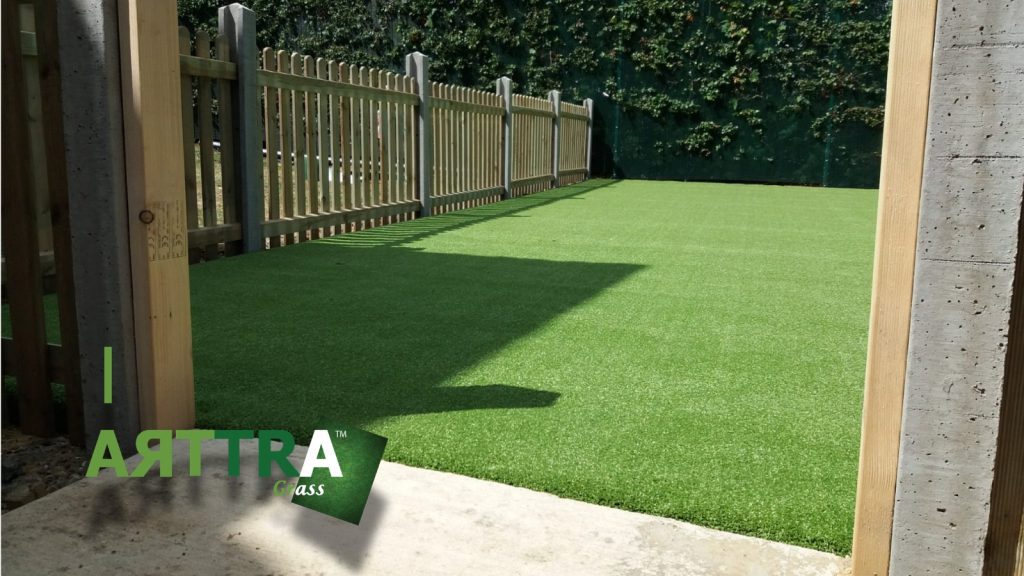
ARTTRAGrass® supplied and installed Artificial Grass for The Shire School | Bletchley

FAQs: Artificial Grass for SEN Schools

1. Is artificial grass suitable for SEN schools?

Yes. Artificial grass provides a stable, predictable and accessible outdoor surface ideal for SEN environments.

2. Does artificial grass help reduce overstimulation?

Yes. A uniform, clean surface reduces visual and tactile inconsistencies found in worn natural grass.

3. Is artificial grass wheelchair accessible?

Yes. Properly installed systems provide a smooth and stable surface for mobility aids.

4. Can artificial grass be installed in sensory gardens?

Yes. It is commonly used in outdoor therapy and sensory areas.

5. Is artificial grass safe for children with additional needs?

Yes. ARTTRAGrass systems are non-toxic and designed for child-safe environments.

6. Does artificial grass reduce mud problems?

Yes. It eliminates soil erosion and waterlogging.

7. Can you install shockpads for additional safety?

Yes. Shock-absorbing underlays can be included where required.

8. How long does artificial grass last in SEN schools?

Typically 8–15 years depending on usage.

9. Does artificial grass drain well?

Yes. Professional systems are fully permeable.

10. Do you provide nationwide installation?

Yes. ARTTRAGrass works with schools and SEN settings across the UK.

GET IN TOUCH

Schedule a Visit

Categories
Education

Artificial Grass Installation

Cygnet Pre-School Wellingborough

When Cygnet Pre-School in Wellingborough approached ARTTRAGrass®, their priority wasn’t just aesthetics.

It was hygiene.

The nursery required an outdoor play surface that was:

  • Safe for toddlers
  • Soft underfoot
  • Clean and mud-free
  • Usable in all seasons
  • Visually welcoming for parents

Natural grass had become inconsistent, muddy and difficult to maintain — especially during wet weather.

The solution was a purpose-designed artificial grass system tailored for early years environments.

The Challenge: Cleanliness & All Year Round Usability

Nurseries face unique challenges compared to primary schools:

  • Younger children play closer to the ground
  • Increased hand-to-surface contact
  • Higher hygiene expectations from parents
  • Limited tolerance for mud and waterlogging
  • Daily use regardless of season

Cygnet Pre-School needed a surface that would:

  • Eliminate mud transfer indoors
  • Provide cushioning and comfort
  • Maintain a bright, attractive appearance
  • Withstand daily high footfall
Before ARTTRAGrass at Cygnet Pre-School
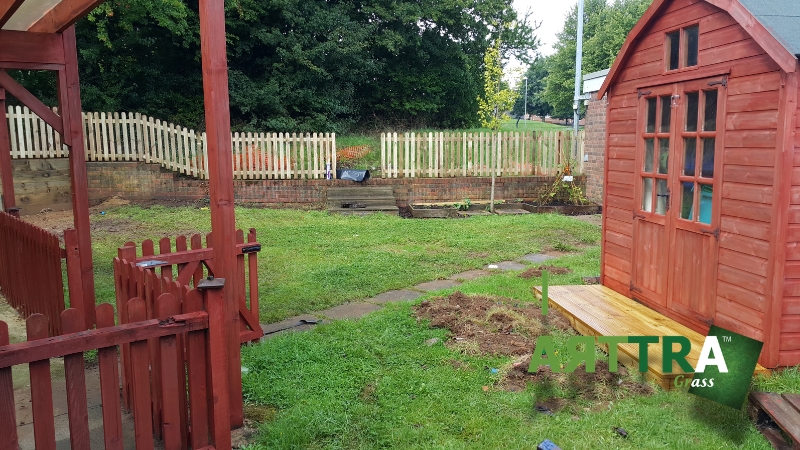
Before installing ARTTRAGrass® artificial grass at Cygnet Pre-School | Wellingborough

The Solution: Soft, Durable Artificial Grass for Early Years

ARTTRAGrass® installed a premium artificial grass system designed specifically for nursery environments.

Installation Highlights

✔ Full ground preparation
✔ Stable sub-base construction
✔ Free-draining system
✔ Child-friendly pile height
✔ Soft yet durable fibre structure
✔ Non-toxic materials

The new surface immediately transformed the outdoor area into a clean, welcoming play environment.

The Results: A Cleaner, Safer Nursery Environment

Following installation, Cygnet Pre-School benefited from:

  • No more muddy shoes entering classrooms
  • Improved hygiene standards
  • All year round outdoor access
  • Reduced maintenance time
  • Enhanced visual appeal for prospective parents

The artificial grass now provides a consistent, all-weather play area that supports learning, exploration and physical development.

Why Artificial Grass Is Ideal for Nurseries

1. Hygiene Control

Artificial grass eliminates soil transfer and reduces the risk of mud being tracked indoors.

2. All-Weather Access

No more restricting outdoor play due to rain.

3. Comfort & Softness

Designed to be gentle underfoot for toddlers.

4. Low Maintenance

No mowing, reseeding or mud management.

5. Parent Confidence

A clean, bright play area reassures families during visits and inspections.

Project Details

Client: Cygnet Pre-School
Application: Nursery outdoor play area
System: ARTTRAGrass® child-friendly artificial turf
Objective: Improve hygiene, safety and all year round usability
Outcome: Clean, durable, visually appealing outdoor environment

Cygnet Pre-School Wellingborough

Considering Artificial Grass for Your Nursery?

If your early years setting struggles with:

  • Muddy outdoor areas
  • High maintenance demands
  • Seasonal closures
  • Parent concerns about cleanliness

ARTTRAGrass® provides tailored nursery-specific solutions across the UK.

Book a site survey to explore options for your outdoor space.

Frequently Asked Questions

1. Is artificial grass safe for nursery children?

Yes. ARTTRAGrass uses non-toxic, child-safe materials suitable for early years settings.

2. Does artificial grass improve hygiene in nurseries?

Yes. It prevents mud transfer and helps maintain cleaner indoor environments.

3. Can nurseries use artificial grass all year round?

Yes. Artificial grass drains effectively and remains usable in wet conditions.

4. Is artificial grass soft enough for toddlers?

Yes. Nursery-specific systems are designed to be comfortable and cushioned.

5. Does artificial grass require a lot of maintenance?

No. It requires minimal brushing and occasional cleaning.

6. Will artificial grass fade over time?

No. Quality systems are UV-stabilised to maintain colour.

7. Can artificial grass support play equipment?

Yes. It can be installed around fixed play structures.

8. Is artificial grass environmentally responsible?

ARTTRAGrass offers recyclable and low-impact options.

9. How long does nursery artificial grass last?

Typically 8–15 years depending on usage.

10. Do you provide installations across the UK?

Yes. ARTTRAGrass works with nurseries and schools nationwide.

GET IN TOUCH

Schedule a Visit

Categories
Education

400sqm Artificial Grass Installation

Winchester House School – Brackley

When Winchester House School contacted ARTTRAGrass®, the issue wasn’t aesthetics.

It was mud.

The school’s natural grass play area had become:

  • Waterlogged in winter
  • Patchy and worn
  • Slippery underfoot
  • A constant source of muddy shoes entering classrooms

Staff were spending unnecessary time managing mess instead of focusing on learning.

The solution? A durable, 400sqm artificial grass installation designed for all year round use.

The Problem: Mud Disrupting Education

Like many primary and preparatory schools, Winchester House relied on a natural grass area for outdoor play.

However:

  • Heavy pupil footfall caused rapid wear
  • Rain turned the surface into mud
  • Children returned to class with dirty footwear
  • Cleaning costs increased
  • Break-time access was restricted in wet weather

This is one of the most common drivers for schools switching to artificial grass.

Before ARTTRAGrass Artificial Grass Winchester School
Before we installed ARTTRAGrass® Artificial Grass at Winchester School | Brackley

The Solution: 400sqm of ARTTRAGrass® 25mm Bio-Backed Turf

We installed approximately 400 square metres of ARTTRAGrass® 25mm artificial grass to transform the play space into a clean, consistent surface.

Installation Highlights:

✔ Full ground preparation
✔ Drainage optimisation
✔ High-footfall durability design
✔ 25mm child-friendly pile height
✔ 100% recyclable bio-backed system

The result was immediate.

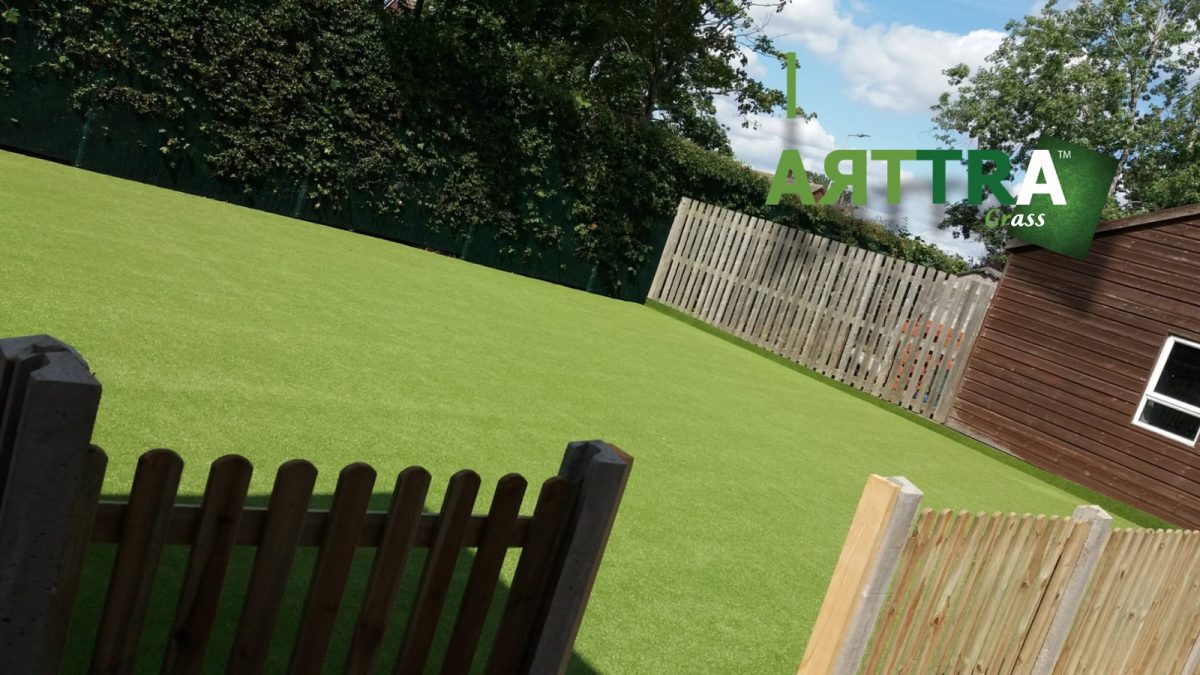
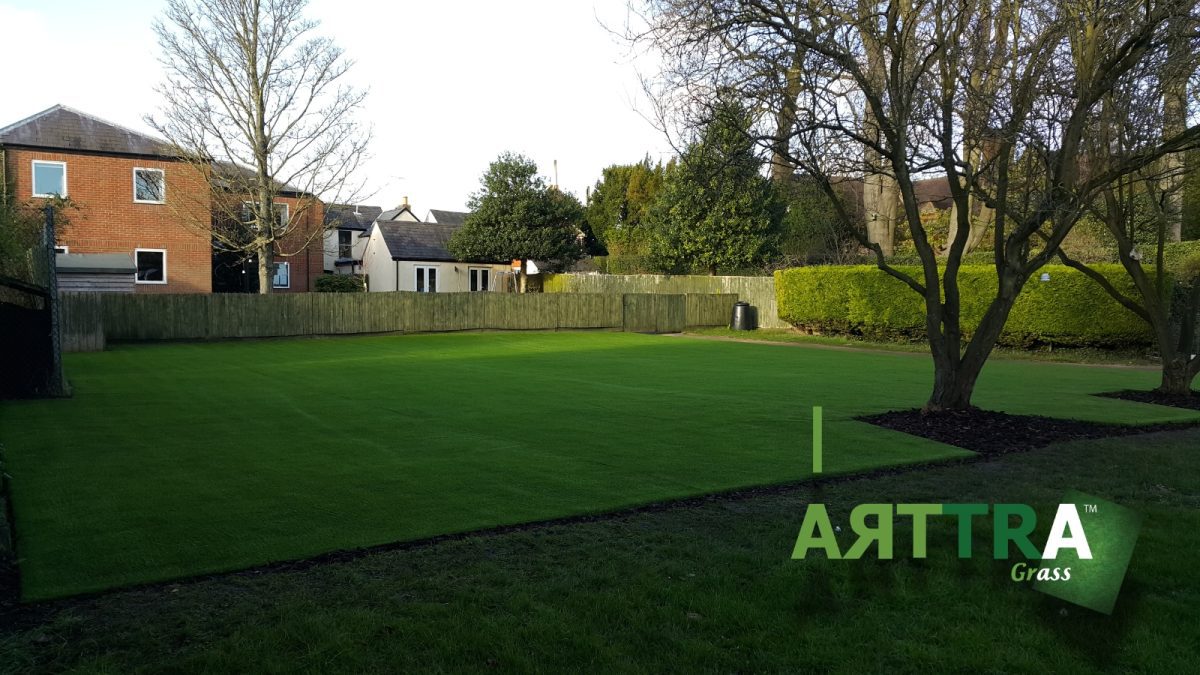
Winchester House School Artificial Grass Brackley

The Results: A Mud-Free School Environment

After installation:

  • No more muddy shoes
  • All year round play access
  • Cleaner classrooms
  • Reduced maintenance demands
  • Improved pupil experience

The artificial grass now provides a consistent, stable surface regardless of weather conditions.

Why Artificial Grass Solves the Mud Problem

Natural grass struggles under:

  • High daily footfall
  • Compacted soil
  • Winter rainfall
  • Limited recovery time

Artificial grass eliminates:

  • Soil erosion
  • Bare patches
  • Waterlogging
  • Mud transfer into buildings

For schools, this translates into:

  • Operational efficiency
  • Reduced cleaning costs
  • Fewer weather cancellations
  • Better safeguarding

Project Details

Client: Winchester House School
Location: Brackley, Northamptonshire
Area Installed: 400sqm
System Used: ARTTRAGrass® 25mm
Primary Objective: Eliminate mud and improve all year round usability
Result: Clean, durable, all-weather play surface

Is Your School Facing the Same Problem?

If your school experiences:

  • Muddy playgrounds
  • Waterlogged grass
  • Dirty classrooms
  • Restricted winter use

Artificial grass may be the long-term solution.

ARTTRAGrass® provides tailored site surveys and specifications for schools across the UK.

Frequently Asked Questions

1. Why did Winchester House School choose artificial grass?

To eliminate mud problems and create a year-round usable play area.

2. How large was the installation?

Approximately 400 square metres.

3. Did artificial grass solve the muddy shoe problem?

Yes. The new surface prevents soil erosion and waterlogging.

4. What pile height was used?

A 25mm pile height, ideal for school playground use.

5. Is artificial grass better than natural grass for schools?

For high-footfall environments, artificial grass provides greater durability and consistent usability.

6. Does artificial grass reduce cleaning costs?

Yes. Mud transfer into classrooms is significantly reduced.

7. Is the system environmentally friendly?

Yes. ARTTRAGrass® bio-backed turf is 100% recyclable and reduces fossil fuel dependency.

8. How long will this artificial grass last?

Typically 8–15 years depending on usage levels.

9. Is it safe for children?

Yes. The surface is non-toxic, odour-free and designed for child environments.

10. Can schools in Brackley request a site survey?

Yes. We provide consultations for schools across Northamptonshire and the UK.

GET IN TOUCH

Schedule a Visit

Categories
Education

Temporary Artificial Grass School Installation

Francis Holland School – Belgravia

When Francis Holland School required a premium sports surface for a week-long event, the challenge wasn’t just performance.

It was precision.

The school needed:

  • A professional sports-ready surface
  • Installation over existing concrete and tarmac
  • No permanent alterations
  • Full removal after the event
  • Zero surface damage

ARTTRAGrass® delivered a complete temporary artificial grass solution designed specifically for short-term educational events.

The Challenge

The sports day event required a high-quality artificial grass surface that:

  • Looked professional
  • Performed safely under heavy footfall
  • Could be installed directly onto hard surfaces
  • Would be removed cleanly after one week

The sub-base consisted of:

  • Concrete
  • Tarmac

There was no option for excavation or groundwork.

This required a fully reversible installation strategy.

Our Solution

We supplied and installed a temporary artificial grass system designed for:

✔ Hard-surface overlay
✔ Short-term use
✔ Secure fixing without surface penetration
✔ Safe traction for student activities
✔ Clean removal post-event

The installation was completed efficiently to meet the event schedule.

After one week of intensive sports use, our team returned to:

  • Carefully lift the artificial grass
  • Remove fixings
  • Restore the original surface

The area was left in its original condition.

Key Project Details

Client: Francis Holland School – Belgravia
Location: Belgravia, London
Application: Temporary sports day surface
Duration: 1 week
Sub-surface: Concrete and tarmac
Installation Type: Fully reversible temporary system
Removal: Completed post-event

Why Temporary Artificial Grass Works for School Events

Temporary installations are ideal for:

  • Sports days
  • Open days
  • Graduation ceremonies
  • Outdoor showcases
  • Summer fairs
  • University promotional events

Schools often require a premium aesthetic without committing to permanent infrastructure changes.

Temporary artificial turf provides:

  • Instant visual transformation
  • Professional sports appearance
  • Safe underfoot traction
  • Quick installation
  • Fast removal

Benefits for Educational Institutions

No Permanent Alterations

Perfect for listed buildings or heritage sites in central London.

Safe for Students

Provides improved grip compared to bare concrete or tarmac.

Professional Presentation

Creates a high-end finish suitable for photography and marketing.

Minimal Disruption

Installation and removal scheduled around school operations.

Trusted by Leading Educational Institutions

In addition to Francis Holland School, ARTTRAGrass® has delivered installations for:

  • Le Cordon Bleu London
  • King’s College London

From independent schools to universities, our temporary artificial grass systems are trusted for special events across London.

Planning a School Sports Event?

If your school requires:

  • Temporary artificial lawn
  • Hard-surface installation
  • Event-ready finish
  • Guaranteed post-event removal

ARTTRAGrass® provides end-to-end management from installation to reinstatement.

Book a consultation to discuss your upcoming event.

FAQs: Temporary Artificial Grass School Installation in Belgravia

1. Can artificial grass be installed temporarily for school events?

Yes. Temporary artificial grass is an ideal solution for school sports days, open days and special events. At Francis Holland School in Belgravia, we installed a professional-grade artificial grass surface for a one-week sports event, providing a safe and visually impressive environment without permanent alterations.


2. Can artificial grass be laid over concrete or tarmac?

Yes. Temporary artificial grass can be installed directly over hard surfaces such as concrete and tarmac. For this project, we used a secure, non-invasive fixing method that ensured stability throughout the event while protecting the existing surface.


3. Will temporary artificial grass damage the surface underneath?

No. Our temporary systems are fully reversible. We do not excavate or permanently fix into the ground. After removal, the original concrete or tarmac surface is left in its original condition, with no structural damage.


4. How long does installation take?

Installation time depends on the size and layout of the area. For most school event spaces, installation can be completed within a short timeframe to meet event deadlines. We work closely with school administrators to minimise disruption to daily operations.


5. Is temporary artificial grass safe for sports activities?

Yes. Temporary artificial grass provides improved traction and comfort compared to bare concrete or tarmac. It creates a safer, more forgiving surface for running, light sports and organised activities during events.


6. Can it be removed after a week?

Yes. Temporary artificial grass is specifically designed for short-term use. In the case of Francis Holland School, we returned after one week to carefully remove the surface and reinstate the original area.


7. Do you provide both installation and removal?

Yes. ARTTRAGrass® manages the complete process — delivery, installation, event support if required, and full removal. Schools and universities benefit from a single point of responsibility from start to finish.


8. Is temporary artificial grass suitable for London schools?

Absolutely. Temporary artificial grass is particularly useful for urban schools in London where outdoor space may consist primarily of concrete or tarmac. It allows schools to transform hard courtyards into functional sports or event areas without permanent redevelopment.


9. Can it be used for university events?

Yes. Temporary artificial grass is suitable for university open days, promotional events, graduation celebrations and sports activities. We have also delivered installations for institutions such as King’s College London and Le Cordon Bleu London.


10. How much does temporary artificial grass hire cost?

Costs vary depending on area size, duration, access requirements and logistics. Because every event space is different, we provide tailored quotations following a consultation to ensure accurate pricing and suitability.

GET IN TOUCH

Schedule a Visit

Categories
Education

ARTTRAGrass® 25mm Bio-Backed Artificial Grass for School Play Areas

Safe. Sustainable. Proven in Real Education Environments.

When a school chooses artificial grass, it isn’t buying a surface. At ARTTRAGrass®, we specialise in artificial grass for school play areas — designed specifically for educational environments, not repurposed landscaping turf.

It’s making a long-term decision about:

  • Child safety
  • Cleanliness & hygiene
  • Sustainability
  • Durability under extreme footfall
  • Financial efficiency

Our systems are already trusted by:

  • Francis Holland School
  • Winchester House School
  • Cygnet Pre-School
  • The Shire School
  • Le Cordon Bleu London
  • King’s College London

From nursery play zones to SEN environments and elite sports spaces — ARTTRAGrass® delivers performance with purpose.

Why Schools Replace Natural Grass

The Mud Problem

One of the biggest triggers for school enquiries? Mud.

At Winchester House School, a 400sqm natural grass area caused constant disruption:

  • Mud tracked into classrooms
  • Slippery surfaces
  • Restricted winter play
  • Increased cleaning costs

After installation of ARTTRAGrass® 25mm bio-backed artificial grass:

✔ No more muddy shoes
✔ All year round play access
✔ Reduced maintenance
✔ Cleaner classrooms

This is one of the most common ROI drivers for primary schools.

Introducing ARTTRAGrass® 25mm Bio-Backed Artificial Grass

Designed Specifically for Schools & Children

Our flagship 25mm system features:

✔ 100% recyclable construction
✔ Non-toxic materials
✔ Odour-free backing
✔ Low-carbon manufacturing
✔ Reduced fossil fuel dependency
✔ Green bio-backed technology

Unlike traditional latex-backed systems, ARTTRAGrass® dramatically reduces reliance on fossil fuels.

This supports:

  • MAT sustainability frameworks
  • ESG compliance
  • Net-zero objectives
  • Local authority procurement requirements

Case Study: SEN & Accessibility

The Shire School – Bletchley, Milton Keynes

The Shire School required a surface that allowed both younger and older students with special needs to safely access outdoor play.

The previous natural surface created:

  • Mud hazards
  • Mobility challenges
  • Reduced outdoor time
  • Safety concerns

Our solution provided:

✔ Stable, even surface
✔ All year round accessibility
✔ Mud-free outdoor engagement
✔ Improved confidence for students and staff

For SEN environments, surface consistency is not optional — it’s essential.

Case Study: Aesthetic & Functional Impact

Cygnet Pre-School – Wellingborough

Cygnet Pre-School required two distinct improvements:

  1. An attractive, welcoming entrance aesthetic
  2. A mud-free outdoor play space for nursery children

The transformation delivered:

✔ Clean, vibrant first impressions
✔ Safe, soft play environment
✔ Reduced cleaning workload
✔ Improved parent perception

For nurseries, visual appeal and hygiene matter equally.

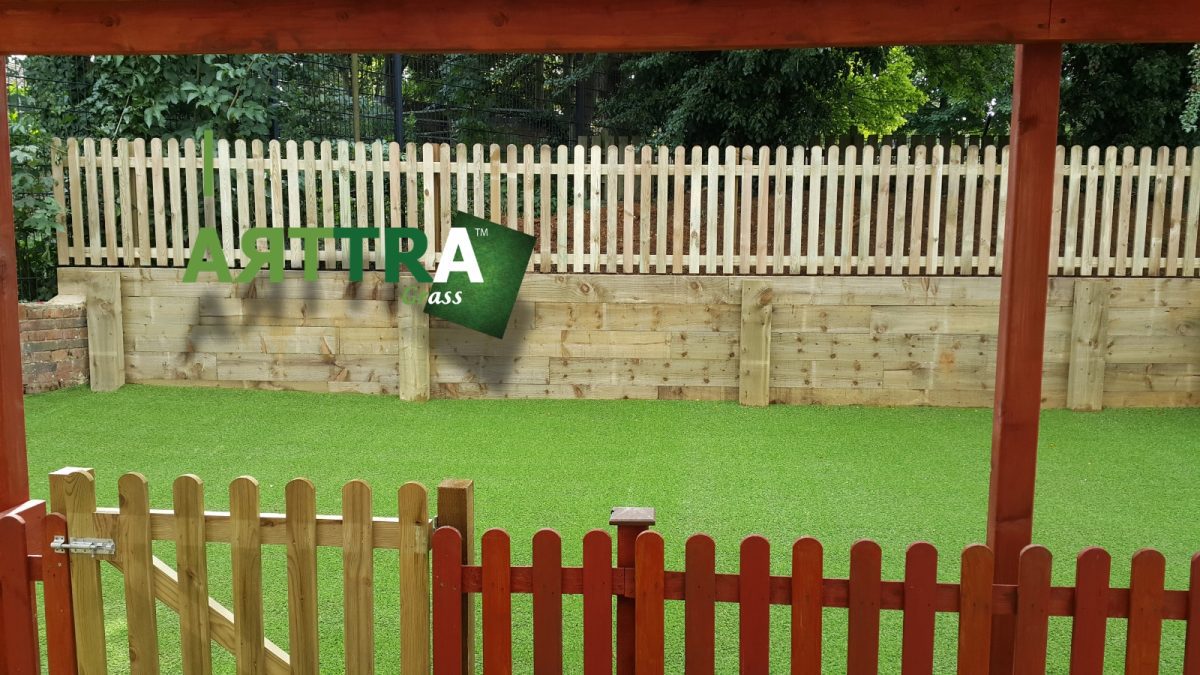
Artificial Grass Cygnet School Wellingborough
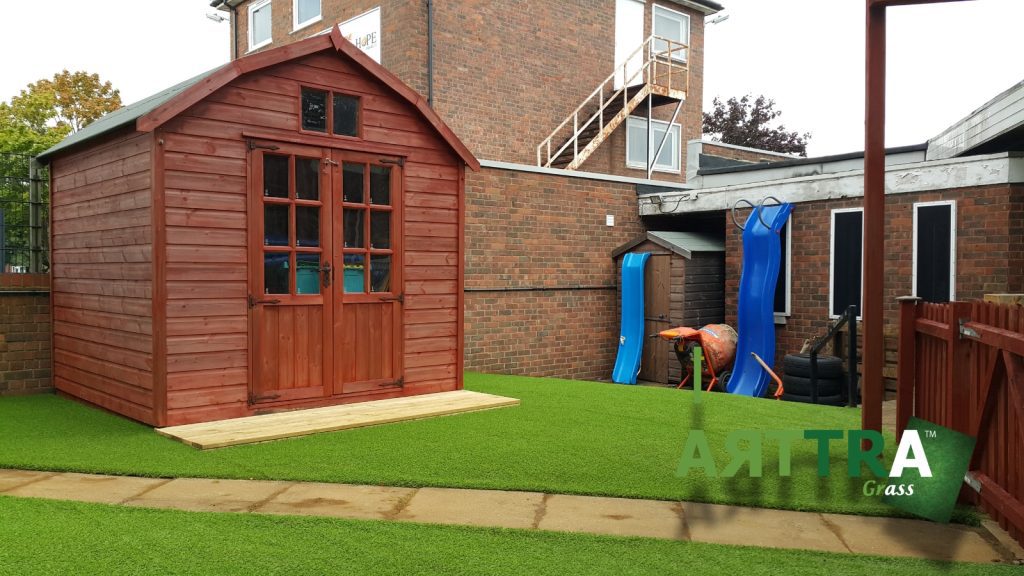
ARTTRAGrass® supplied and installed for Cygnet Pre-School in Wellingborough | 2015

Case Study: Sports Performance

Francis Holland School – Belgravia

At Francis Holland School, the requirement was sports-focused.

The school needed a high-performance artificial grass area suitable for structured activities.

Our system delivered:

✔ Durable sports-ready surface
✔ Consistent traction
✔ All-weather usability
✔ Professional finish

For independent schools, performance and presentation go hand-in-hand.

Case Study: Special Event Installations

We also supported event-based educational use at:

  • Le Cordon Bleu London
  • King’s College London

These installations required:

✔ Premium aesthetic finish
✔ Temporary or event-ready durability
✔ Fast turnaround
✔ Immaculate presentation

Our versatility allows ARTTRAGrass® to serve both permanent installations and high-profile academic events.

Coloured MUGA Artificial Grass for School Play Areas

While our bio-backed 25mm system is ideal for playgrounds and general school use, we also provide high-density coloured artificial grass for sports environments.

Ideal For:

  • Multi-Use Games Areas (MUGA)
  • Football training
  • Basketball
  • Netball
  • Playground zoning
  • Padel walkways

Key Features

✔ High-density fibre
✔ Enhanced traction
✔ Colour-coded zones
✔ Long-term sports durability

This allows schools to maximise limited space while increasing structured sports opportunities.

Why ARTTRAGrass® Outperforms Standard Artificial Turf

Most artificial grass products on the market were developed for domestic landscaping.

Schools need something very different.

We Focus On:

  • Extreme daily footfall
  • Child-safe materials
  • Sustainability reporting
  • Longevity under institutional use
  • Procurement transparency

Our systems are engineered for education environments first.

Long-Term Financial Efficiency

Artificial grass reduces:

  • Grounds maintenance contracts
  • Reseeding
  • Irrigation
  • Drainage repairs
  • Cleaning costs from mud transfer

Schools like Winchester House School quickly see operational benefits beyond surface aesthetics.

Over a 10–15 year lifecycle, artificial grass becomes a predictable, controllable asset.

Built for Every Education Setting

Primary Schools

Safe, clean, all year round play.

Secondary Schools

High-performance sports durability.

Nurseries

Non-toxic, odour-free environments.

SEN Schools

SEN Schools: Stable, consistent, accessible surfaces.

Universities & Colleges

Event-ready and multi-use solutions.

Sustainability That Supports Your Reputation

Parents increasingly expect schools to demonstrate environmental responsibility.

ARTTRAGrass® allows you to communicate:

  • Recyclable materials
  • Reduced fossil fuel dependency
  • Long lifecycle performance
  • Sustainable procurement choices

That strengthens trust at every level — from governors to community stakeholders.

FAQs: Artificial Grass for School Play Areas

1. Is artificial grass safe for primary schools?

Yes. Our bio-backed artificial grass is non-toxic and odour-free.

2. What pile height is best for school playgrounds?

25mm provides an ideal balance between durability and comfort.

3. Can artificial grass reduce mud problems?

Yes — this is one of the primary reasons schools switch.

4. Is artificial grass suitable for SEN schools?

Absolutely. A consistent surface improves accessibility and safety.

5. Does artificial grass meet sustainability goals?

Our bio-backed system is 100% recyclable and low-carbon.

6. Is coloured artificial grass available?

Yes. We offer high-density MUGA systems.

7. How long does artificial grass last in a school?

Typically 8–15 years depending on use.

8. Can it be used for sports activities?

Yes — we supply both general play and sports-specific systems.

9. Is it suitable for nursery environments?

Yes. It provides a clean, safe, mud-free play area.

10. Do you provide site surveys?

Yes. We offer tailored consultations for schools across the UK

Book a School Surface Consultation

Your school deserves more than a generic solution.

Whether you are:

  • Eliminating mud
  • Upgrading a sports facility
  • Improving SEN accessibility
  • Enhancing your entrance aesthetic
  • Supporting sustainability goals

ARTTRAGrass® provides expert guidance from consultation to completion. If you would like to compare natural with artificial grass, visit our Artificial Grass vs Natural Grass for Schools article.

Request your free site survey today.

Let’s build a safer, cleaner, more sustainable outdoor environment for your pupils.

GET IN TOUCH

Schedule a Visit