Artificial grass vs natural grass for schools; Which is the better long-term investment? Choosing the right outdoor surface for a school is not just about appearance.
It affects:
- Safety
- Maintenance budgets
- Cleaning costs
- Accessibility
- All year round usability
- Staff workload
- Parent perception
For many schools, the debate comes down to one question:
Artificial grass or natural grass?
This guide provides a balanced, practical comparison to help headteachers, bursars and estates managers make an informed decision.
Quick Comparison Overview
| Factor | Artificial Grass | Natural Grass |
|---|---|---|
| Year-round usability | ✅ All weather | ❌ Restricted in winter |
| Mud control | ✅ Eliminates mud | ❌ High risk |
| Maintenance | ✅ Low | ❌ High |
| Upfront cost | Higher | Lower |
| Long-term cost | Predictable | Ongoing + rising |
| Accessibility | Excellent | Variable |
| Lifespan | 8–15 years | Continuous upkeep |
Now let’s explore this properly.
1. All Year Round Usability
Natural Grass
Natural grass struggles under:
- Heavy footfall
- Compacted soil
- Winter rainfall
- Limited recovery time
In school environments, grass rarely gets time to regenerate.
Wet weather often means:
- Play areas closed
- Break times restricted
- Mud forming
- Increased indoor congestion
Artificial Grass
Artificial grass provides:
- Consistent drainage
- No soil erosion
- No recovery time needed
- Immediate usability after rainfall
For high-footfall school environments, this consistency is often the deciding factor.
2. The Mud Problem
Mud is not just a cosmetic issue.
It leads to:
- Dirty classrooms
- Increased cleaning hours
- Slippery corridors
- Lost learning time
- Higher caretaker workload
Many schools move to artificial grass specifically to eliminate mud transfer.
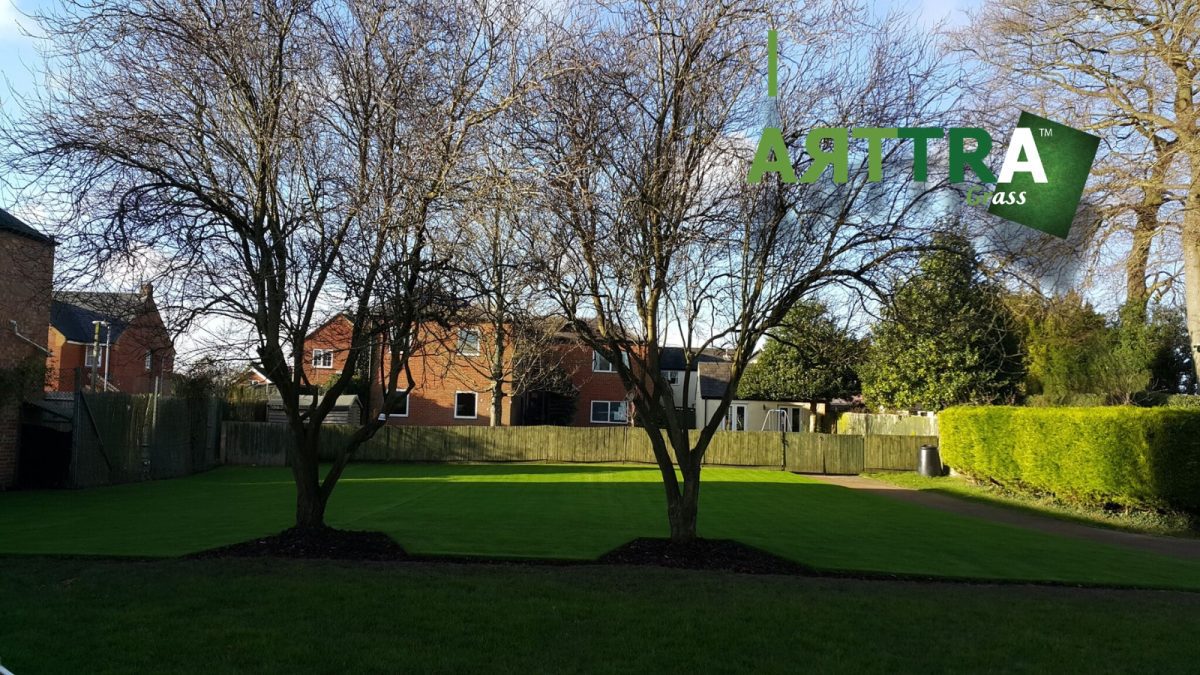
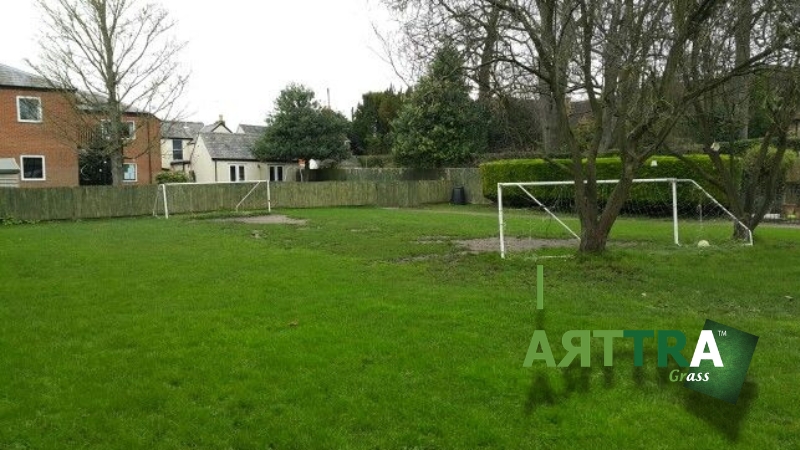
One example is Winchester House School, where a 400sqm artificial grass installation significantly reduced muddy classroom disruption.
Natural grass simply cannot prevent soil transfer in wet conditions.
Artificial grass eliminates the source of mud entirely.
3. Maintenance Requirements
Natural Grass Maintenance Includes:
- Regular mowing
- Seasonal reseeding
- Fertilising
- Irrigation
- Pest treatment
- Aeration
- Weed control
- Line marking
These tasks require:
- Ongoing labour
- Specialist contractors
- Equipment storage
- Rising costs
Artificial Grass Maintenance Includes:
- Occasional brushing
- Debris removal
- Infrequent deep cleaning
There is no:
- Mowing
- Watering
- Reseeding
- Fertilising
For schools with limited estates budgets, this reduction in ongoing maintenance can be transformative.
4. Long-Term Cost Comparison
This is where many decisions are made.
Natural Grass: Lower Upfront, Higher Lifetime Cost
While natural grass has lower installation costs, schools must factor:
- Annual maintenance contracts
- Grounds staff time
- Repair work
- Drainage improvements
- Ongoing wear recovery
Over 10 years, cumulative maintenance can exceed initial artificial grass installation costs.
Artificial Grass: Higher Upfront, Predictable Over Time
Artificial grass requires a larger initial investment.
However:
- No mowing contracts
- No reseeding
- Reduced cleaning costs
- Reduced caretaker hours
- Fewer weather closures
Over 8–15 years, many schools find artificial grass delivers better cost predictability.
(A dedicated cost breakdown page can explore this in detail.)
5. Durability Under High Footfall
School environments are extreme-use environments.
Natural grass suffers under:
- Daily break times
- PE sessions
- Events
- Assemblies
- Sports days
Even high-quality turf deteriorates under constant compaction.
Artificial grass is specifically designed for:
- Heavy daily use
- Repetitive foot traffic
- Consistent performance
This durability is particularly valuable in smaller playground areas where wear concentrates quickly.
6. Accessibility & Inclusion
Inclusion is increasingly central to school design.
Natural grass can become:
- Uneven
- Slippery
- Soft under wheels
- Difficult for mobility aids
Artificial grass provides:
- Stable surfaces
- Predictable traction
- Wheelchair accessibility (when properly installed)
- Level transitions
For Special Educational Needs settings, surface predictability can support confidence and safe movement.
7. Safety Considerations
Both surfaces can be safe — but performance varies.
Natural Grass
- Can become slippery when wet
- Develops uneven wear patches
- May hide dips or ruts
- Hardens in summer
Artificial Grass
When properly specified:
- Provides consistent grip
- Can include shockpads
- Drains effectively
- Remains stable all year round
Installation quality is critical in either case.
8. Environmental Considerations
This is often a sensitive topic.
Natural Grass
Pros:
- Natural ecosystem
- Carbon absorption
- Biodiversity support
Cons:
- Water consumption
- Fertiliser use
- Fuel for mowing equipment
- Chemical treatments
Artificial Grass
Pros:
- No watering
- No fertilisers
- No mowing emissions
- Long lifespan
- Recyclable options available
Modern bio-backed systems are increasingly addressing environmental concerns.
The key is selecting a responsible supplier and product.
9. Aesthetic & Presentation
School grounds influence:
- Parent perception
- Ofsted visits
- Prospectus photography
- Event presentation
Natural grass can look beautiful — when perfectly maintained.
But in winter or high-use areas, it often appears worn and patchy.
Artificial grass provides a consistently green appearance throughout the year.
For schools hosting events — such as the temporary installation delivered at Francis Holland School — presentation can be critical.
10. When Natural Grass Is the Right Choice
Artificial grass is not always the answer.
Natural grass may be preferable when:
- Large sports fields are available
- Maintenance budgets are strong
- Usage levels are moderate
- Biodiversity is a priority
- Space allows rotational rest periods
The decision depends on context.
When Artificial Grass Is the Right Choice
Artificial grass is often ideal when:
- Play areas are compact
- Footfall is high
- Mud is a recurring issue
- Cleaning costs are rising
- Accessibility is a priority
- All year round usability is essential
Most schools switching to artificial grass do so due to operational pressures rather than aesthetics alone.
FAQs: Artificial Grass vs Natural Grass for Schools
1. Is artificial grass better than natural grass for schools?
It depends on usage levels and maintenance capacity. For high-footfall playgrounds, artificial grass often provides greater durability and usability.
2. Does artificial grass reduce mud in schools?
Yes. Artificial grass eliminates soil erosion, preventing mud formation.
3. Is natural grass cheaper than artificial grass?
Upfront, yes. Over the long term, ongoing maintenance can narrow or exceed the cost difference.
4. How long does artificial grass last in schools?
Typically 8–15 years depending on use and installation quality.
5. Can artificial grass be installed over existing surfaces?
Yes. It can be installed over prepared ground or certain hard surfaces when specified correctly.
6. Is artificial grass safe for children?
Yes. When properly installed, it provides stable, non-toxic, child-safe surfaces.
7. Does artificial grass require maintenance?
Yes, but significantly less than natural grass.
8. Does artificial grass drain properly?
Yes. Professional systems are permeable and designed for effective drainage.
9. Does artificial grass get too hot?
It can become warmer in direct sunlight, similar to other outdoor surfaces. Shade planning can mitigate this.
10. Will artificial grass damage the environment?
Modern systems offer recyclable and lower-impact options. Environmental impact depends on product choice and maintenance practices.
Final Thoughts: Artificial Grass vs Natural Grass for Schools
The decision between artificial grass and natural grass is not about trends.
It’s about:
- Operational efficiency
- Budget control
- Accessibility
- Safety
- Usability
For many high-footfall schools, artificial grass offers predictable performance and reduced long-term disruption.
For others, natural grass remains appropriate where space, budgets and usage allow.
If your school is evaluating options, a site-specific assessment is always recommended.
GET IN TOUCH