Categories
Dogs

25mm vs 35mm Artificial Grass for Dogs (UK Comparison Guide 2026)

If you’re choosing artificial grass for dogs, one of the biggest decisions is pile height.

Should you choose:

  • 25mm artificial grass
    or
  • 35mm artificial grass?

Both are excellent options — but they serve slightly different purposes.

In this guide, we’ll break down:

  • Drainage performance
  • Durability under heavy dog use
  • Comfort and appearance
  • Cleaning and maintenance
  • Which is best for your specific situation

By the end, you’ll know exactly which pile height suits your home.

What Does “Pile Height” Actually Mean?

Pile height refers to the length of the artificial grass fibres.

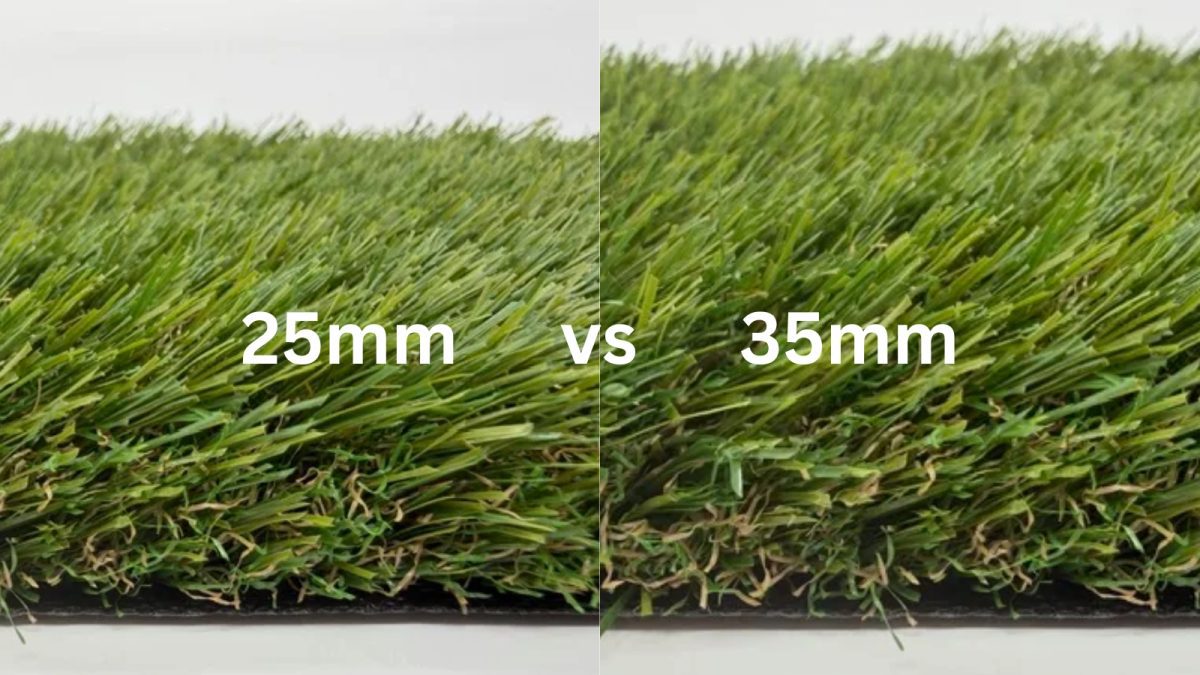
  • 25mm = shorter, tighter finish
  • 35mm = longer, more natural lawn look

It affects:

  • Drying time
  • Cleaning ease
  • Cushioning
  • Appearance
  • Wear resistance

It does NOT directly affect safety — both are safe when manufactured properly.

Quick Comparison Overview

Feature25mm Artificial Grass35mm Artificial Grass
AppearanceNeat, practicalLush, natural
Drying SpeedFasterSlightly slower
CleaningEasierStill easy
Multi-Dog HomesExcellentVery good
ComfortFirmSofter feel
Best ForHeavy use areasFamily gardens

25mm Artificial Grass for Dogs

Why Many Dog Owners Choose 25mm

25mm artificial grass is often considered the most practical option for pet households.

Key Benefits

✔ Dries faster after rain
✔ Easier to rinse
✔ Less fibre flattening
✔ Handles heavy use
✔ Ideal for multiple dogs

Because the fibres are shorter, moisture evaporates more quickly — helpful in damp UK conditions.

Best Situations for 25mm

  • Homes with 2+ dogs
  • Dog runs
  • High-traffic gardens
  • Breeders
  • Rental properties
  • Areas focused on practicality over aesthetics

If your garden is primarily for the dog, 25mm is usually the smart choice.

35mm Artificial Grass for Dogs

Why Homeowners Prefer 35mm

35mm offers a softer, more natural lawn appearance.

It looks closer to a freshly cut British lawn and provides slightly more cushioning.

Key Benefits

✔ More realistic appearance
✔ Softer underfoot
✔ Great for mixed-use gardens
✔ Comfortable for children and pets
✔ Premium aesthetic finish

For many UK families, 35mm strikes the balance between style and function.

Best Situations for 35mm

  • Family gardens
  • Homes with children and pets
  • Front gardens
  • Decorative spaces
  • Moderate dog use

If your garden is both a relaxation space and dog area, 35mm often wins.

Does Pile Height Affect Drainage?

This is a common misconception.

Drainage performance is primarily determined by:

  • Backing permeability
  • Sub-base preparation
  • Installation quality

However:

  • 25mm dries slightly faster due to shorter fibres
  • 35mm may hold surface moisture slightly longer

In properly installed systems, both perform well.

Does Pile Height Affect Odour?

Indirectly.

Shorter fibres (25mm):

  • Allow easier rinsing
  • Dry more quickly
  • Are slightly less prone to surface moisture retention

But the real cause of odour is poor drainage — not fibre length.

Advanced systems like ARTTRAGrass® combine either pile height with 100% recyclable bio-backed green backing, supporting airflow and drainage compatibility.

Find out more on our Artificial Grass for Dogs service page.

Durability Under Heavy Dog Use

Dogs create:

  • Repeated traffic paths
  • Digging pressure
  • Zoomies and turning stress
  • Concentrated toilet areas

25mm:

  • Slightly more resilient to flattening
  • Easier to maintain upright appearance

35mm:

  • Slightly softer feel
  • May require occasional brushing in high-use spots

Both perform well when fibre density and backing quality are high.

Comfort for Dogs

Dogs care more about:

  • Stability
  • Cleanliness
  • Temperature

than fibre height.

That said:

  • 35mm feels slightly plusher when lying down
  • 25mm feels firmer but still comfortable

For elderly dogs, cushioning may matter slightly more.

UK Weather Considerations

Given the UK’s damp climate:

  • Faster drying can be beneficial
  • Good drainage is essential
  • Professional installation is critical

25mm can offer marginally better drying speed in shaded gardens.

However, in well-installed systems, both are suitable all year round.

Eco Considerations

Pile height itself does not determine environmental impact.

What matters is:

  • Backing technology
  • Recyclability
  • Fossil fuel dependency
  • Product lifespan

ARTTRAGrass® is available in both 25mm and 35mm and features:

  • 100% recyclable bio-backed green backing
  • Reduced fossil fuel reliance
  • Lower carbon footprint
  • Non-toxic construction

The eco advantage applies to both options.

Cost Difference Between 25mm and 35mm

Generally:

  • 35mm may cost slightly more due to increased fibre volume
  • Installation costs are similar

Price differences are usually minor compared to base preparation costs.

Choosing based on performance needs is more important than minor price variation.

Which Should You Choose?

Choose 25mm if:

  • You have multiple dogs
  • Your garden is high traffic
  • Practicality matters most
  • You want easier cleaning

Choose 35mm if:

  • You want a more natural lawn appearance
  • Your garden is shared by children and pets
  • Aesthetic finish matters
  • Dog use is moderate

Both are excellent when properly installed.

The Most Important Decision Isn’t 25mm vs 35mm

It’s this:

  • Is the turf non-toxic?
  • Is the backing permeable?
  • Is the installation done correctly?
  • Is the system environmentally responsible?

Pile height is secondary to product quality.

Why ARTTRAGrass® Offers Both Options

Rather than forcing a one-size-fits-all approach, ARTTRAGrass® provides:

  • 25mm for heavy-duty practicality
  • 35mm for premium aesthetic finish
  • 100% recyclable bio-backed green backing
  • Reduced fossil fuel dependency
  • Designed for UK families with pets and children

The technology remains consistent — only the fibre height changes.
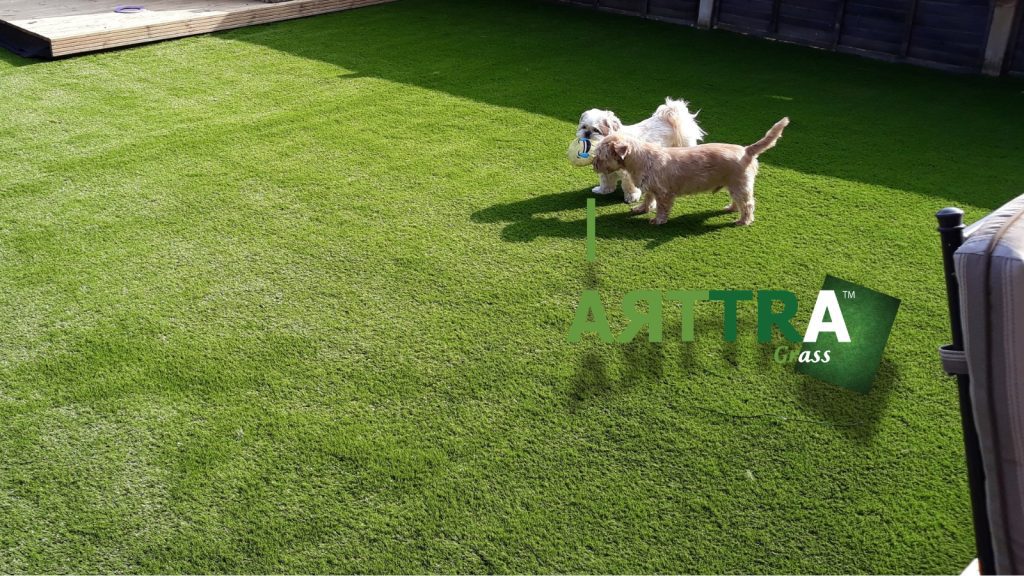
25mm Artificial Lawn for Dogs

Need Help Deciding?

The best way to choose is through:

  • Usage assessment
  • Garden layout review
  • Drainage evaluation
  • Lifestyle considerations

Request a free consultation and we’ll help you decide whether 25mm or 35mm is the better long-term investment for your home.

FAQs: 25mm vs 35mm Artificial Grass for Dogs

1. Is 25mm or 35mm artificial grass better for dogs?

25mm is slightly more practical for heavy use; 35mm offers a softer look and feel.

2. Does 35mm artificial grass smell more?

No. Odour depends on drainage, not pile height.

3. Is 25mm easier to clean?

Yes, slightly — due to shorter fibres.

4. Is 35mm softer for dogs?

Yes, marginally.

5. Which lasts longer?

Both last 10–15+ years when properly installed.

6. Is there a big cost difference?

Usually minimal.

7. Is 25mm better for multiple dogs?

Often yes, due to practicality.

8. Does pile height affect drainage?

Not directly — backing and sub-base are more important.

9. Can puppies use either?

Yes, both are safe when non-toxic.

10. Which looks more realistic?

35mm typically looks more like a natural lawn.

GET IN TOUCH
Schedule a Visit

Categories
Dogs

How to Stop Artificial Grass Smelling of Dog Urine (UK Guide 2026)

If your artificial lawn smells unpleasant, you’re not imagining it.

One of the most searched problems in the UK artificial turf market is:

“Why does my artificial grass smell of dog urine?”

The good news?
The smell is not inevitable.

The better news?
It’s preventable — and in most cases, fixable.

In this guide, we’ll explain:

  • Why artificial grass develops urine odour
  • How to remove existing smells
  • The biggest installation mistakes
  • Long-term prevention strategies
  • When replacement is the only real solution

Why Artificial Grass Smells of Dog Urine

Artificial grass itself does not create smell.

The odour comes from:

  • Ammonia in dog urine
  • Bacteria growth
  • Urine pooling beneath the surface
  • Poor drainage systems
  • Incorrect sub-base installation

In UK conditions, damp weather can worsen the issue by slowing evaporation.

The Real Cause: Drainage Failure

In over 80% of odour cases, the root cause is poor drainage.

This happens when:

  • The backing is not sufficiently permeable
  • The sub-base is compacted incorrectly
  • There is no proper MOT Type 1 base
  • Sand layers trap moisture
  • Cheap latex backing restricts airflow

When urine cannot drain vertically, it stagnates — creating ammonia build-up and bacterial growth.

No cleaning product can permanently fix trapped urine beneath the turf.

Immediate Fix: How to Remove Artificial Grass Dog Urine Smell

If the smell is recent or mild, try this step-by-step method.

Step 1: Rinse Thoroughly

Use a garden hose to flush the affected area.

In the UK, regular rainfall often helps — but targeted rinsing is more effective.

Step 2: Apply an Enzyme Cleaner

Use a pet-safe enzyme-based artificial grass cleaner.

Enzymes break down:

  • Uric acid crystals
  • Bacteria
  • Organic residue

Avoid bleach or harsh chemicals — they can damage fibres and harm pets.

Step 3: Brush the Fibres

Brushing helps:

  • Lift flattened fibres
  • Improve airflow
  • Prevent moisture trapping

Step 4: Improve Drainage Flow

If water pools after rinsing, your issue is structural — not surface-level.

What NOT to Do

Avoid:

  • Pouring undiluted disinfectant
  • Using pressure washers excessively
  • Masking smell with fragranced sprays
  • Ignoring sub-base issues

Temporary solutions only delay the problem.

When Cleaning Doesn’t Work

If the smell keeps returning after rain or cleaning, it usually means:

  • Urine has soaked into the sub-base
  • The turf backing restricts drainage
  • The base was not installed correctly

In these cases, surface treatment will not solve the issue.

The solution may involve:

  • Lifting sections of turf
  • Replacing the base layer
  • Installing higher drainage backing

How Proper Installation Prevents Smell

A correctly installed dog friendly artificial grass system should include:

  1. Adequate excavation depth
  2. Compacted MOT Type 1 base
  3. Sharp sand levelling
  4. Permeable membrane
  5. High-drainage turf backing

Premium systems like ARTTRAGrass® use advanced bio-backed green backing technology, supporting airflow and vertical drainage.

This drastically reduces the risk of urine stagnation compared to traditional latex-backed turf.

Why Cheap Artificial Grass Smells More

Budget turf often uses:

  • Dense latex backing
  • Limited perforation
  • Poor-quality fibres
  • Weak seam bonding

These materials trap moisture and limit airflow.

Over time, bacteria multiply beneath the surface — especially in multi-dog households.

UK Climate & Artificial Grass Smell

In warmer countries, heat can intensify odour.

In the UK, the main issue is damp conditions slowing evaporation.

That’s why:

  • Proper drainage is essential
  • Sub-base preparation matters
  • Permeable materials outperform sealed systems

Preventing Artificial Grass Dog Urine Smell Long-Term

To prevent future problems:

✔ Rinse High-Use Areas Weekly

✔ Remove Solid Waste Promptly

✔ Use Enzyme Cleaner Monthly

✔ Ensure Proper Drainage During Installation

✔ Choose High-Permeability Turf

Prevention is far easier than correction.

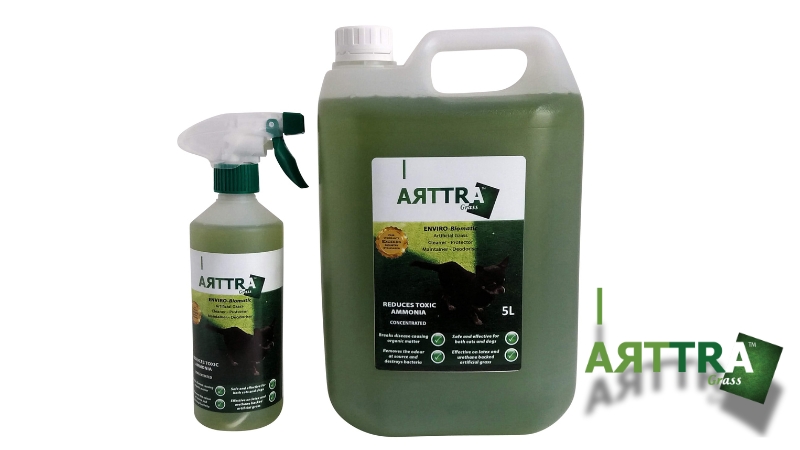
Enzyme Cleaner for Artificial Grass

Is Artificial Grass Always Going to Smell with Dogs?

No.

When:

  • The product is high quality
  • The backing is breathable
  • Installation is professional
  • Drainage is correct

Artificial grass can remain odour-free for years. Pet infills can also help.

Thousands of UK households successfully use dog friendly artificial grass without issues.

When Replacement Is the Best Option

If:

  • The base is saturated with urine
  • The backing is non-permeable
  • Smell returns within days of cleaning

You may need to replace the turf and rebuild the base properly.

When upgrading, choose a system designed specifically for pet use — not decorative garden turf.

Why Many UK Dog Owners Upgrade to ARTTRAGrass®

If you’re experiencing persistent artificial grass dog urine smell, it’s often due to:

  • Outdated latex-backed turf
  • Inadequate drainage
  • Poor installation

ARTTRAGrass® is engineered with:

  • 100% recyclable bio-backed green backing
  • Reduced fossil fuel dependency
  • Improved drainage compatibility
  • Non-toxic construction
  • Availability in 25mm and 35mm

It’s designed specifically for families with pets and children.

Get more information by visiting our Artificial Grass for Dogs service page.

Final Thoughts

Artificial grass dog urine smell is not inevitable.

It’s usually the result of:

  • Poor drainage
  • Cheap materials
  • Installation shortcuts

Fix minor issues with cleaning.

Fix structural issues with better installation.

And if needed — upgrade to a system built for real dog ownership.

Need Expert Advice?

If your artificial lawn smells and you are unsure whether it’s fixable or needs replacing, request a professional assessment.

We will help you determine whether cleaning, drainage correction or full replacement is the best solution.

FAQs: How to Stop Artificial Grass Smelling of Dog Urine

1. Why does my artificial grass smell of dog urine?

Usually due to poor drainage or urine pooling beneath the turf.

2. Can artificial grass smell permanently?

Only if the sub-base is saturated and drainage is inadequate.

3. Does rain remove urine smell?

Rain helps, but proper drainage is more important.

4. What is the best cleaner for artificial grass dog urine?

Pet-safe enzyme cleaners are most effective.

5. Should I use bleach on artificial grass?

No, bleach can damage fibres and harm pets.

6. How often should I rinse artificial grass with dogs?

Weekly for high-use areas.

7. Does pile height affect odour?

Indirectly — shorter piles (25mm) dry faster.

8. Can poor installation cause smell?

Yes, it’s the most common cause.

9. Is eco-friendly artificial grass less likely to smell?

High-quality permeable systems are less prone to odour.

10. When should artificial grass be replaced?

If smell persists despite cleaning and drainage corrections.

GET IN TOUCH

Schedule a Visit