Categories
Back Garden Residential

Artificial Grass Installation Kettering

Mawsley Case Study – Eco-Friendly Garden Transformation

This artificial grass installation Kettering project in Mawsley was completed just last week, transforming a patchy, mud-prone lawn into a clean, safe and eco-friendly garden for a young family.

For years, the homeowners had struggled with:

  • Patchy, worn natural grass
  • Mud constantly being brought into the house
  • Children unable to play outside during wet weather
  • Ongoing frustration with maintenance

However, this project had an additional layer.

The homeowner’s husband, Stuart, had resisted artificial grass for over six years due to environmental concerns.

Like many environmentally conscious homeowners, he believed most artificial grass products on the market were not sustainable.

That changed when he discovered ARTTRAGrass® BioGrass and EcoGrass.


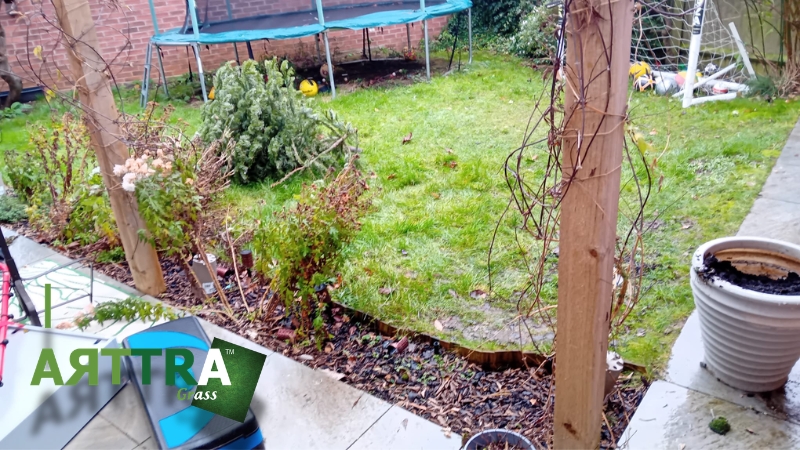
The Problem: Patchy Lawn & Mud Disrupting Family Life

The garden in Mawsley had become increasingly difficult to manage.

Natural grass was struggling due to:

  • Regular foot traffic from children
  • Seasonal weather conditions
  • Poor recovery after wear
  • Inconsistent growth

Over time, the lawn became:

  • Patchy and uneven
  • Muddy during wet conditions
  • Visually unattractive
  • Unsafe for regular play

For the family, this meant:

  • Children unable to enjoy the garden
  • Mud being constantly walked into the home
  • Increased cleaning and frustration
  • Limited use of outdoor space

Like many homeowners in the Kettering area, they reached a point where natural grass was no longer practical.


The Objection: Environmental Concerns Around Artificial Grass

For Stuart, the decision wasn’t simple.

He had spent years avoiding artificial grass due to concerns about:

  • Plastic use
  • Environmental impact
  • Recyclability
  • Heat retention
  • Long-term sustainability

This is a common and valid concern.

Many artificial grass products on the market rely heavily on:

  • Latex backing
  • Fossil fuel-based materials
  • Non-recyclable components

These systems often fail to align with environmentally responsible values.


The Turning Point: Discovering ARTTRAGrass® BioGrass

The breakthrough came when the family discovered ARTTRAGrass® BioGrass and EcoGrass systems.

These products are designed with sustainability in mind, offering:

  • Reduced reliance on fossil fuels
  • Bio-based backing technology
  • Fully recyclable components
  • Non-toxic materials
  • Odour-free performance

But beyond sustainability, one feature stood out immediately:

The lifelike appearance.
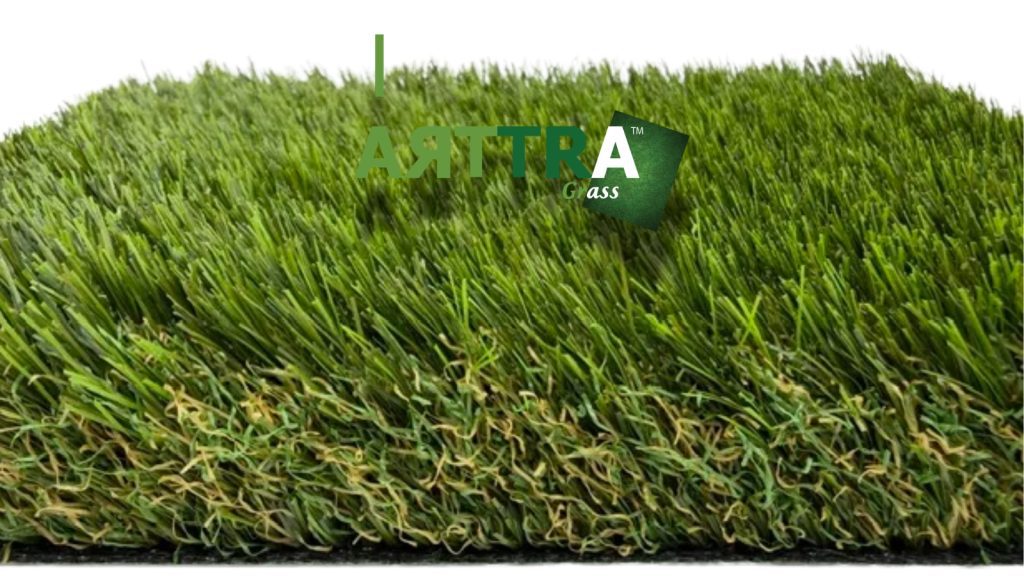
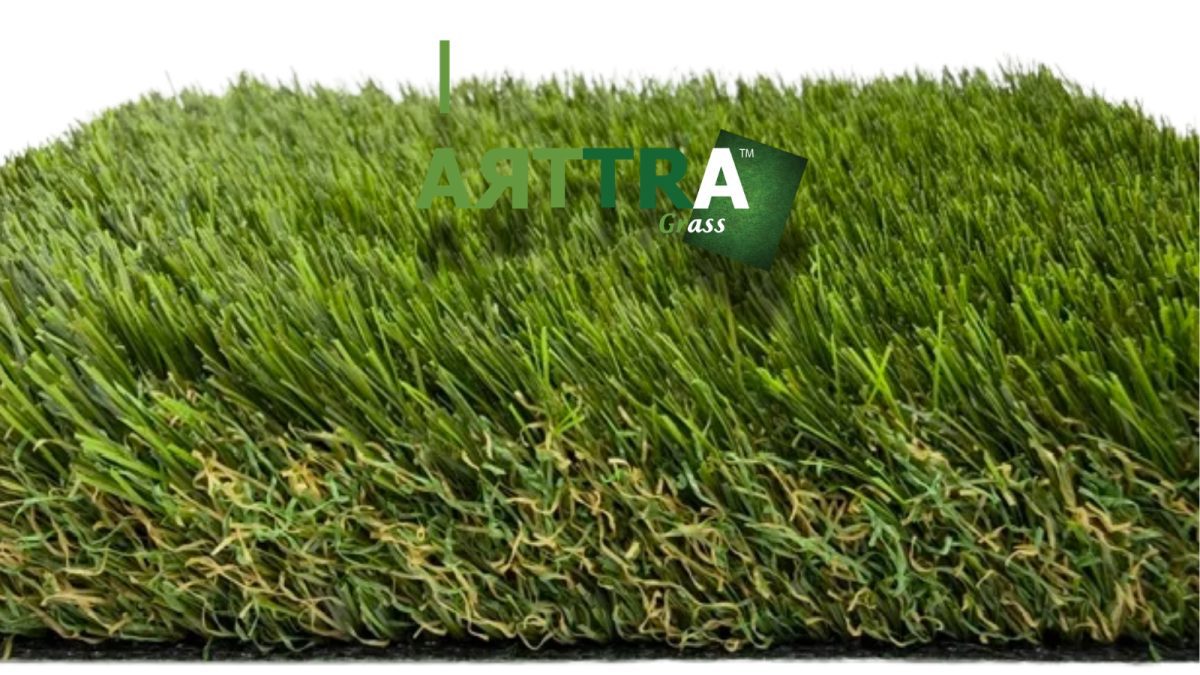
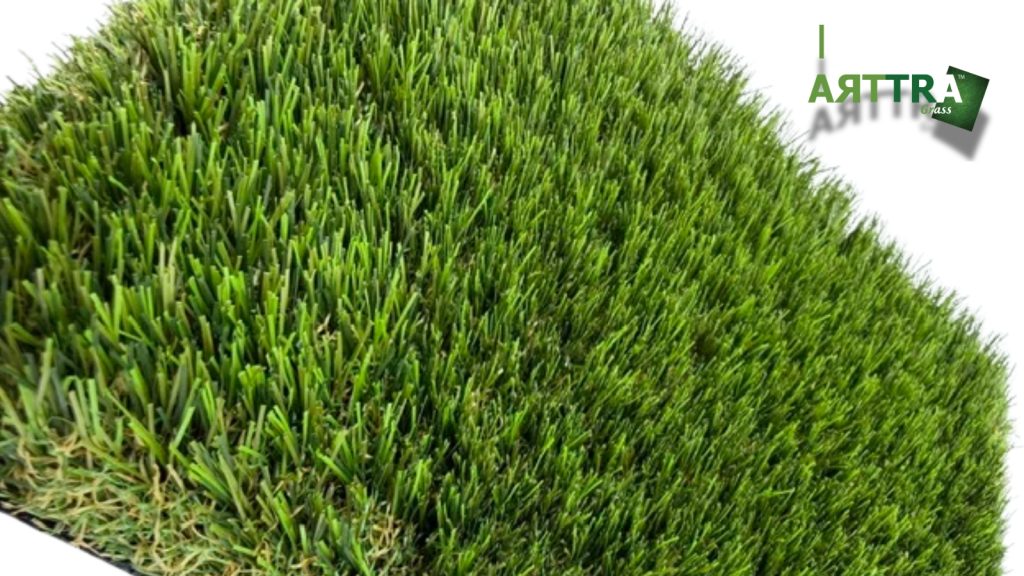
Eco Bio-Backed 40mm Turf

A Truly Lifelike Artificial Grass

One of the biggest misconceptions about artificial grass is that it looks unnatural.

That perception changed instantly when the family saw ARTTRAGrass® BioGrass.

The product delivers:

  • Natural colour variation
  • Realistic blade structure
  • Dense, high-quality fibres
  • Soft, comfortable feel underfoot

The result is a lawn that looks and feels like natural grass — without the drawbacks.


Installation Process

The installation was completed efficiently and professionally, ensuring minimal disruption.

Step 1: Removal of Existing Lawn

  • Excavation of patchy grass
  • Removal of organic material
  • Surface levelling
Before

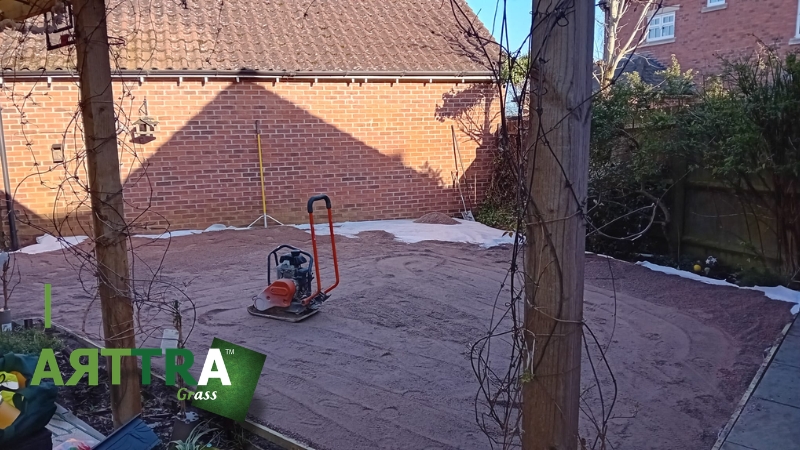
Step 2: Sub-Base Preparation

  • Installation of a stable, free-draining sub-base
  • Compaction for durability
  • Ensuring long-term structural integrity
During

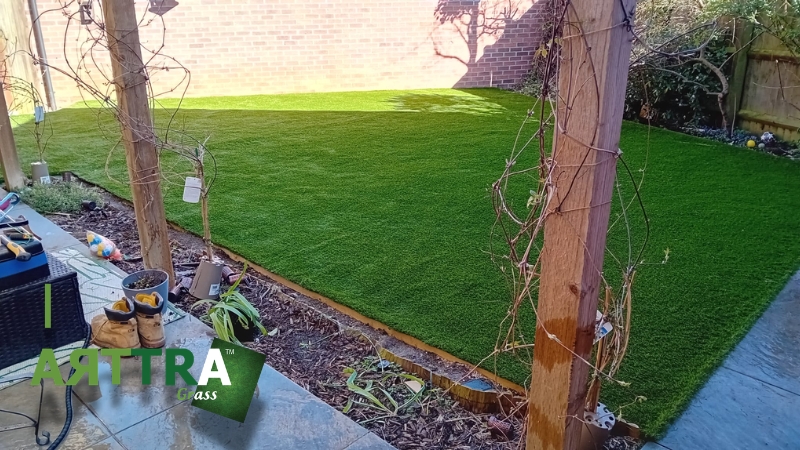
Step 3: Artificial Grass Installation

  • Precision cutting and fitting
  • Seam joining and securing
  • Edge detailing
  • Final brushing and finishing

Attention to detail at every stage ensured a flawless finish.
After

The Result: A Garden Transformed

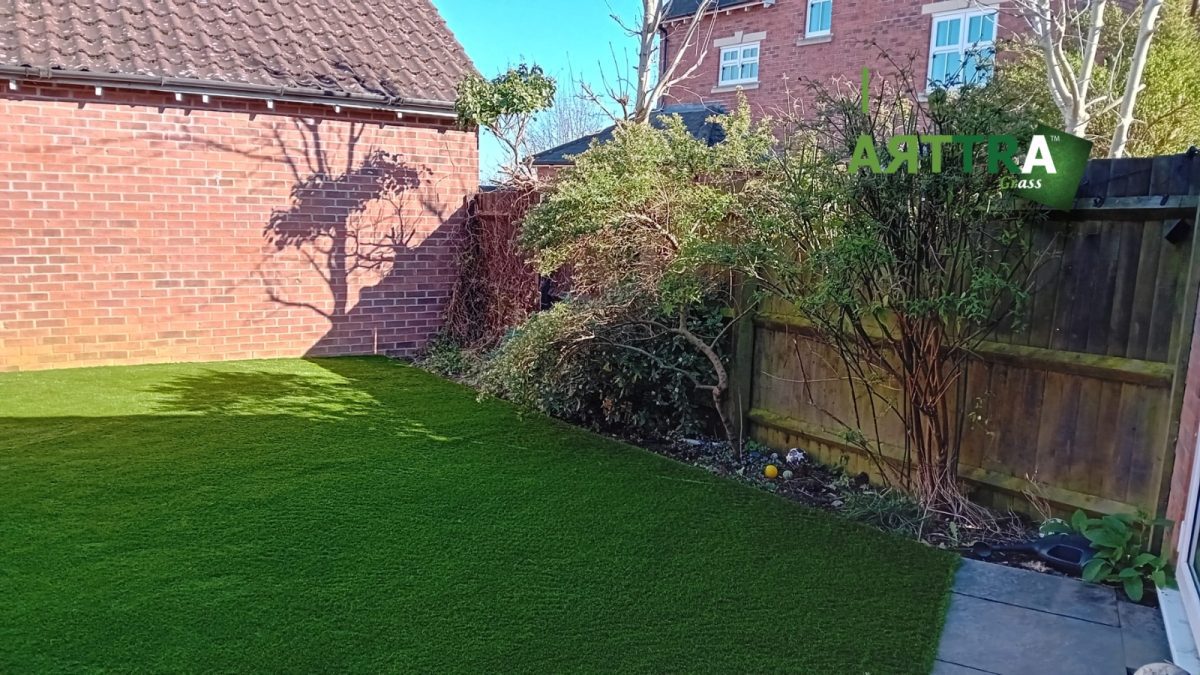
The transformation was immediate.

The garden is now:

  • Fully usable all year round
  • Clean and mud-free
  • Safe for children
  • Visually stunning
  • Environmentally responsible

The children haven’t stopped playing outside since installation.

And importantly for Stuart, the solution aligns with his environmental values.


Customer Review

The homeowner shared the following review:

“Not only does the finished grass look amazing and so natural but the team were fantastic. Such a professional experience from start to finish, the team were hard working, friendly, polite and so tidy. The kids haven’t stopped playing in the garden since the new grass went in. Thanks so much.”

This highlights not just the product quality, but the overall customer experience.
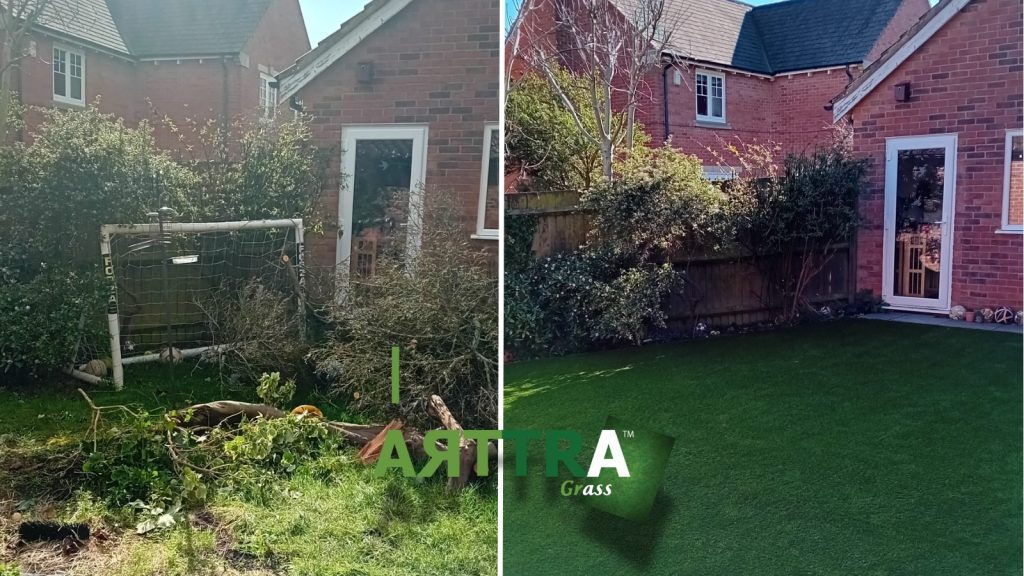
Artificial Grass Mawsley Before After
Before & After ARTTRAGrass® Artificial Grass installation images in Mawsley, Kettering

Why Families in Kettering Choose Artificial Grass

Artificial grass is increasingly popular across Kettering and surrounding areas due to:

  • High clay content in soil
  • Poor drainage conditions
  • Heavy garden usage
  • Unpredictable UK weather

For families, the key benefits include:

  • No mud in the house
  • All year round usability
  • Low maintenance
  • Safe play surface
  • Consistent appearance

Explore the Product Used

This project featured the ARTTRAGrass® BioGrass which is 100% recyclable artificial grass:

This product is ideal for:

  • Family gardens
  • High-use areas
  • Eco-conscious homeowners
  • Premium aesthetic results

Learn More: Choosing the Best Artificial Grass

If you’re comparing options, the best artificial grass guide will help.


Project Summary

Location: Mawsley, Kettering
Completed: Last week
Problem: Patchy lawn, mud, limited usability
Solution: BioGrass installation by ARTTRAGrass® Artificial Grass Rushden team
Key Feature: Eco-friendly artificial grass system
Outcome: Clean, safe, high-performance family garden
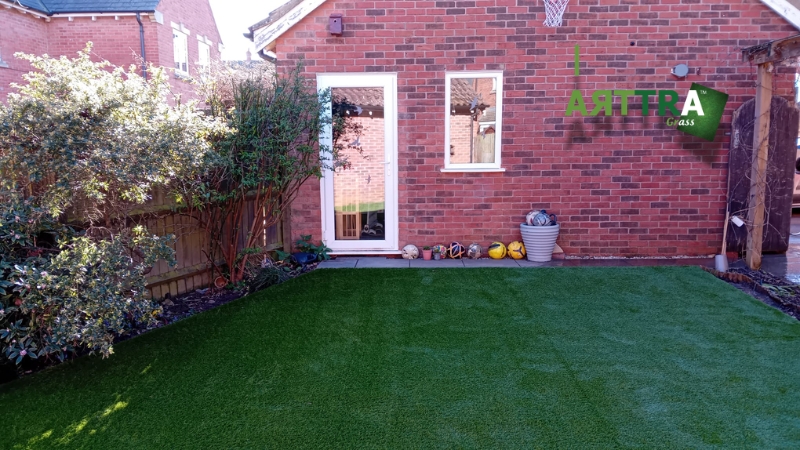
Artificial Lawn Mawsley Kettering

Frequently Asked Questions: Artificial Grass Installation Kettering

1. Is artificial grass suitable for family gardens?

Yes. It provides a safe, clean and durable surface ideal for children.

2. Does artificial grass eliminate mud?

Yes. Artificial grass removes exposed soil, preventing mud formation.

3. Is artificial grass environmentally friendly?

Modern systems like ARTTRAGrass BioGrass use recyclable materials and reduce reliance on fossil fuels.

4. Does artificial grass look realistic?

Yes. High-quality products offer natural colour variation and lifelike textures.

5. How long does artificial grass last?

Typically 10–15 years depending on use and maintenance.

6. Is artificial grass safe for children?

Yes. It is non-toxic, soft underfoot and stable.

7. Does artificial grass require maintenance?

Minimal maintenance such as brushing and occasional cleaning.

8. Can artificial grass be installed in all weather?

Installation is best completed in dry conditions but is possible all year round.

9. Will artificial grass drain properly?

Yes. Professional systems include free-draining sub-bases.

10. Do you install artificial grass in Kettering?

Yes. ARTTRAGrass provides installations throughout Kettering and surrounding areas.

GET IN TOUCH
Schedule a Quotation

Categories
Education

How Much Does Artificial Grass Cost for Schools?

2026 Pricing Guide for Educational Settings

One of the first questions schools ask is: “How much does artificial grass cost?”

The honest answer?

It depends.

Costs vary based on:

  • Area size
  • Ground preparation
  • Drainage requirements
  • Usage level
  • Accessibility needs
  • Location

This guide breaks down realistic pricing ranges for UK schools and explains what influences your final investment.

Quick Cost Overview (UK Schools)

For most educational installations, artificial grass typically costs:

£55 – £95 per square metre (fully installed)

This range includes:

  • Ground preparation
  • Sub-base construction
  • Artificial grass supply
  • Installation labour
  • Finishing and edge detailing

Larger projects often benefit from lower per-square-metre costs.

Smaller projects may sit at the higher end due to fixed setup costs.

Typical School Project Examples

Small Nursery Play Area (50–100sqm)

Estimated total:
£3,000 – £8,500

Ideal for:

  • Early years settings
  • Compact outdoor classrooms
  • Sensory areas

Primary School Playground (200–400sqm)

Estimated total:
£11,000 – £34,000

Commonly installed to eliminate mud and increase year-round access.

For example, Winchester House School installed approximately 400sqm to resolve ongoing mud disruption.

Larger School Courtyard or Multi-Use Area (500sqm+)

Estimated total:
£27,500 – £47,500+

Economies of scale may reduce per-sqm cost slightly on larger areas.

Nursery School Artificial Grass Cost

What Affects the Cost of Artificial Grass for Schools?

Understanding pricing variables helps you budget accurately.

1. Ground Preparation

The largest cost factor is often what lies beneath.

If your current surface is:

  • Worn natural grass
  • Uneven
  • Poorly draining
  • Waterlogged

It may require:

  • Excavation
  • New sub-base
  • Compaction
  • Drainage improvements

If installing over an existing stable surface (such as properly prepared concrete), costs may reduce.

For example, a temporary installation was delivered at Francis Holland School directly over hard surfaces for a sports event.

2. Area Size

Bigger areas generally reduce cost per square metre.

Smaller areas may cost more per sqm due to:

  • Fixed labour mobilisation
  • Equipment setup
  • Waste removal

3. Pile Height & Product Specification

School artificial grass typically ranges between:

  • 20mm – 30mm for playgrounds
  • 25mm – 35mm for multi-use areas

Higher specification systems with enhanced durability or bio-backed materials may increase material cost.

4. Drainage Requirements

Schools often require:

  • Free-draining sub-base
  • Permeable membranes
  • Proper edge detailing

Poor drainage design leads to long-term problems — so this should never be compromised to reduce cost.

5. Shockpads & Safety Layers

Where additional fall protection is required (for example under play equipment), shock-absorbing underlays may be specified.

This increases cost but improves safety compliance.

6. Accessibility Considerations

For SEN environments or wheelchair-accessible areas, additional preparation and levelling may be required.

These adjustments affect installation time and material usage.

Is Artificial Grass Cheaper Than Natural Grass?

Upfront:
No. Natural grass is cheaper to install initially.

Long term:
Often yes.

Natural grass requires ongoing:

  • Mowing
  • Reseeding
  • Fertilising
  • Pest control
  • Irrigation
  • Grounds staff time

Additionally, many schools underestimate:

  • Cleaning costs from mud
  • Caretaker overtime
  • Corridor maintenance
  • Seasonal area closures

Artificial grass eliminates most of these recurring costs.

Over 8–15 years, lifetime cost comparisons often favour artificial grass in high-use school environments

How Long Does Artificial Grass Last in Schools?

Typical lifespan:

8 – 15 years

Depending on:

  • Usage levels
  • Installation quality
  • Maintenance
  • Footfall concentration

This means the annualised cost can be significantly lower than the headline installation figure suggests.

Hidden Costs Schools Often Overlook

When evaluating natural grass vs artificial grass, schools should consider:

  • Lost teaching time due to weather closures
  • Cleaning staff hours
  • Damage to indoor flooring from mud
  • Parent complaints
  • Negative first impressions during inspections

Artificial grass helps stabilise these operational variables.

Can Schools Finance Artificial Grass?

Many schools fund installations through:

  • Capital improvement budgets
  • PTA fundraising
  • Academy trust investment
  • Phased area installations
  • Summer project planning

Breaking a large playground into staged phases can make budgeting more manageable.

Temporary Artificial Grass Costs

For short-term events (sports days, open days, graduations), temporary artificial grass hire is also available.

Costs depend on:

  • Duration
  • Surface type
  • Installation complexity
  • Area size

Temporary installations are typically quoted individually due to logistics.

Return on Investment (ROI)

When evaluating ROI, schools should consider:

  • Reduced cleaning labour
  • Reduced grounds maintenance
  • Increased all year round usability
  • Enhanced presentation
  • Improved accessibility

The value is not purely financial — it is operational.

FAQs: How Much Does Artificial Grass Cost for Schools?

1. How much does artificial grass cost per square metre for schools?

Typically £55–£95 per square metre fully installed, depending on specification and preparation requirements.

2. Is artificial grass more expensive than natural grass?

Upfront, yes. Long-term, it can be more cost-effective in high-footfall environments.

3. What is the cheapest artificial grass option for schools?

Lower pile-height systems with minimal groundwork sit at the lower end of the pricing range.

4. How long does installation take?

Most school projects take between 3–10 working days depending on size and preparation needs.

5. Does artificial grass reduce maintenance costs?

Yes. It eliminates mowing, reseeding and most grounds maintenance requirements.

6. Can artificial grass be installed during school holidays?

Yes. Many schools schedule installation during half terms or summer breaks.

7. Does artificial grass add value to a school?

It can enhance presentation, usability and accessibility, which positively impacts perception and operations.

8. Is artificial grass suitable for nurseries?

Yes. It is commonly installed in early years settings to improve hygiene and reduce mud.

9. Can artificial grass be installed in phases?

Yes. Larger playgrounds can be divided into staged installations.

10. How do we get an accurate quote?

A site survey is required to assess ground conditions, drainage and project scope.

In a Nutshell

Artificial grass for schools is an investment.

The exact cost depends on your site conditions, specification and objectives.

For high-footfall playgrounds where mud, maintenance and disruption are ongoing problems, artificial grass often provides long-term value and operational stability.

A professional site assessment is the only way to obtain an accurate, tailored quotation. Find out the different types of Artificial Grass for Schools on our service page.

GET IN TOUCH

Schedule a Visit

Categories
Dogs

ARTTRAGrass® vs Standard Artificial Turf

Which Is Truly Best for Dogs and UK Families?

If you’re investing in artificial grass for your dog, you’ve probably realised something:

Not all artificial turf is the same.

At first glance, most products look similar.

But beneath the surface, the differences are significant — especially when it comes to:

  • Pet safety
  • Odour control
  • Environmental impact
  • Longevity
  • Backing technology
  • Fossil fuel dependency

This page breaks down the real differences between:

ARTTRAGrass® (100% recyclable bio-backed system)
vs
Standard petroleum-backed artificial turf

So you can make an informed decision.

The Core Difference: Backing Technology

Most artificial grass in the UK uses:

  • Latex or polyurethane backing
  • Petroleum-derived materials
  • Mixed-material construction
  • Limited recyclability

ARTTRAGrass® uses:

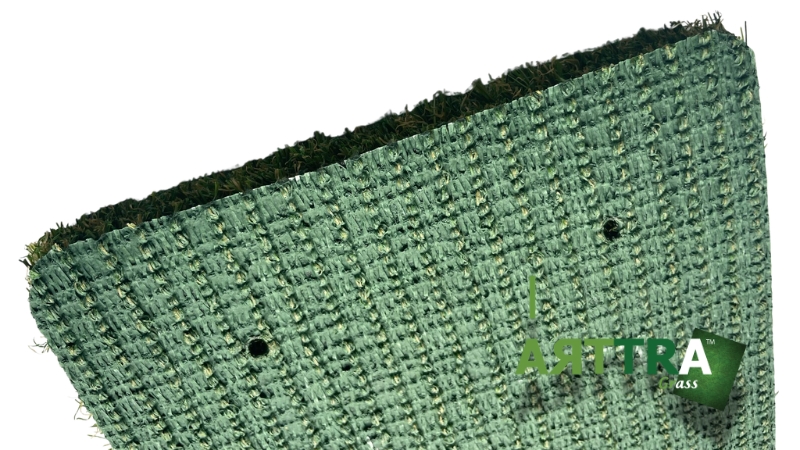
  • 100% recyclable bio-backed green backing
  • Reduced fossil fuel dependency
  • Lower carbon footprint manufacturing
  • Fully recyclable design pathway

The fibres may look similar on top.

The backing is where the real innovation lives.

Side-by-Side Comparison

FeatureARTTRAGrass®Standard Artificial Turf
Backing100% recyclable bio-backedLatex / PU (petroleum-based)
Fossil Fuel DependencyDrastically reducedHigh
RecyclabilityDesigned for recyclingOften landfill
Odour ResistanceSupports airflow & drainageVaries
SafetyNon-toxicDepends on manufacturer
Available Pile Heights25mm & 35mmVarious
UK Family FocusYesNot always
Long-Term Environmental ImpactLowerHigher

1. Safety for Dogs and Children

When it comes to pets, safety is non-negotiable.

Standard Turf Risks May Include:

  • Chemical stabilisers
  • Petroleum-based backing
  • Questionable sourcing
  • Heat retention concerns
  • VOC emissions (varies by manufacturer)

ARTTRAGrass® Focuses On:

  • Non-toxic materials
  • Family-safe construction
  • Designed for pet and child use
  • Low-carbon innovation

While many products claim safety, ARTTRAGrass® is engineered specifically with family use in mind.

2. Environmental Impact

This is where the biggest separation happens.

Standard Artificial Turf

  • Heavily petroleum-based
  • Difficult to recycle
  • Often disposed of in landfill
  • High fossil fuel input

ARTTRAGrass®

  • Bio-backed green technology
  • Reduced fossil fuel dependency
  • 100% recyclable pathway
  • Lower carbon footprint

For eco-conscious UK homeowners, this difference matters.

3. Odour and Drainage Performance

Dog urine smell is usually caused by:

  • Poor drainage
  • Inadequate sub-base
  • Moisture retention
  • Bacteria build-up

Standard turf may:

  • Use impermeable backings
  • Trap moisture
  • Increase odour risk if poorly installed

ARTTRAGrass®:

  • Supports airflow
  • Compatible with permeable installations
  • Designed for pet-friendly drainage systems

Proper installation is critical — but product design plays a major role.

4. Longevity and Structural Integrity

Standard turf:

  • Backing can degrade over time
  • Latex may crack
  • Separation can occur in low-cost products

ARTTRAGrass®:

  • Engineered backing system
  • Built for UK weather
  • Designed for long-term performance

When investing in artificial grass, longevity impacts total cost of ownership.

5. Performance Under Heavy Dog Use

Dogs create:

  • Repetitive traffic
  • Concentrated toilet spots
  • Turning stress
  • Claw pressure

ARTTRAGrass® is available in:

  • 25mm (heavy-duty practicality)
  • 35mm (family aesthetic finish)

Both options maintain structural performance while supporting drainage.

ARTTRAGrass® Artificial Dog Grass

6. Heat Retention

All artificial grass warms in direct sun.

However, darker petroleum-based backings may contribute to heat retention.

ARTTRAGrass®’s green bio-backed system reduces reliance on petroleum-heavy components.

For UK climate conditions, heat is rarely extreme — but product design still matters.

7. Cost Comparison

Standard artificial turf can appear cheaper upfront.

But consider:

  • Replacement frequency
  • Disposal costs
  • Environmental cost
  • Performance degradation
  • Brand credibility

ARTTRAGrass® may represent:

  • Higher upfront value
  • Lower long-term environmental cost
  • Premium family-focused investment

Price is only one part of the equation.

Who Should Choose Standard Turf?

Standard artificial turf may suit:

  • Budget-only projects
  • Temporary installations
  • Low-use decorative spaces

But for dog-owning families prioritising safety and sustainability, alternatives are worth evaluating.

Who Should Choose ARTTRAGrass®?

ARTTRAGrass® is ideal for:

  • Dog owners
  • Families with children
  • Eco-conscious households
  • Homeowners planning long-term
  • Multi-dog homes
  • Responsible property developers

It’s built for people who care about what’s under the surface — not just how it looks on top.

Why the UK Market Is Changing

UK homeowners are becoming more aware of:

  • Sustainability
  • Carbon impact
  • Pet safety
  • Material sourcing
  • Product lifecycle

The artificial grass industry is evolving.

Petroleum-heavy systems are slowly being challenged by recyclable innovations.

ARTTRAGrass® is positioned at the front of that shift.

Visit our Artificial Grass for Dogs service page for more information.

The Real Question Isn’t “Which Looks Better?”

Most artificial grass looks good in photos.

The real question is:

What is it made of?
Where does it end up?
How does it impact your dog?
How does it impact the planet?

That’s where meaningful differentiation exists.

Frequently Asked Questions: ARTTRAGrass® vs Standard Artificial Turf

1. Is ARTTRAGrass® safer than standard artificial turf?

ARTTRAGrass® is designed to be non-toxic and family-safe, with reduced fossil fuel reliance.

2. Is all artificial grass recyclable?

No. Most standard turf is difficult to recycle due to mixed-material construction.

3. Does standard turf contain petroleum?

Most traditional backings rely heavily on petroleum-derived materials.

4. Is ARTTRAGrass® fully recyclable?

It is designed with a 100% recyclable pathway.

5. Which is better for dogs?

Products designed with drainage, safety, and non-toxic materials are generally preferable.

6. Does ARTTRAGrass® cost more?

It may have a higher upfront cost but offers long-term environmental and performance benefits.

7. Is it suitable for multiple dogs?

Yes, especially in the 25mm option.

8. Does recyclable turf last as long?

Yes — durability is engineered into the backing system.

9. Is installation different?

Installation principles remain similar.

10. Why choose ARTTRAGrass® over a cheaper option?

Because long-term safety, sustainability, and performance matter.

GET IN TOUCH

Schedule a Visit

Categories
Dogs

The Ultimate Guide to Dog Friendly Artificial Grass (UK 2026 Edition)

If you are researching dog friendly artificial grass, you’re likely dealing with one (or more) of these problems:

  • Muddy paws destroying your floors
  • Yellow urine burn patches across your lawn
  • Constant reseeding and fertilising
  • Smells lingering in warm weather
  • A garden that looks worn out and patchy

You’re not alone.

Across the UK, more dog owners are replacing natural turf with modern artificial systems designed specifically for pets. But here’s the critical part:

Not all artificial grass is genuinely dog friendly.

This guide explains everything UK dog owners need to know before investing — from safety and drainage to pile height, environmental impact and long-term value.

What Does “Dog Friendly Artificial Grass” Actually Mean?

This term gets used loosely in the industry.

True dog friendly artificial grass must:

  • Be non-toxic
  • Drain urine quickly
  • Resist odour build-up
  • Withstand high traffic
  • Be easy to clean
  • Stay stable under digging pressure
  • Remain safe in UK weather conditions

If it fails in any of these areas, it’s simply decorative turf — not pet-engineered lawn.

Is Artificial Grass Safe for Dogs in the UK?

This is the most common concern for responsible pet owners.

The Safety Factors That Matter

A dog safe artificial lawn should include:

  • Lead-free yarn fibres
  • No harmful chemical coatings
  • No crumb rubber infill
  • Proper drainage backing
  • Stable installation

High-quality systems such as ARTTRAGrass® are built using a 100% recyclable bio-backed green backing, reducing fossil fuel reliance and eliminating traditional latex concerns.

Unlike natural lawns, artificial turf also removes exposure to:

  • Fertilisers
  • Weed killers
  • Moss treatments
  • Pesticides

For many UK families, artificial grass is actually the safer option.

The Biggest Concern: Artificial Grass & Dog Urine Smell

Let’s address this honestly.

Yes — artificial grass can smell.

But only when:

  • Drainage is poor
  • Installation is incorrect
  • Cheap latex backing is used
  • Sub-base preparation is inadequate

Why Odour Happens

Dog urine contains ammonia. When urine sits beneath turf without proper drainage, bacteria multiply, causing smell.

How Proper Systems Prevent It

A genuinely dog friendly system includes:

  • Perforated backing
  • Permeable sub-base
  • Fast vertical drainage
  • Airflow beneath the turf

When installed correctly, urine drains away rather than pooling.

In UK climates, regular rainfall also assists natural rinsing.

Natural Grass vs Dog Friendly Artificial Grass

Let’s compare practically.

Natural Grass Problems in the UK

  • Mud for 6+ months of the year
  • Waterlogged lawns
  • Yellow burn patches
  • Constant reseeding
  • Slippery surfaces
  • Digging damage

Dog Friendly Artificial Grass Benefits

  • Mud-free all year
  • No bald patches
  • Minimal maintenance
  • Fast drainage
  • Clean paws
  • Consistent appearance

For multi-dog households, the difference is dramatic.

Choosing the Right Pile Height for Dogs

Pile height affects both aesthetics and practicality.

25mm Artificial Grass

Best for:

  • Heavy dog use
  • Dog runs
  • Multiple dogs
  • Easier cleaning
  • Faster drying

It’s practical and durable.

35mm Artificial Grass

Best for:

  • Family gardens
  • Softer underfoot feel
  • Natural lawn appearance
  • Mixed use (children + pets)

Both options work — the right choice depends on usage intensity.

Drainage: The Most Important Factor

If you remember only one thing from this guide, let it be this:

Drainage determines success.

Proper dog friendly artificial grass installation in the UK requires:

  1. Excavation to correct depth
  2. Compacted MOT Type 1 sub-base
  3. Sharp sand levelling layer
  4. Permeable membrane
  5. High-drainage turf backing

Without this structure, even premium turf can fail.

Eco Friendly Dog Friendly Artificial Grass

Sustainability is now a major consideration for UK homeowners.

Traditional artificial turf relies heavily on petroleum-based latex backings and is often difficult to recycle.

What Makes Modern Turf Eco-Conscious?

  • Bio-based backing systems
  • Reduced fossil fuel dependency
  • 100% recyclability
  • Lower carbon footprint
  • Longer lifespan (reduces replacement waste)

ARTTRAGrass® features pioneering bio-backed technology that drastically reduces fossil fuel reliance compared to traditional synthetic turf.

For families who care about both pets and the planet, this is a major differentiator.

Does Artificial Grass Get Too Hot for Dogs?

In direct sun, all artificial surfaces warm up.

However, in the UK:

  • Extreme temperatures are rare
  • Cloud cover reduces exposure
  • Light watering cools instantly

Modern fibres are also engineered to reduce heat retention compared to older products.

Maintenance Guide for UK Dog Owners

Dog friendly artificial grass is low maintenance — not no maintenance.

Weekly

  • Remove solid waste
  • Hose high-use areas
  • Brush fibres occasionally

Monthly

  • Check edges
  • Inspect drainage areas
  • Use pet-safe enzyme cleaner if needed

Compared to mowing, feeding and reseeding natural lawns, upkeep is minimal

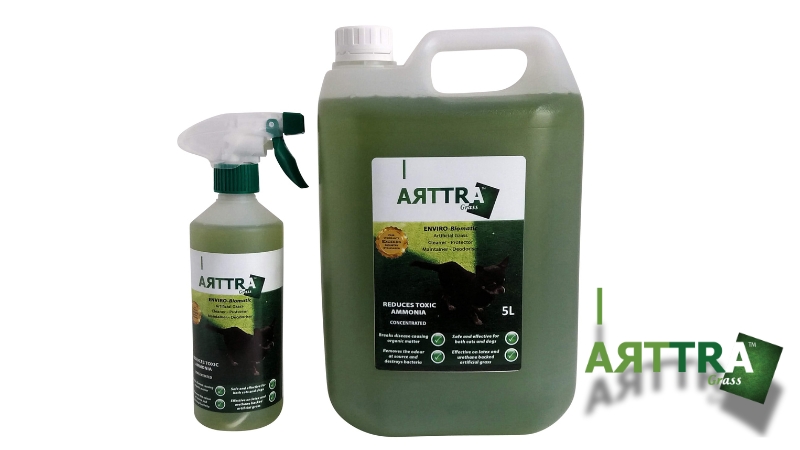
Enzyme Cleaner for Artificial Grass

Preventing Dogs from Digging

Dogs dig for instinct, scent or boredom.

Professional installation prevents lifting:

  • Secure edge restraints
  • Fully compacted base
  • Bonded seams
  • No exposed edges

Once installed correctly, most dogs quickly adapt.

Artificial Grass for Multiple Dogs

Higher traffic requires:

  • Dense fibre construction
  • Superior drainage
  • Slightly shorter pile height (often 25mm preferred)
  • More regular rinsing

For breeders or homes with several dogs, installation quality becomes even more critical.

How Long Does Dog Friendly Artificial Grass Last?

With proper installation in UK conditions:

  • 10–15+ years lifespan
  • Stable drainage
  • Strong fibre resilience

Longevity depends on:

  • Product quality
  • Sub-base preparation
  • Usage intensity
  • Maintenance routine

Cheaper products often fail within 5–7 years

Cost of Dog Friendly Artificial Grass in the UK

Pricing varies depending on:

  • Garden size
  • Access
  • Ground preparation
  • Waste removal
  • Turf specification
  • Installation complexity

While upfront investment is higher than reseeding, long-term savings include:

  • No fertilisers
  • No watering
  • No mowing
  • No lawn repairs
  • No mud damage indoors

For many households, it becomes cost-effective over time.

Explore how much artificial grass costs for dogs in the UK.

Common Myths About Dog Friendly Artificial Grass

“It always smells.”

Only when poorly installed.

“It’s bad for dogs.”

Non-toxic systems are completely safe.

“It’s bad for the environment.”

Modern recyclable bio-backed turf dramatically reduces impact.

“Dogs won’t use it.”

Most adapt immediately.

Who Should Consider Dog Friendly Artificial Grass?

It’s ideal for:

  • Urban homes
  • Busy families
  • Multi-dog households
  • Rental properties
  • Breeders
  • Homes with children and pets

Why Many UK Families Choose ARTTRAGrass®

When comparing options, ARTTRAGrass® stands out because it combines:

  • 100% recyclable bio-backed green backing
  • Non-toxic construction
  • Odour-resistant drainage support
  • Reduced fossil fuel dependency
  • Lower carbon footprint
  • Availability in 25mm and 35mm
  • Designed for families with pets and children

This isn’t just synthetic turf.

It’s next-generation sustainable lawn technology built for real UK homes.

Learn how our products help you on our Artificial Grass for Dogs service page.

Dog Friendly Artificial Grass

Internal Next Steps

If you’re still researching, explore:

  • Artificial grass for dogs installation
  • 25mm vs 35mm artificial grass comparison
  • How to stop artificial grass smelling of dog urine
  • Eco friendly artificial grass explained

If you’re ready to transform your garden:

Request a free quote for dog friendly artificial grass installation today.

Frequently Asked Questions

1. Is dog friendly artificial grass safe for long-term use?

Yes, when manufactured using non-toxic materials and installed correctly.

2. How do you stop artificial grass smelling of dog urine?

Ensure proper drainage during installation and rinse regularly.

3. What pile height is best for dogs?

25mm for heavy use; 35mm for softer family gardens.

4. Does artificial grass get too hot in the UK?

Rarely excessively. Water cools it quickly.

5. Is artificial grass better than natural grass for dogs?

For mud prevention and durability, many UK owners prefer it.

6. Can puppies use artificial grass?

Yes, it’s suitable during toilet training.

7. How long does dog friendly artificial grass last?

Typically 10–15+ years.

8. Is eco friendly artificial grass recyclable?

Some advanced systems are 100% recyclable.

9. Will dogs dig it up?

Not when professionally installed.

10. Does it require special cleaning?

Only simple rinsing and occasional enzyme treatment.

GET IN TOUCH

Schedule a Visit

Categories
Back Garden Commercial Residential

Best Artificial Grass for 2026: Why Bio-Backed 40mm Turf Leads the Market

If you’re searching for the best artificial grass for 2026, you’re not just looking for something green — you’re looking for durability, realism, environmental responsibility, and long-term value.

In 2026, artificial turf standards have evolved. Homeowners, landscapers, and commercial developers now expect:

  • Natural aesthetics
  • Dense, premium yarn construction
  • Eco-conscious manufacturing
  • Long-term structural durability
  • Realistic pile height
  • Strong drainage & backing systems

One product stands ahead of the competition: ARTTRAGrass® BioGrass.

Let’s break down why.

What Defines the Best Artificial Grass for 2026?

1. Eco-Friendly Backing Technology (The 2026 Standard)

Sustainability is no longer optional.

The best artificial grass in 2026 must reduce environmental impact without sacrificing performance.

BioGrass features:

  • Double-layer bio-based green backing
  • Environmentally conscious coating
  • Enhanced structural stability
  • Long-term durability against delamination

Unlike traditional black latex backing, the green bio coating improves environmental credentials while blending more naturally during installation.

Why this matters:
Landscapers and homeowners increasingly prioritise eco-friendly landscaping solutions. Bio-backed turf positions your project ahead of regulations and consumer expectations.

2. Dense Thickness & 8800 Dtex Yarn Construction

Thin turf looks artificial. Premium turf looks real.

BioGrass features:

  • 8800 dtex yarn
  • 2.8kg per sqm total weight
  • 3/8 gauge stitching
  • 25 stitches per 10cm

This combination creates a thick, plush, upright finish that resists flattening — even in high-traffic areas.

In 2026, density equals luxury.

Lower-density grass mats down quickly and exposes backing. High-density turf maintains structure and visual depth.

3. The Perfect 40mm Pile Height for Modern Landscaping

Why is 40mm considered the premium standard?

Because it delivers:

  • Rich, landscaped depth
  • Realistic lawn profile
  • Cushion underfoot
  • A luxury garden aesthetic

Too short looks synthetic.
Too long looks overgrown.

40mm is the sweet spot — and BioGrass executes it perfectly.

4. Realistic Multi-Tone Colour Blend

The best artificial grass for 2026 must fool the eye.

BioGrass uses:

  • 3 vibrant green tones
  • Subtle light brown thatch layer
  • PE (C-shape) straight yarn
  • PP curly yarn base

This layered yarn technology mimics how real grass grows — upright blades supported by curled base fibres.

The result?

A lawn that looks natural in:

  • Bright sunlight
  • Overcast conditions
  • Commercial landscapes
  • Residential gardens

5. Built for High-Traffic Areas

In 2026, artificial grass isn’t just for decoration.

It’s used for:

  • Family gardens
  • Pet areas
  • Schools
  • Hospitality venues
  • Rooftop terraces
  • Commercial developments

BioGrass combines resilience and softness — meaning it feels comfortable but recovers quickly from pressure.

This balance is what separates premium turf from budget imports.

Why ARTTRAGrass® BioGrass Is the Best Artificial Grass for 2026

Let’s summarise:

FeatureBioGrass Advantage
BackingBio-based green double layer
Density8800 dtex, 2.8kg per sqm
RealismMulti-tone + thatch
Pile HeightIdeal 40mm
DurabilityHigh-traffic resistant
SustainabilityEnvironmentally conscious design

While many suppliers compete on price, BioGrass competes on performance, longevity, and environmental responsibility.

That’s why it leads 2026’s artificial turf market.

Who Is BioGrass Perfect For?

  • Homeowners upgrading gardens
  • Landscape architects
  • Property developers
  • Hospitality venues
  • Commercial property managers
  • Schools & nurseries

If you want a lawn that:

Looks real
Feels natural
Lasts for years
Supports sustainable landscaping

BioGrass is the clear choice.

Best Artificial Grass for 2026

Frequently Asked Questions: Best Artificial Grass for 2026

What is the best artificial grass for 2026?

The best artificial grass for 2026 is a high-density, bio-backed 40mm turf that combines eco-friendly backing, realistic multi-tone yarn, and durable 8800 dtex construction. Premium artificial grass should look natural, resist flattening, and perform in both residential and commercial environments.


Why is bio-backed artificial grass better?

Bio-backed artificial grass is better because it reduces environmental impact while improving structural strength. A double-layer bio-based green backing enhances durability, prevents delamination, and supports sustainable landscaping standards expected in 2026.


Is 40mm artificial grass the best pile height?

Yes, 40mm artificial grass is considered the premium pile height for 2026. It offers the ideal balance between realism, softness, and durability. Shorter piles can look synthetic, while longer piles may flatten more easily.


What does 8800 dtex mean in artificial grass?

8800 dtex refers to the yarn thickness and density of artificial grass fibres. Higher dtex values indicate thicker, stronger blades that create a fuller appearance and improved resilience in high-traffic areas.


How long does premium artificial grass last?

Premium high-density artificial grass with strong backing can last 10 to 15 years or more when professionally installed and properly maintained. Longevity depends on traffic levels, drainage, and base preparation.


What makes artificial grass look realistic?

Artificial grass looks realistic when it includes multiple green tones, a light brown thatch layer, C-shaped PE yarn, and dense stitch rates. These features replicate natural lawn growth patterns and improve visual depth.

Ready to Upgrade to the Best Artificial Grass for 2026?

Don’t settle for average turf that fades, flattens, or looks artificial.

Choose a lawn engineered for the future.

Experience the Difference with ARTTRAGrass® BioGrass

✔ Eco bio-backed technology
✔ Ultra-dense 8800 dtex yarn
✔ Luxurious 40mm pile height
✔ Natural multi-tone realism
✔ Built for residential & commercial use

Request a Free Sample Today

Get a Custom Quote for Your Project or Speak to a Turf Specialist Now at 0800 433 2353

The best artificial grass for 2026 isn’t coming soon.
It’s already here.

GET IN TOUCH

Schedule a Visit