Mawsley Case Study – Eco-Friendly Garden Transformation
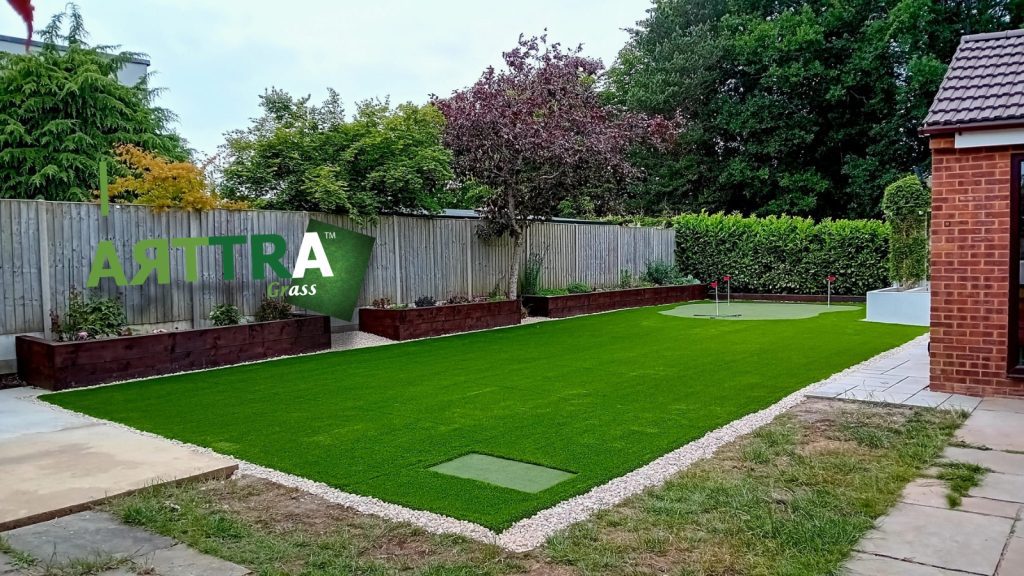
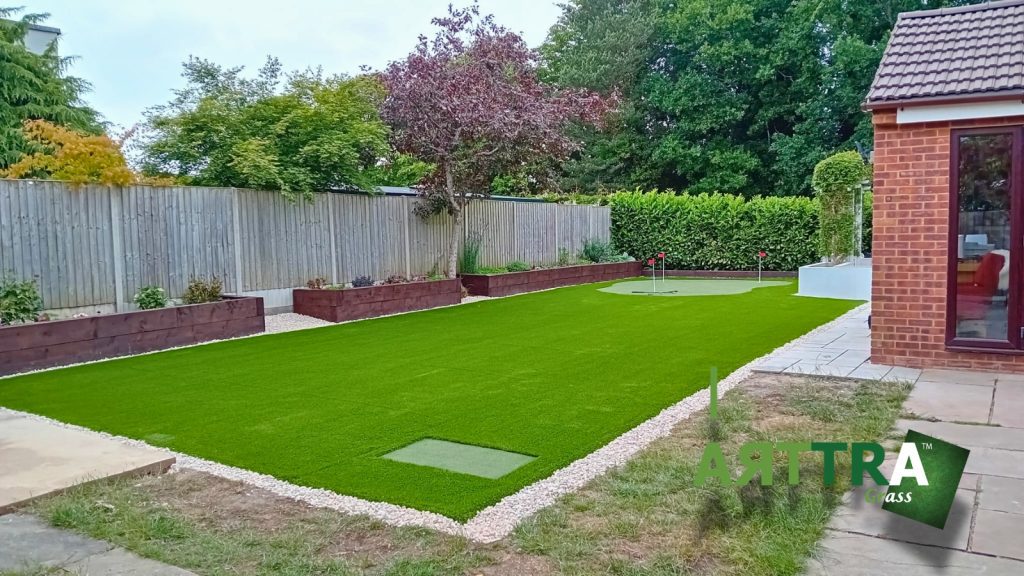
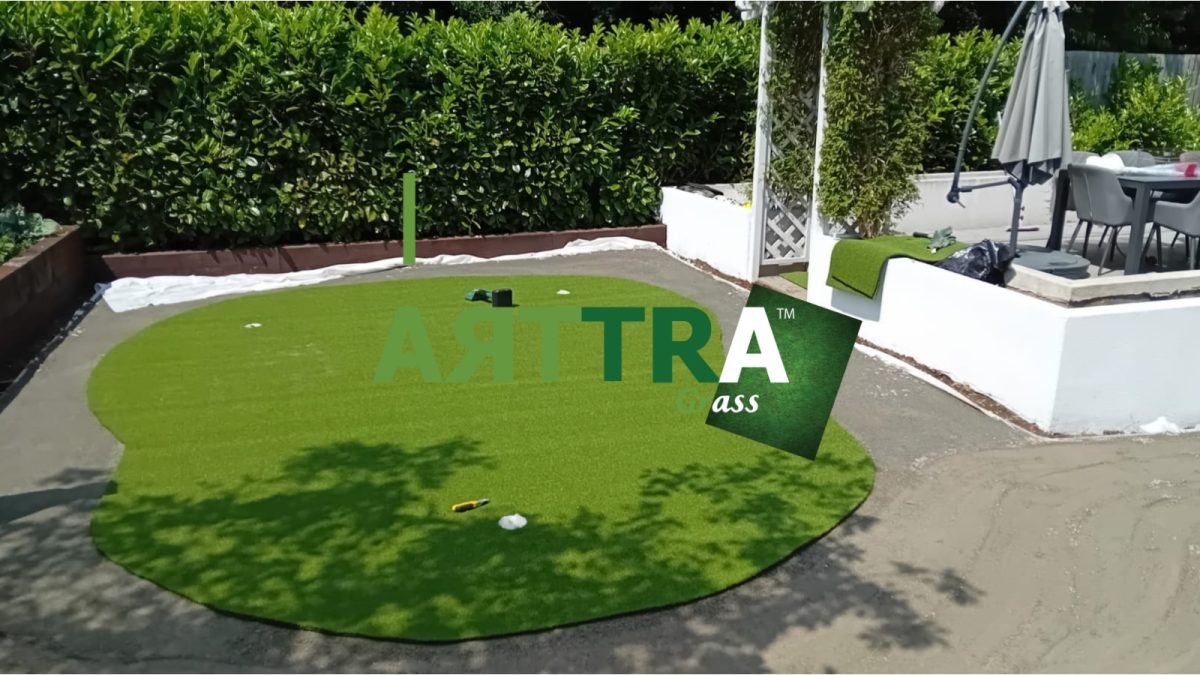
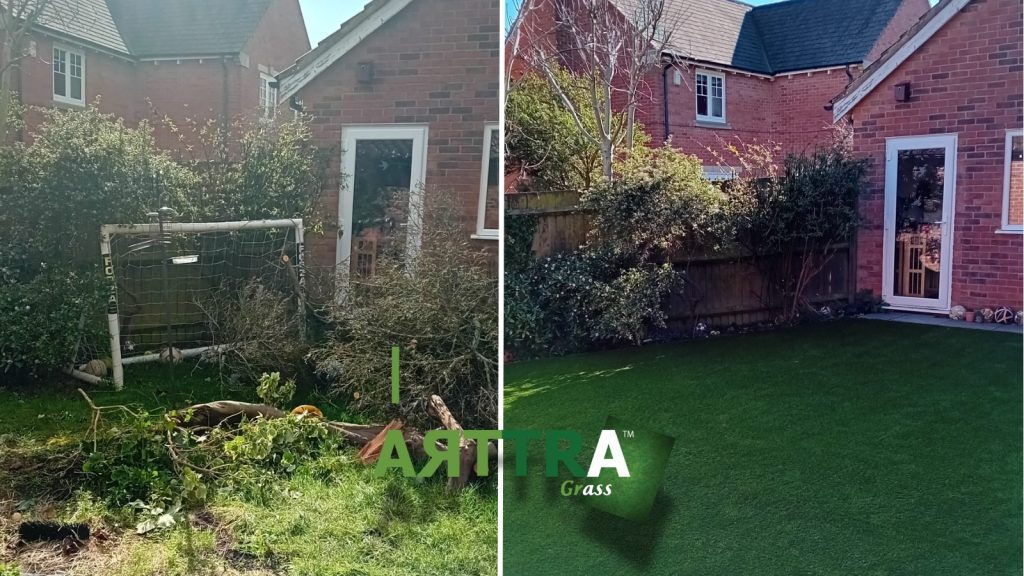
This artificial grass installation Kettering project in Mawsley was completed just last week, transforming a patchy, mud-prone lawn into a clean, safe and eco-friendly garden for a young family.
For years, the homeowners had struggled with:
- Patchy, worn natural grass
- Mud constantly being brought into the house
- Children unable to play outside during wet weather
- Ongoing frustration with maintenance
However, this project had an additional layer.
The homeowner’s husband, Stuart, had resisted artificial grass for over six years due to environmental concerns.
Like many environmentally conscious homeowners, he believed most artificial grass products on the market were not sustainable.
That changed when he discovered ARTTRAGrass® BioGrass and EcoGrass.
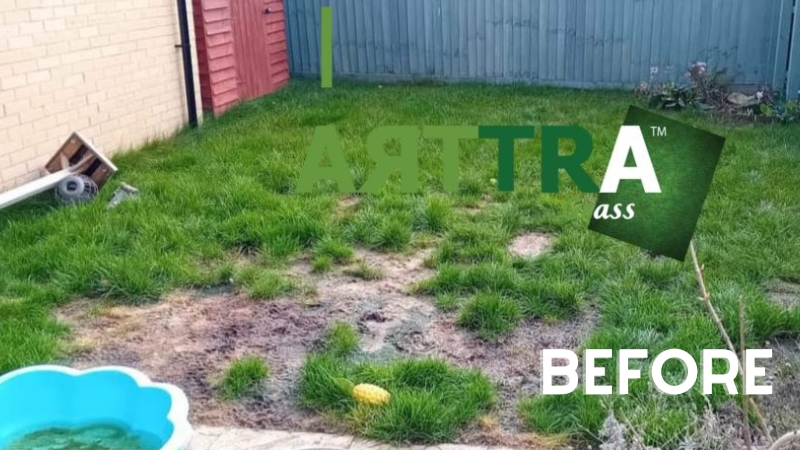
The Problem: Patchy Lawn & Mud Disrupting Family Life
The garden in Mawsley had become increasingly difficult to manage.
Natural grass was struggling due to:
- Regular foot traffic from children
- Seasonal weather conditions
- Poor recovery after wear
- Inconsistent growth
Over time, the lawn became:
- Patchy and uneven
- Muddy during wet conditions
- Visually unattractive
- Unsafe for regular play
For the family, this meant:
- Children unable to enjoy the garden
- Mud being constantly walked into the home
- Increased cleaning and frustration
- Limited use of outdoor space
Like many homeowners in the Kettering area, they reached a point where natural grass was no longer practical.
The Objection: Environmental Concerns Around Artificial Grass
For Stuart, the decision wasn’t simple.
He had spent years avoiding artificial grass due to concerns about:
- Plastic use
- Environmental impact
- Recyclability
- Heat retention
- Long-term sustainability
This is a common and valid concern.
Many artificial grass products on the market rely heavily on:
- Latex backing
- Fossil fuel-based materials
- Non-recyclable components
These systems often fail to align with environmentally responsible values.
The Turning Point: Discovering ARTTRAGrass® BioGrass
The breakthrough came when the family discovered ARTTRAGrass® BioGrass and EcoGrass systems.
These products are designed with sustainability in mind, offering:
- Reduced reliance on fossil fuels
- Bio-based backing technology
- Fully recyclable components
- Non-toxic materials
- Odour-free performance
But beyond sustainability, one feature stood out immediately:
The lifelike appearance.
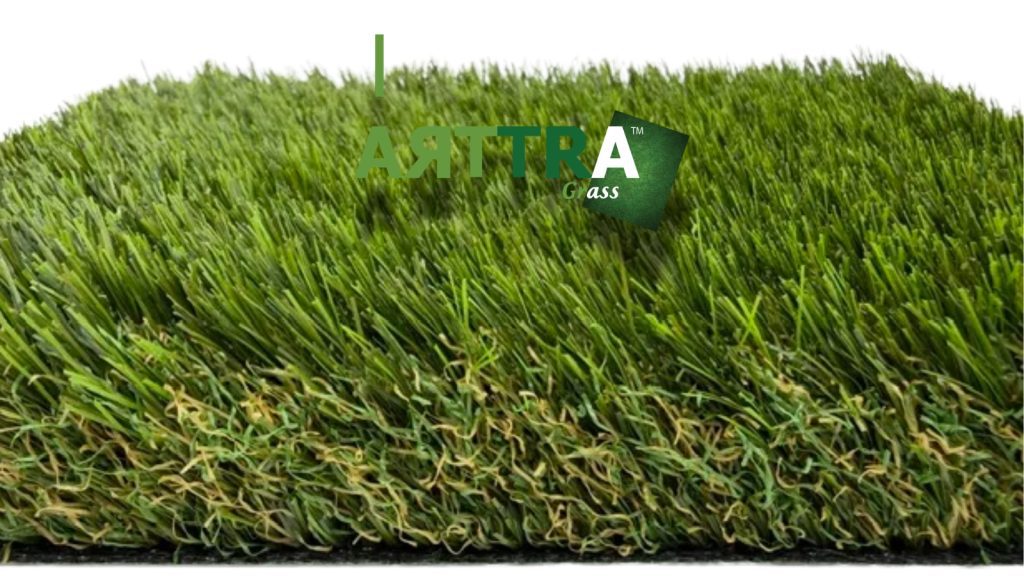
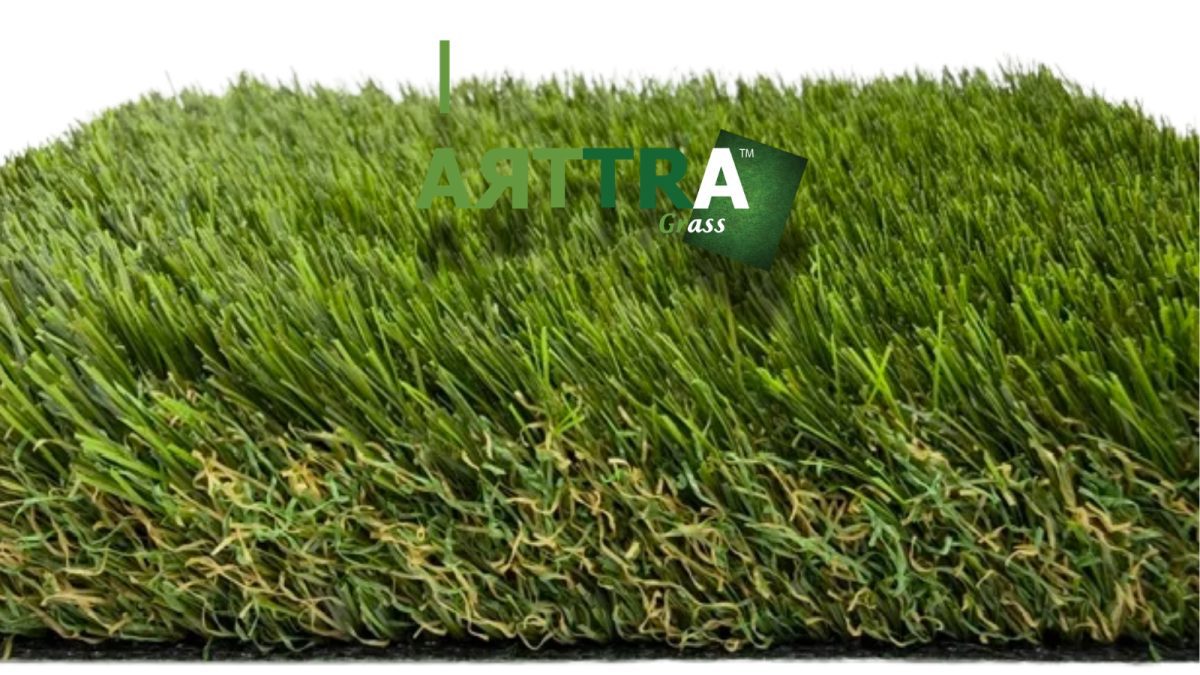
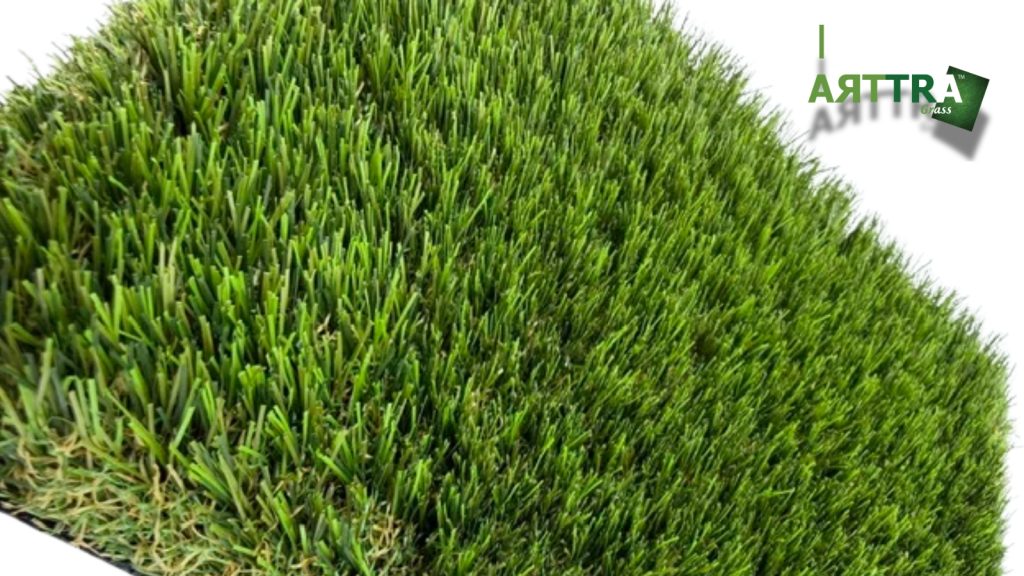
A Truly Lifelike Artificial Grass
One of the biggest misconceptions about artificial grass is that it looks unnatural.
That perception changed instantly when the family saw ARTTRAGrass® BioGrass.
The product delivers:
- Natural colour variation
- Realistic blade structure
- Dense, high-quality fibres
- Soft, comfortable feel underfoot
The result is a lawn that looks and feels like natural grass — without the drawbacks.
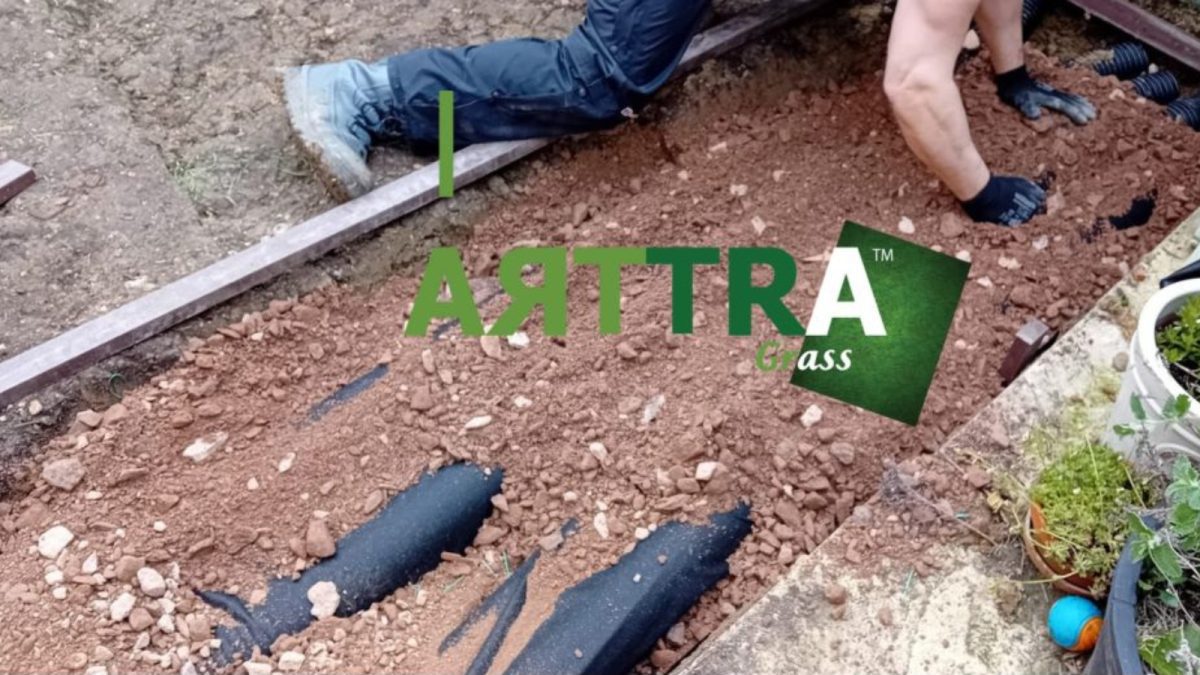
Installation Process
The installation was completed efficiently and professionally, ensuring minimal disruption.
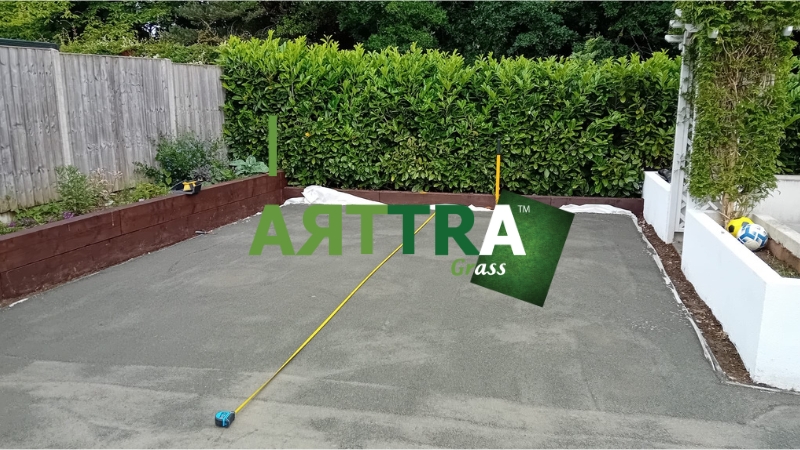
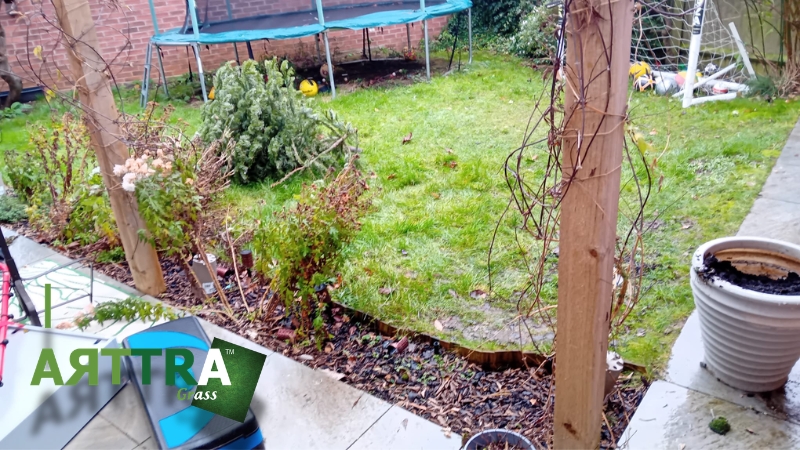
Step 1: Removal of Existing Lawn
- Excavation of patchy grass
- Removal of organic material
- Surface levelling
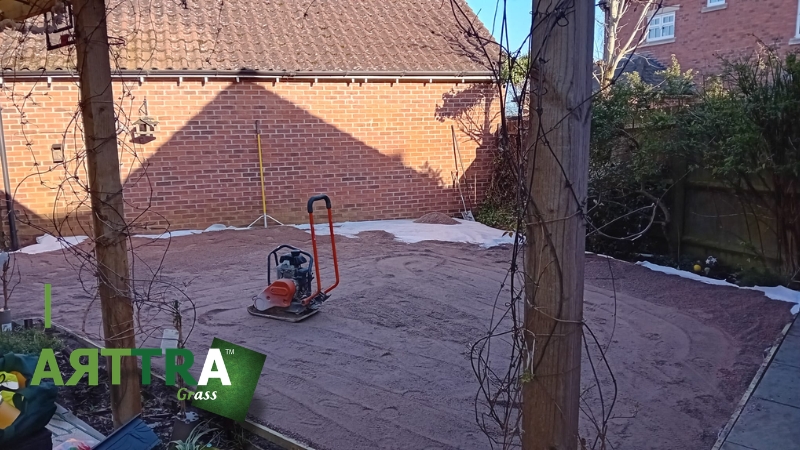
Step 2: Sub-Base Preparation
- Installation of a stable, free-draining sub-base
- Compaction for durability
- Ensuring long-term structural integrity
Step 3: Artificial Grass Installation
- Precision cutting and fitting
- Seam joining and securing
- Edge detailing
- Final brushing and finishing
Attention to detail at every stage ensured a flawless finish.
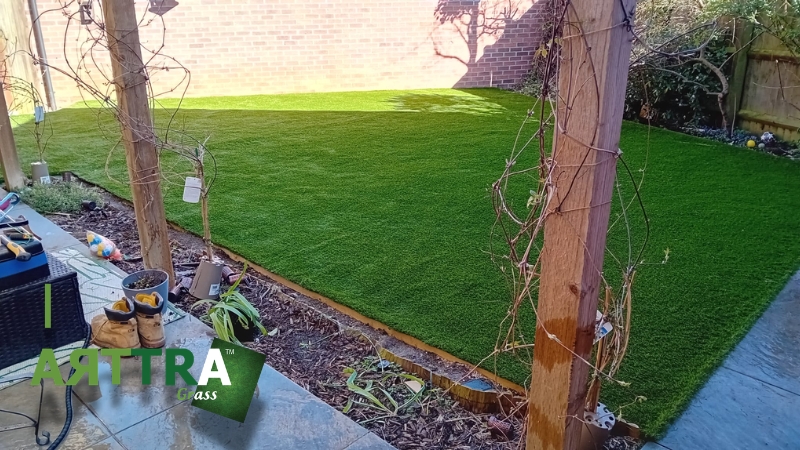
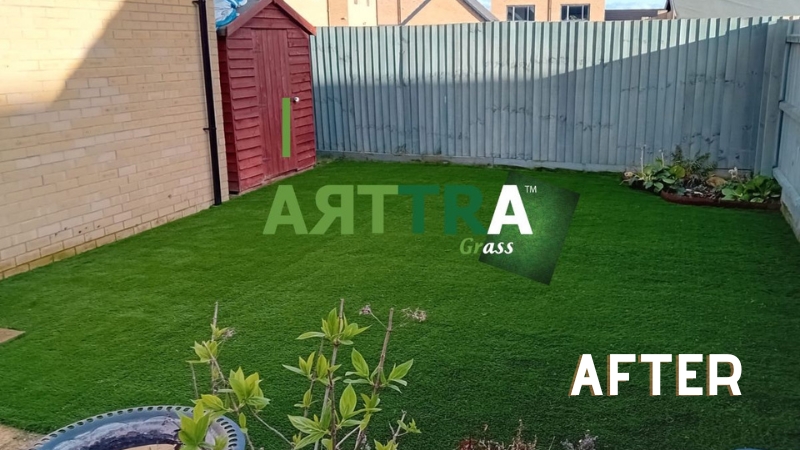
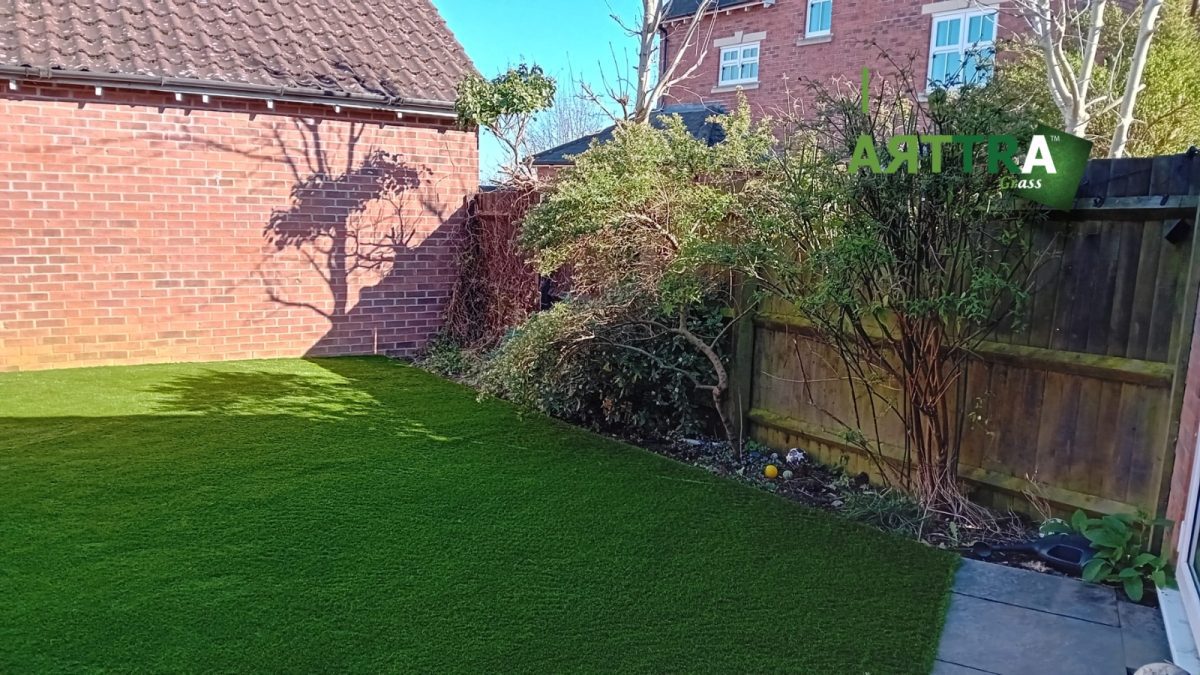
The Result: A Garden Transformed
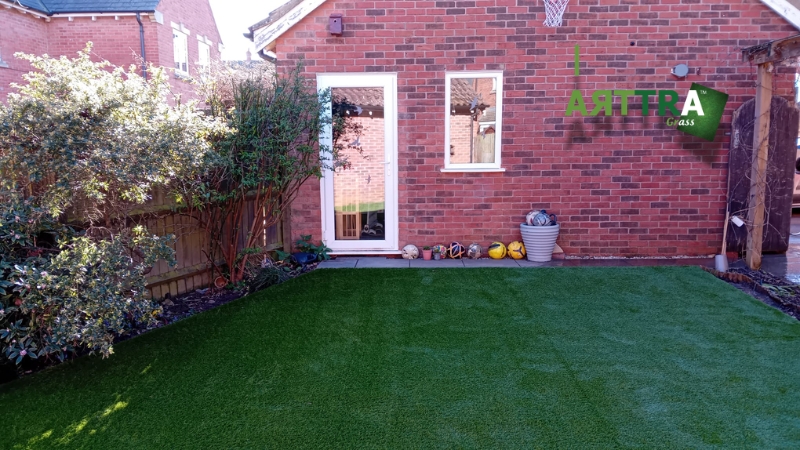
The transformation was immediate.
The garden is now:
- Fully usable all year round
- Clean and mud-free
- Safe for children
- Visually stunning
- Environmentally responsible
The children haven’t stopped playing outside since installation.
And importantly for Stuart, the solution aligns with his environmental values.
Customer Review
The homeowner shared the following review:
“Not only does the finished grass look amazing and so natural but the team were fantastic. Such a professional experience from start to finish, the team were hard working, friendly, polite and so tidy. The kids haven’t stopped playing in the garden since the new grass went in. Thanks so much.”
This highlights not just the product quality, but the overall customer experience.
Why Families in Kettering Choose Artificial Grass
Artificial grass is increasingly popular across Kettering and surrounding areas due to:
- High clay content in soil
- Poor drainage conditions
- Heavy garden usage
- Unpredictable UK weather
For families, the key benefits include:
- No mud in the house
- All year round usability
- Low maintenance
- Safe play surface
- Consistent appearance
Explore the Product Used
This project featured the ARTTRAGrass® BioGrass which is 100% recyclable artificial grass:
This product is ideal for:
- Family gardens
- High-use areas
- Eco-conscious homeowners
- Premium aesthetic results
Learn More: Choosing the Best Artificial Grass
If you’re comparing options, the best artificial grass guide will help.
Project Summary
Location: Mawsley, Kettering
Completed: Last week
Problem: Patchy lawn, mud, limited usability
Solution: BioGrass installation by ARTTRAGrass® Artificial Grass Rushden team
Key Feature: Eco-friendly artificial grass system
Outcome: Clean, safe, high-performance family garden
Frequently Asked Questions: Artificial Grass Installation Kettering
1. Is artificial grass suitable for family gardens?
Yes. It provides a safe, clean and durable surface ideal for children.
2. Does artificial grass eliminate mud?
Yes. Artificial grass removes exposed soil, preventing mud formation.
3. Is artificial grass environmentally friendly?
Modern systems like ARTTRAGrass BioGrass use recyclable materials and reduce reliance on fossil fuels.
4. Does artificial grass look realistic?
Yes. High-quality products offer natural colour variation and lifelike textures.
5. How long does artificial grass last?
Typically 10–15 years depending on use and maintenance.
6. Is artificial grass safe for children?
Yes. It is non-toxic, soft underfoot and stable.
7. Does artificial grass require maintenance?
Minimal maintenance such as brushing and occasional cleaning.
8. Can artificial grass be installed in all weather?
Installation is best completed in dry conditions but is possible all year round.
9. Will artificial grass drain properly?
Yes. Professional systems include free-draining sub-bases.
10. Do you install artificial grass in Kettering?
Yes. ARTTRAGrass provides installations throughout Kettering and surrounding areas.
GET IN TOUCH