
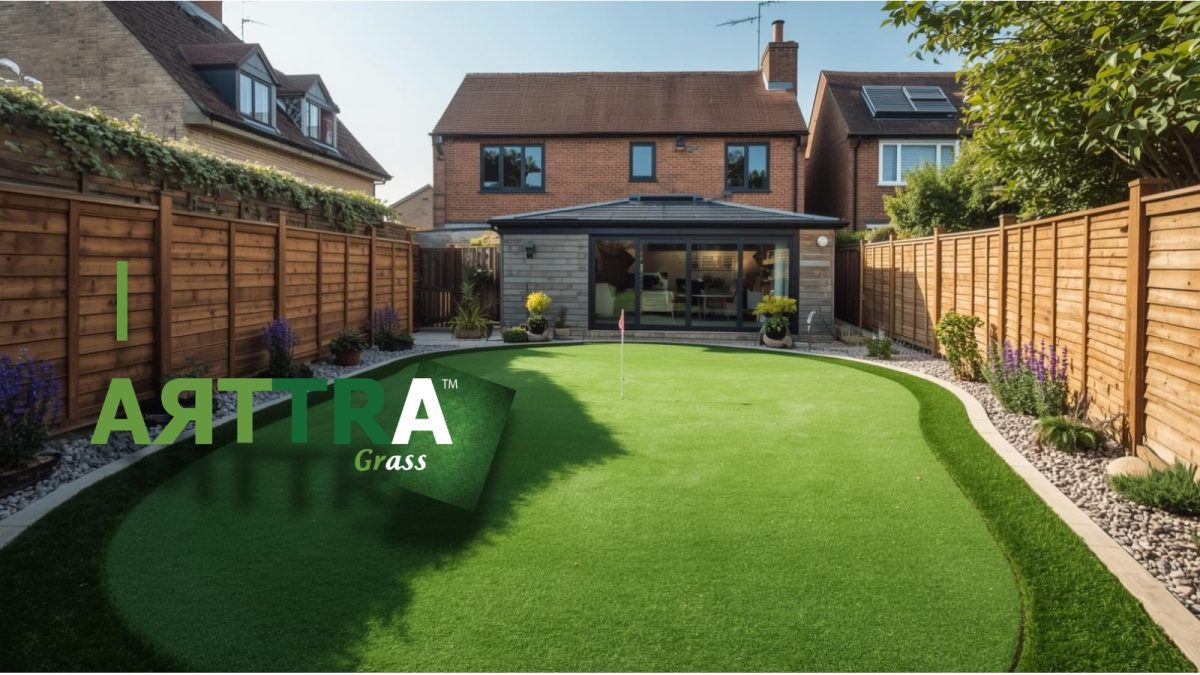
If you’re searching for backyard putting green design ideas, you’re likely imagining more than just a flat strip of turf.
A well-designed artificial putting green should:
- Fit your garden proportions
- Complement landscaping
- Drain effectively
- Provide realistic practice conditions
- Increase lifestyle appeal
This guide explores data-informed layouts, sizing insights and creative design approaches for UK gardens.
Why Design Matters More Than Size
Many homeowners assume bigger = better.
But in residential projects across the UK, most high-performing backyard putting greens range between:
15m² – 40m²
What matters more than size:
- Contour complexity
- Hole placement strategy
- Fringe integration
- Visual framing
- Drainage engineering
Smart design creates challenge — not just square footage.
1. Compact Corner Green (10–20m²)
Ideal for:
- Small gardens
- New-build homes
- Patio-adjacent spaces
Design Features:
- 2–3 hole placements
- Gentle breaks
- Minimal excavation footprint
This is one of the most popular UK installations due to space efficiency.
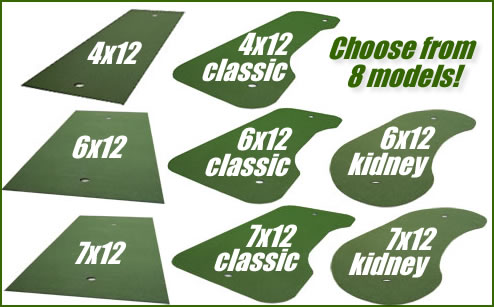
2. Kidney-Shaped Feature Green
Organic shapes blend better into landscaping.
Benefits:
- Soft visual flow
- Natural-looking contours
- Allows multiple pin positions
This design works well alongside artificial lawns.
3. Multi-Level Practice Green
For serious golfers.
Includes:
- Elevated tiers
- Subtle slopes
- Varied stimp calibration
Creates realistic practice challenges without needing large area.
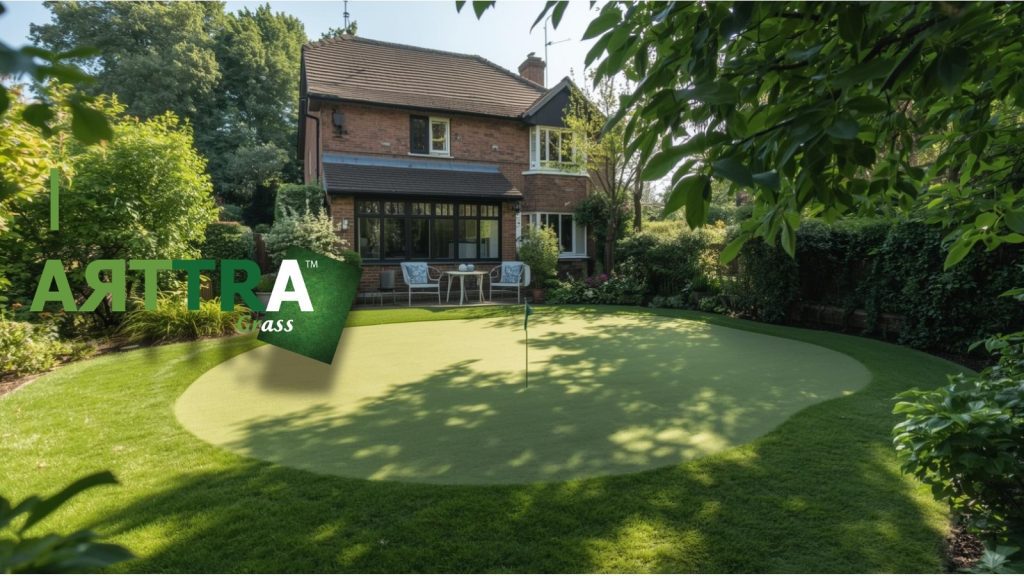
4. Island Green Effect
Inspired by championship courses.
Design Elements:
- Framed by decorative stone
- Artificial fringe surround
- Strategic drainage base
Visually striking centrepiece for premium gardens.
5. Integrated Patio Edge Green
Blends directly into paving.
Benefits:
- Clean finish
- Easy access
- Social entertaining appeal
Works especially well in modern garden designs.
6. Garden Flow Green (Full Landscape Integration)
Combines:
- Artificial lawn
- Putting surface
- Seating zones
- Pathways
This approach increases perceived garden size and usability.
7. Narrow Run Practice Strip
Designed for:
- Distance control
- Alignment training
- Small gardens
A 1.2–1.5m wide strip can dramatically improve short-game practice.
8. Contour-Focused Challenge Green
Designed around slope variation rather than size.
Key Features:
- Subtle breaks
- Ridge integration
- Multiple pin positions
Performance is engineered beneath the surface through sub-base shaping.
9. Family-Friendly Fun Green
Includes:
- Wider cups
- Gentle breaks
- Safe edges
Perfect for households wanting entertainment value as well as practice.
10. Premium Showcase Green (40m²+)
Best suited for:
- Larger properties
- Golf enthusiasts
- Luxury landscaping projects
Can include:
- Bunker effects
- Fringe rough
- Advanced contour mapping
These installations create standout visual impact.
Find out more by visiting our Artificial Grass Putting Green Installation page.
Size Guide: What Works in UK Gardens?
| Garden Size | Recommended Green Size |
|---|---|
| Small (Under 60m²) | 10–20m² |
| Medium (60–120m²) | 20–35m² |
| Large (120m²+) | 35–60m²+ |
Proportion matters more than total area.
Contours: The Hidden Performance Factor
A putting green without contour is just turf.
Professional installations shape the sub-base to:
- Influence ball break
- Improve drainage
- Prevent pooling
- Maintain consistent roll
Ground engineering determines performance.
Drainage: Essential in UK Climate
UK rainfall demands:
- Permeable sub-base layers
- Compacted aggregates
- Proper edge restraint
- Controlled runoff
Aesthetics matter — but drainage ensures longevity.
Fringe & Surround Ideas
Adding fringe improves realism.
Options include:
- Artificial fringe collar
- Stone edging
- Timber sleepers
- Integrated lawn transition
Framing elevates the visual finish.
Design Mistakes to Avoid
- Oversizing small gardens
- Ignoring drainage slope
- Flat installation (no challenge)
- Cheap turf selection
- Poor edge finishing
Design errors reduce both enjoyment and resale appeal.
How Design Impacts Cost
Design complexity affects:
- Excavation depth
- Base shaping
- Material usage
- Labour time
More contours = more groundwork.
That’s why understanding layout early helps budget planning.
Learn more about artificial putting green cost in the UK.
Does Design Affect Property Appeal?
Yes.
Tastefully integrated backyard putting greens can:
- Improve visual interest
- Enhance lifestyle perception
- Differentiate property listings
Poorly designed greens can do the opposite. Integration is everything.
It can actually increase the value of your property. Does a putting green increase property value in the UK?
FAQs – Backyard Putting Green Design Ideas
1. What size backyard putting green is ideal?
Most UK residential greens range from 15–40m².
2. Can small gardens accommodate a putting green?
Yes, compact designs work well in smaller spaces.
3. Do contours make a big difference?
Yes, they dramatically improve realism and challenge.
4. Is drainage important in the UK?
Absolutely, due to regular rainfall.
5. How many holes should a backyard green have?
2–5 holes is typical for residential installations.
6. Can a putting green be integrated into landscaping?
Yes, integration improves both function and aesthetics.
7. Are bunkers recommended?
Only for larger gardens; they increase complexity and cost.
8. Does shape matter?
Organic shapes often blend better into gardens.
9. Can it be installed on a slope?
Yes, but proper base engineering is essential.
10. Should I prioritise size or contour?
Contour and design quality are more important than size.
GET IN TOUCH