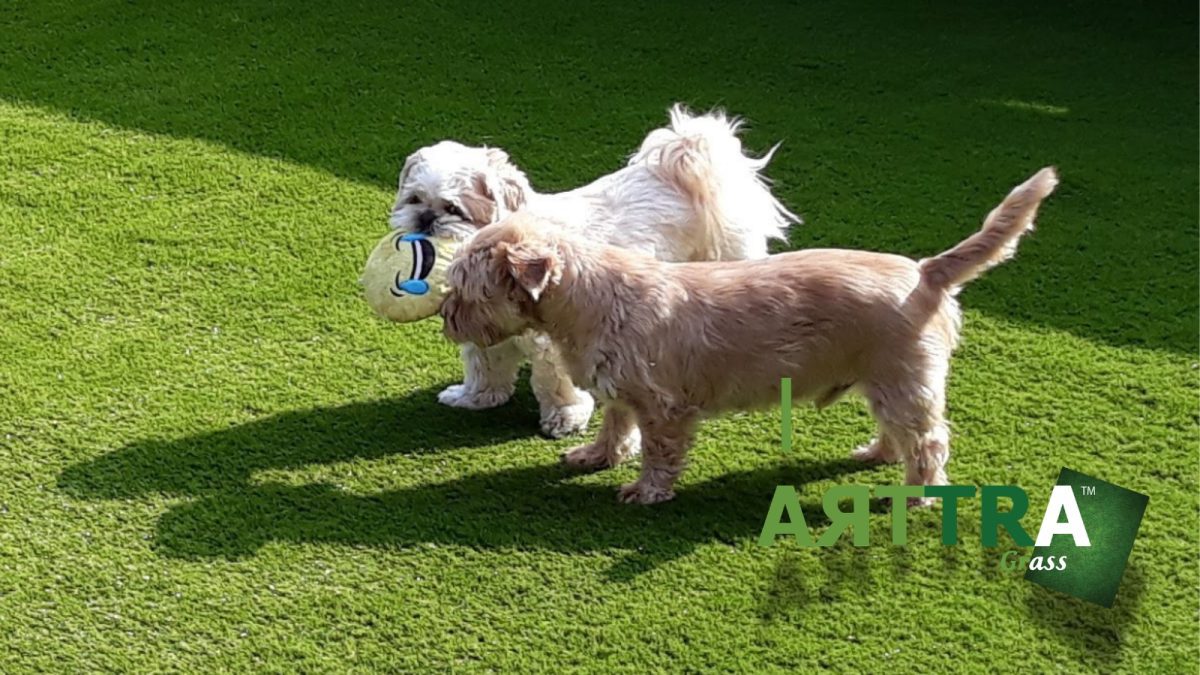
Choosing the best dog friendly artificial grass in the UK isn’t just about appearance.
If you own a dog, the wrong product can lead to:
- Persistent urine odour
- Poor drainage
- Fibre flattening
- Heat retention
- Premature wear
- Environmental concerns
This buyer’s guide explains exactly what separates premium dog-friendly turf from decorative synthetic grass — so you can invest with confidence.
What Makes Artificial Grass “The Best” for Dogs?
The best artificial grass for dogs must meet five core criteria:
- Non-toxic construction
- Superior drainage
- Odour resistance
- Durability under heavy use
- Environmental responsibility
If a product fails any of these, it’s not truly pet-optimised.
1. Safety First: Non-Toxic Materials
Your dog spends hours in the garden — sniffing, rolling, lying down.
Low-quality artificial grass can contain:
- Petroleum-heavy latex backing
- Chemical residues
- Inferior dyes
The best dog friendly artificial grass in the UK uses:
- Lead-free fibres
- No harmful infill
- Safe backing systems
- Certified materials
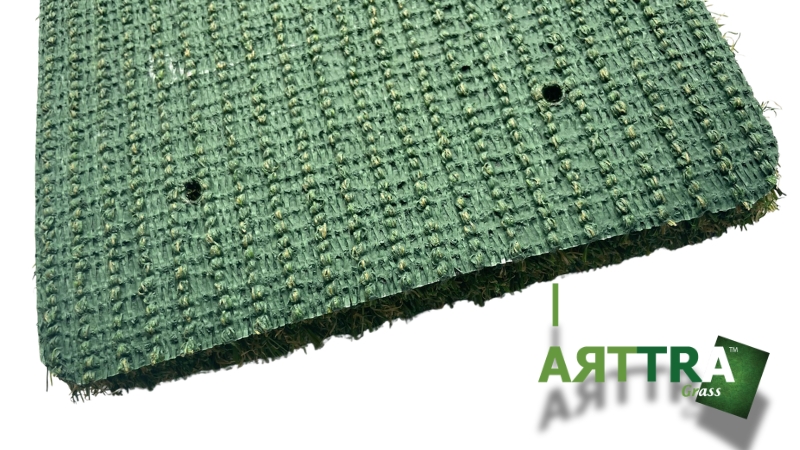
Premium options like ARTTRAGrass® are engineered with 100% recyclable bio-backed green backing, reducing fossil fuel dependency and eliminating traditional latex concerns.
2. Drainage: The #1 Performance Factor
Drainage determines whether your lawn smells fresh or becomes a problem.
The best artificial grass for dogs will include:
- Perforated backing
- High permeability rate
- Fast vertical drainage
- Compatibility with permeable sub-base
Without this, urine pools beneath the surface.
In the UK’s wet climate, proper drainage is non-negotiable.
3. Odour Control: How the Best Turf Prevents Smell
Contrary to myth, artificial grass doesn’t automatically smell.
Odour occurs when:
- Urine stagnates
- Bacteria multiply
- Backing materials trap moisture
The best dog friendly artificial grass supports airflow and drainage, preventing ammonia build-up.
When paired with professional installation, odour issues are rare.
4. Choosing the Right Pile Height (25mm vs 35mm)
25mm – Practical & High Traffic
Best for:
- Multiple dogs
- Heavy garden use
- Dog runs
- Faster drying
- Easier cleaning
35mm – Softer & More Natural
Best for:
- Family gardens
- Aesthetic focus
- Mixed use (children + pets)
- Slightly plusher feel
Both can be excellent — but usage intensity should guide your decision.
5. Fibre Density & Durability
The best artificial grass for dogs should:
- Maintain upright fibres
- Resist matting
- Recover from zoomies
- Withstand digging attempts
Look for:
- High stitch rate
- Strong backing adhesion
- UV stability
Cheaper turf often flattens within a few seasons.
6. Eco Credentials: The Future of Artificial Grass
Many UK homeowners now want sustainability alongside performance.
Traditional artificial turf:
- Relies heavily on fossil fuels
- Is difficult to recycle
- Uses petroleum-based latex
Modern eco-friendly artificial grass options, such as ARTTRAGrass®, offer:
- 100% recyclable bio-backed technology
- Reduced fossil fuel dependency
- Lower carbon footprint
- Circular lifecycle potential
If environmental impact matters to you, this is a key differentiator.
7. Installation: The Hidden Factor
Even the best turf fails with poor installation.
Professional installation ensures:
- Correct excavation depth
- Compacted MOT Type 1 base
- Sharp sand levelling
- Secure edging
- Seam bonding
Many complaints about artificial grass smell or lifting come from improper sub-base preparation — not the product itself.
How to Compare Artificial Grass Suppliers in the UK
Before choosing, ask:
- Is the product non-toxic?
- What backing system is used?
- Is it recyclable?
- What drainage rate does it offer?
- What warranty is included?
- Is installation provided in-house?
Transparency is a sign of quality.
Cost of the Best Dog Friendly Artificial Grass in the UK
Expect variation depending on:
- Area size
- Ground conditions
- Product specification
- Access
- Waste removal
While premium eco-backed turf costs more upfront, it often lasts longer and performs better — making it better value over time.
Common Mistakes When Choosing Artificial Grass for Dogs
- Choosing purely on price
- Ignoring drainage specifications
- Not asking about backing materials
- Overlooking eco impact
- Attempting DIY installation without expertise
Cutting corners often leads to odour and premature replacement.
Why ARTTRAGrass® Stands Out in the UK Market
When evaluating the best dog friendly artificial grass UK suppliers, ARTTRAGrass® offers:
- 100% recyclable bio-backed green backing
- Non-toxic construction
- Odour-resistant drainage compatibility
- Reduced fossil fuel dependency
- Lower carbon footprint
- Available in 25mm and 35mm
- Designed for families with pets and children
It’s engineered not just for aesthetics — but for real dog ownership.
Visit our Artificial Grass for Dogs service page to learn more.
Is Dog Friendly Artificial Grass Worth It?
For many UK dog owners, the benefits include:
- No mud
- No burn patches
- No fertilisers
- Minimal maintenance
- Cleaner interiors
- Long lifespan
For busy households, it often transforms daily life.
Final Checklist Before You Buy
✔ Non-toxic fibres
✔ High drainage backing
✔ 25mm or 35mm suited to usage
✔ Professional installation
✔ Eco credentials verified
✔ Clear warranty
If all boxes are ticked, you’re likely choosing wisely.
Ready to Upgrade?
If you’re comparing the best dog friendly artificial grass in the UK and want:
- Expert advice
- Eco-conscious technology
- Long-term performance
- Professional installation
Request a free consultation and product recommendation today.
FAQs: Best Dog Friendly Artificial Grass UK
1. What is the best artificial grass for dogs in the UK?
The best options are non-toxic, highly permeable and durable under heavy use, with strong eco credentials.
2. Is more expensive artificial grass better for dogs?
Often yes, as premium products provide better drainage and longer lifespan.
3. Should I choose 25mm or 35mm for dogs?
25mm suits heavy use; 35mm offers a softer aesthetic.
4. How do I avoid artificial grass smelling?
Ensure proper drainage and professional installation.
5. Is eco-friendly artificial grass available in the UK?
Yes, some manufacturers now offer 100% recyclable bio-backed systems.
6. How long does dog friendly artificial grass last?
Typically 10–15+ years.
7. Can artificial grass handle multiple dogs?
Yes, if fibre density and drainage are adequate.
8. Is installation included?
Many reputable suppliers offer full installation services.
9. Does artificial grass need infill for dogs?
Most modern systems do not require crumb rubber infill.
10. Is artificial grass better than natural turf for pets?
For mud prevention and durability, many UK dog owners prefer it.
GET IN TOUCH