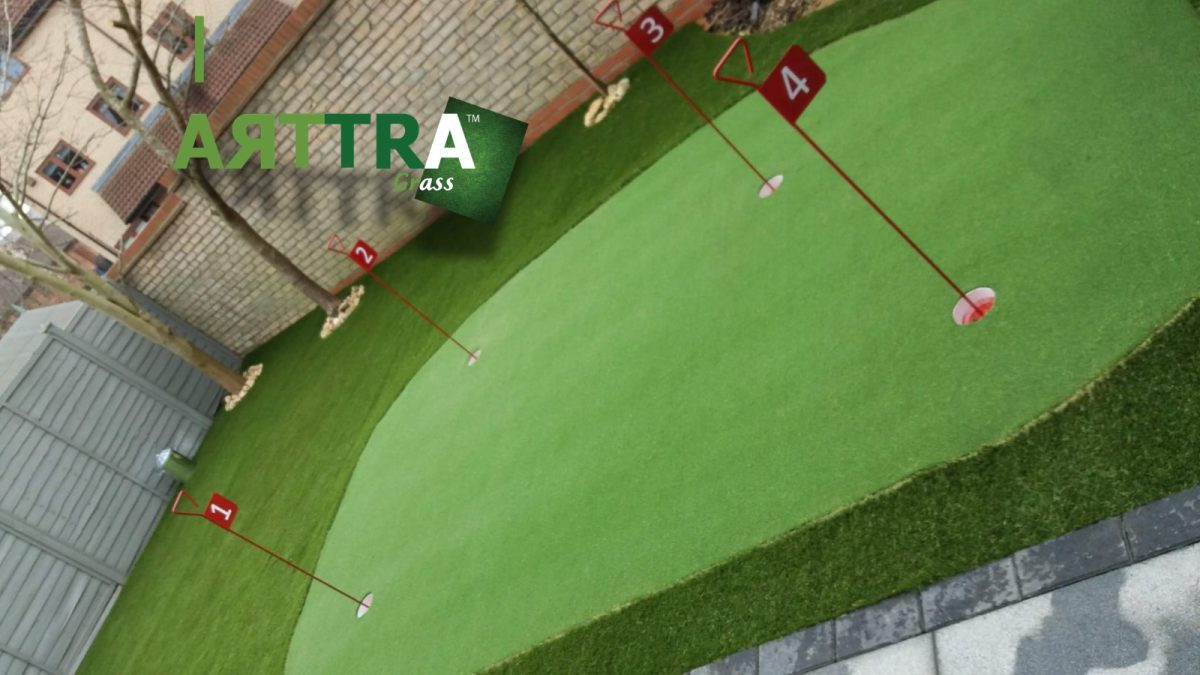
Choosing the best artificial grass for putting greens is one of the most important decisions in any installation. The wrong turf will result in inconsistent ball roll, unrealistic speed and long-term performance issues.
Unlike standard artificial lawn products, putting green turf is engineered for precision, pace control and durability. In this guide, we explain exactly what separates professional-grade putting grass from decorative alternatives.
Why Not All Artificial Grass Is Suitable for Putting Greens
Many homeowners assume any short-pile artificial grass can function as a putting surface. It cannot.
Putting greens require:
- Controlled ball roll
- Minimal fibre resistance
- Even surface tension
- Stable backing
- Compatible infill
Decorative garden grass is designed for aesthetics. Putting turf is designed for performance.
Key Features of the Best Artificial Grass for Putting Greens
1. Pile Height
Ideal putting green pile height is typically:
10mm–15mm
Too long:
- Slows ball speed
- Causes drag
Too short:
- Reduces cushioning
- Feels unnatural
Professional-grade putting turf is calibrated for consistent pace.
2. Fibre Density
Density determines:
- Ball tracking stability
- Surface consistency
- Longevity
High-density fibres prevent the ball from wobbling or deviating during roll.
Low-density turf often causes unpredictable breaks.
3. Yarn Type & Structure
The best artificial putting turf uses:
- Texturised nylon or polypropylene
- Curled or fibrillated fibres
- Reinforced backing systems
These materials maintain structure under repeated foot traffic and practice sessions.
4. Backing Strength
Strong backing prevents:
- Stretching
- Rippling
- Movement over time
Professional turf uses latex or polyurethane-backed systems designed for stability.
5. Infill Compatibility
Infill affects:
- Ball speed
- Surface firmness
- Shock absorption
Common infills:
- Kiln-dried silica sand
- Specialist performance infill blends
Incorrect infill selection compromises speed and realism.
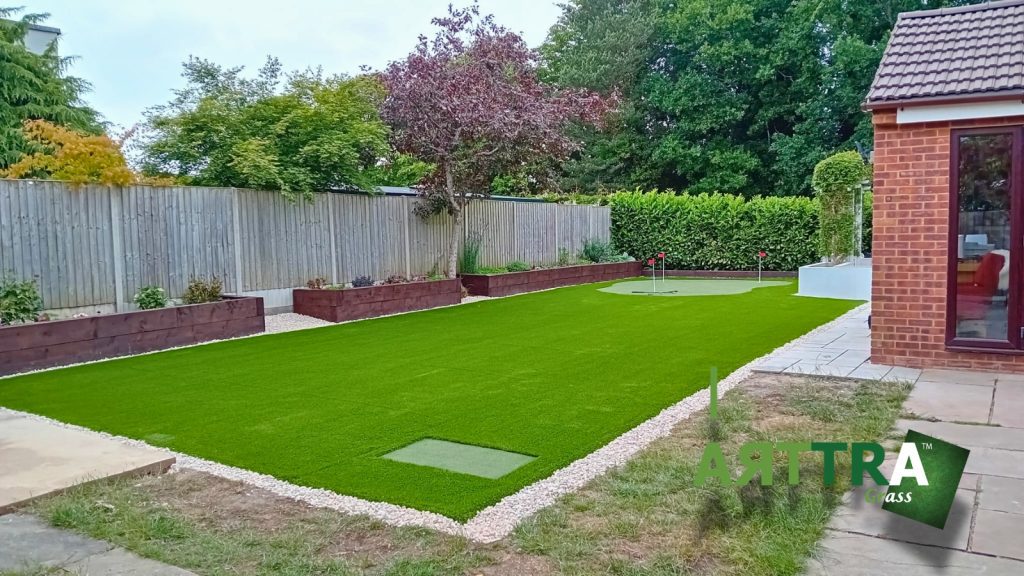
What Speed Should a Putting Green Be?
Putting green speed is often compared using the Stimpmeter scale.
Residential greens typically aim for:
- 8–10 Stimp (realistic practice speed)
Advanced golfers may prefer:
- 10–12 Stimp
Professional installers adjust:
- Base firmness
- Infill levels
- Fibre brushing direction
DIY installations rarely achieve controlled speed calibration.
Fringe vs Putting Surface: Why It Matters
The best artificial grass for putting greens often includes:
- Short-pile putting surface
- Slightly longer fringe grass
- Defined chipping zones
This creates:
- Visual contrast
- Functional realism
- Professional aesthetics
Using one turf type throughout reduces authenticity.
Drainage Performance in the UK Climate
In the UK, drainage is critical.
High-quality putting turf must:
- Allow rapid water permeability
- Prevent pooling
- Maintain structural integrity in heavy rain
Poor drainage leads to:
- Surface movement
- Base failure
- Inconsistent ball roll
The turf and sub-base must work together.
Nylon vs Polypropylene for Putting Greens
Nylon
✔ Stronger
✔ More durable
✔ Better heat resistance
✔ Premium performance
Higher cost but longer lifespan.
Polypropylene
✔ More affordable
✔ Adequate for light residential use
✖ Slightly less durable
Commercial installations typically favour nylon-based systems.
How Long Does Premium Putting Turf Last?
With professional installation:
- 12–15+ years residential
- 8–12 years commercial
Longevity depends on:
- Base preparation
- Usage levels
- Maintenance
Cheap turf may degrade within 3–5 years.
Common Mistakes When Choosing Putting Turf
- Selecting decorative lawn grass
- Ignoring fibre density
- Choosing based on price alone
- Overlooking drainage capability
- Installing without proper base engineering
Performance always comes down to specification.
Why Professional Selection Matters
The best artificial grass for putting greens is not just about the product — it’s about matching turf specification to:
- Ground conditions
- Desired speed
- Usage frequency
- Design complexity
Professional installers assess:
- Soil composition
- Drainage risk
- Sun exposure
- Sub-base depth
This ensures performance is engineered, not guessed. To learn more, visit our Artificial Putting Green Installation Service page.
The Bottom Line
If your goal is:
✔ Realistic ball roll
✔ Controlled speed
✔ Long-term durability
✔ Professional finish
The best artificial grass for putting greens is a specialist performance turf — professionally selected and installed.
Choosing the right product at the beginning prevents costly corrections later. Find out the cost to install putting greens professionally below.
FAQs – Best Artificial Grass for Putting Greens
1. What pile height is best for putting greens?
Typically 10–15mm for optimal speed and control.
2. Can I use normal artificial lawn grass?
No, decorative turf does not provide consistent ball roll.
3. What fibre type is best?
Nylon is generally preferred for durability and performance.
4. How fast can artificial putting greens be?
They can be calibrated to 8–12 on the Stimpmeter scale.
5. Does infill affect ball speed?
Yes, infill significantly impacts pace and surface firmness.
6. How long does putting turf last?
Premium turf lasts 12–15+ years with proper installation.
7. Is nylon better than polypropylene?
Nylon offers superior durability and heat resistance.
8. Can artificial putting greens drain well?
Yes, when installed with correct sub-base preparation.
9. Does density matter?
Yes, higher density ensures consistent ball roll.
10. Is professional installation necessary?
For performance and longevity, professional installation is highly recommended.
GET IN TOUCH